
Toyota Prius has been the most iconic hybrid vehicle for over two decades. Unquestionable reliability, futuristic design, and eco-friendly fuel consumption made it very popular both as an economy car and means to go green. In recent years, the spotlight has been moved away from hybrids and towards electric vehicles.
However, limited range and high manufacturing costs are aspects that need to be improved for electric vehicles to truly take over. As running costs aren’t exactly cheap either, hybrid vehicles are still the favored option for many drivers.
Prius C made its appearance on the US market in 2012 and took it by storm. It became Toyota’s fastest-selling vehicle and remained popular until its discontinuation in 2019. If you’re interested in buying a used model, knowing the differences between trim levels can be very useful. Toyota released Prius C with four trims: One, Two, Three, and Four.
The naming scheme might not win any awards for creativity, but it does a great job of illustrating trim progression. Let’s take a look at the main differences between the four, and find the best option for you.
Toyota Prius C is a 5-door, 5-seat subcompact hatchback that merges a Yaris-sized car with full hybrid capability. The C in its name stands for City, where the car thrives thanks to its excellent fuel economy and small dimensions. Throughout its production, it was priced below the standards Prius, in line with economy car standards.
Prius C is powered by a 1.5-liter Inline 4 petrol engine delivering 74 horsepower through the continuously variable automatic transmission, or CVT for short. Weighing just 2530 pounds, it rides well on city streets but unsurprisingly underperforms on open roads. However, we cannot really expect more from a car that can do 48 miles to the gallon of city drive.
For its size, Prius C is surprisingly spacious, with enough room for 4 adult passengers and some baggage. The ride is quite stiff, and with the less-than-comfortable interior, we don’t suggest taking the Prius C on extended trips. The signs of budget-saving are evident in the interior, both in choice of materials and wind noise at higher speeds.
With the discontinuation in 2019, some of the latest models could still be in the warranty period of 3 years or 36,000 miles. The price varied depending on the trim level, starting at roughly $20,000 for the Prius C One, and going as high as $25,000 for the Prius C Four.
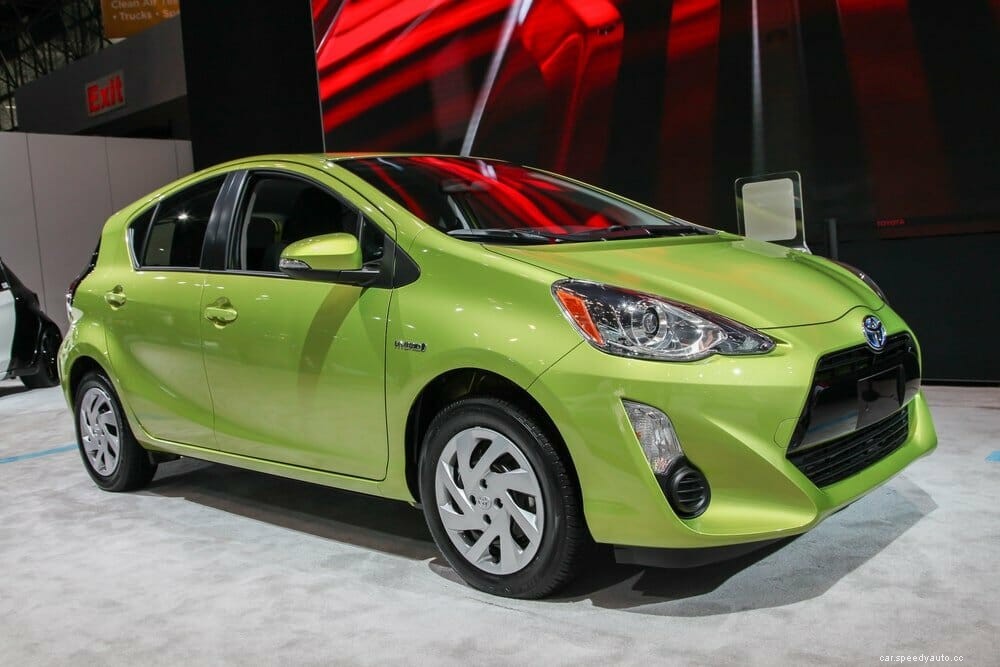
One represents the base model of the Prius C, with the lowest starting price but also the least features. Owners were given an option between 10 exteriors and three interior colors, but metallic paint was made optional. Exterior extras are generous considering the vehicle’s class and trim level. One comes with LED headlamps, 15″ alloy wheels, remote keyless entry, power mirrors, and a rear camera.
Inside, you’ll find more than enough convenience features to make for a comfortable ride. The steering wheel comes with integrated audio and AC controls, while all windows are power-operated. The central touchscreen infotainment unit allows you to connect your phone wirelessly, or use the USB slot. Auto-dimming rearview mirror, cruise control, interior organizers, and mats were available as optional extras, among others.
A wide range of safety options was made available as standards:
Two seemingly offers nothing new in comparison to the One. Manufacturers tend to add in trims with next to no differences to the base model to use as a marketing scheme. Rather than buying a base model with a few optional extras, the new owner will get a higher trim which sounds more appealing.
As Prius C was seldom made to order, it is likely that every base car retained the name One, while those with some addons but without meeting the criteria for higher trims were labeled Two. Be on the lookout for Prius C Two with cruise control, power moonroof, 16″ alloy wheels, or premium cloth seat trim to get the most out of it.
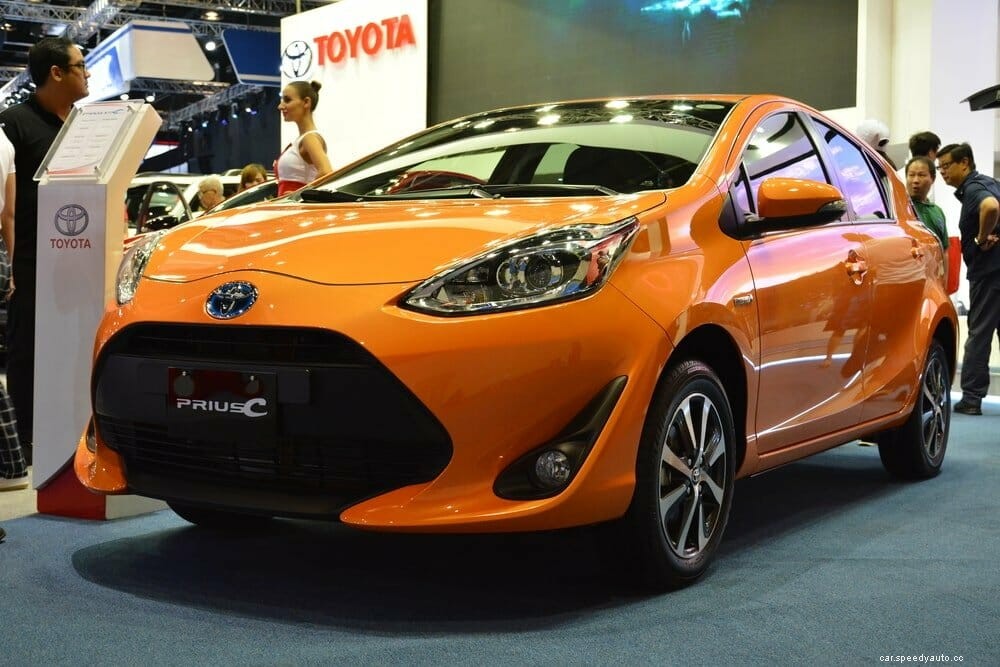
Three is where you’ll get the most value for money. The standard AM/FM stereo has been replaced with Sirius XM radio, and the standard seat trim receives an upgrade into premium cloth. A navigation system with voice activation was also made available as standard. Originally priced at $22,855, Three was in the middle between the base One model, and the more luxuriously equipped Four.
If you were looking for a Prius C that has a few more convenient features than the base model, Three is the right choice.
Four is where Prius C gets some really nice features that make it more than just an economy car. Express open/close sliding and tilting glass sunroof is added above the front row to open up the vehicle and make it more enjoyable during summer days. When it gets cold, the driver and front passenger can take full advantage of the fully heated seats, while the heated mirrors enhance visibility.
Interior comfort is elevated with the addition of SofTex leatherette seat trim which also makes it better looking. In addition, fog lights and cruise control with steering wheel controls add to the safety and convenience of every trip. These extras would have originally raised the price of Prius C to $24,965, but in the used car market, the value of extras diminishes rapidly, so you might be able to find a Prius C Four without a significant price difference in comparison to lesser trims.
For the year 2019, Prius C trims have been reduced to two models: L and LE. As the production of Prius C was reaching its end, Toyota most likely streamlined its production to use up the remaining components. L shares its equipment with the base One model, with the addition of the premium cloth seat trim. LE is more in line with Prius C Three due to having the same Sirius XM radio, navigation system, and premium cloth seat trim. Unless you’re looking for the high-end features of Prius C Four, L and LE are a great way of getting the newest Prius C.
Despite being discontinued, Toyota Prius C remains a very popular model for the city streets. Now that you’ve been acquainted with the differences between One, Two, Three, and Four, you’ll be able to make an informed purchase and get the most out of your new car. Unless you need the heated seats and sunroof, we recommend checking out Three or LE, as it strikes the balance between affordability and excellent features.
Here are some other articles you may be interested in:
Nissan Leaf vs. Toyota Prius – Which One Is The Best?
Honda Fit vs. Toyota Prius – Which Is Better?
Prius Check Engine Light Reset Guide
