
Keeping your car battery charged is essential and is very easy to do. Car batteries will charge themselves as you drive around, as long as the battery is in good working order. However, your car battery can go flat if the engine has not been run for a while or the battery is damaged. If you leave your car lights turned on or the stereo while the engine is off, this can also drain the car battery.
Car battery chargers will recharge your battery if it goes completely flat, or the charge just needs topping up. If you are planning on using a car battery charger, it is important to know how to read the battery charger amp meter. Overcharging a car battery can be dangerous, if you leave the charger on for too long the car battery may explode.
In this article, we provide information on how to read a battery charger amp meter and answer questions frequently asked about charging your car battery.
Different car battery chargers will charge your car battery at different speeds. It is important to use the correct amperage battery charger for your car’s battery. Using a charger with an amp rating that is too high for your battery can cause damage and overcharging a battery can also potentially lead to an explosion. However, many modern chargers often have safety features, like auto-shutoff features and voltage regulators, to prevent dangerous overcharging.
Let’s take a quick look at the different types of car battery chargers that are available:
40 amp car battery charger – A 40 amp charger will provide fast and efficient car battery charging. Using a 40 amp battery charger will get your car running again in only a matter of minutes.
10 amp car battery charger – A 10 amp battery charger may take several hours to recharge your car battery. A 10 amp battery charger can charge a large, completely depleted battery in around 8-14hours. If you have a medium-sized battery, it will charge it in around 6-8hours.
4 and 2 amp car battery chargers – 4 and 2 amp battery chargers take a long time to recharge a fully depleted battery and will only work on smaller car batteries. A 4 amp charger takes around 12 hours to charge a 48amp battery; a 2 amp charger could take a full day to charge the same sized battery.
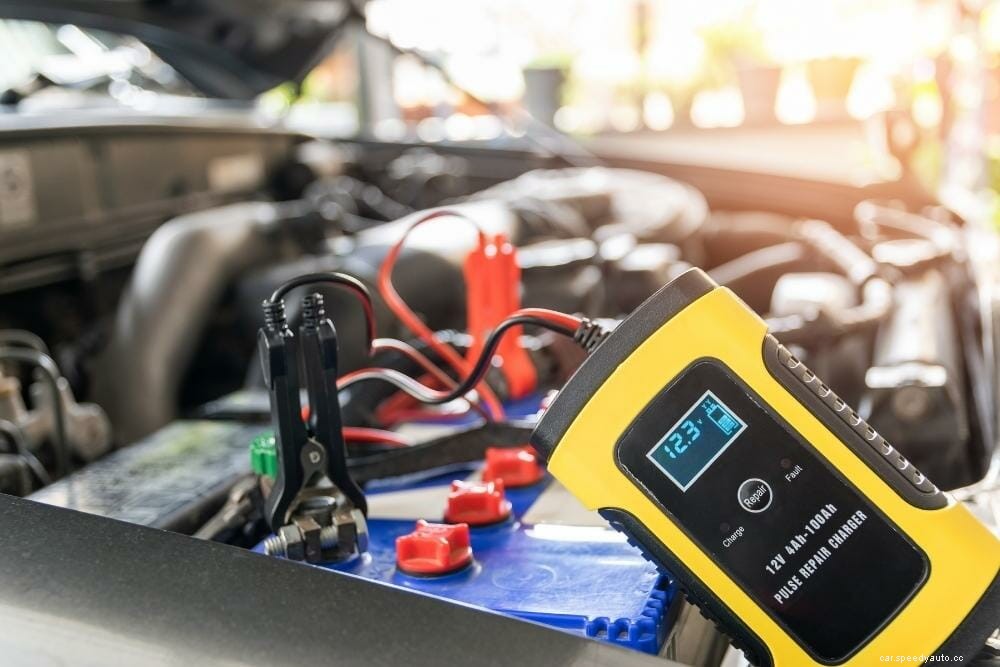
The amp meter on a battery charger measures the electrical current flowing into the car battery and the amount of energy inside the battery: the ‘draw’ of energy and the ‘continuity’ of the electrical current. Your amp meter will show you how much power your battery has and will also monitor the amperage as the car battery charges.
You can use a digital or analog amp meter to monitor the amps moving through the electrical current to your car battery. Digital amp meters are easy to read, they do not have moving parts and all the data is displayed on an LED screen. However, analog amp meters have a moving needle and can be a little trickier to interpret.
To help you know how to read an analog battery charger amp meter, we have put together an easy-to-follow step-by-step guide.
Before you are able to read your amp meter you will first need to safely attach your charger to the car battery. Here is a brief guide on how to connect a charger to a car battery:
Step 1 – Remove all jewelry and wear protective eye goggles.
Step 2 – Make sure the car engine is turned off and disconnect the car battery.
Step 3 – The charger should be turned off when you connect it to the battery.
Step 4 – Connect the positive battery charger clip to the battery’s positive terminal and connect the negative clip to the negative terminal. Do not get this step wrong, the positive cable will be red and the negative will be black.
Step 5 – Turn the charger on. It will immediately begin to charge your car battery and once the needle has settled (if using an analog amp reader) you will be able to monitor the electrical current flowing into and powering the car battery.
Now you know how to attach a car battery charger safely and correctly, you need to understand how to read the amp meter.
Reading a digital amp meter is fairly straightforward, we will only be providing instructions on how to read an analog battery charger amp meter.
Step 1 – When you switch the battery charger on the needles on the amp meter will move up and down on the scale before it settles on the correct reading.
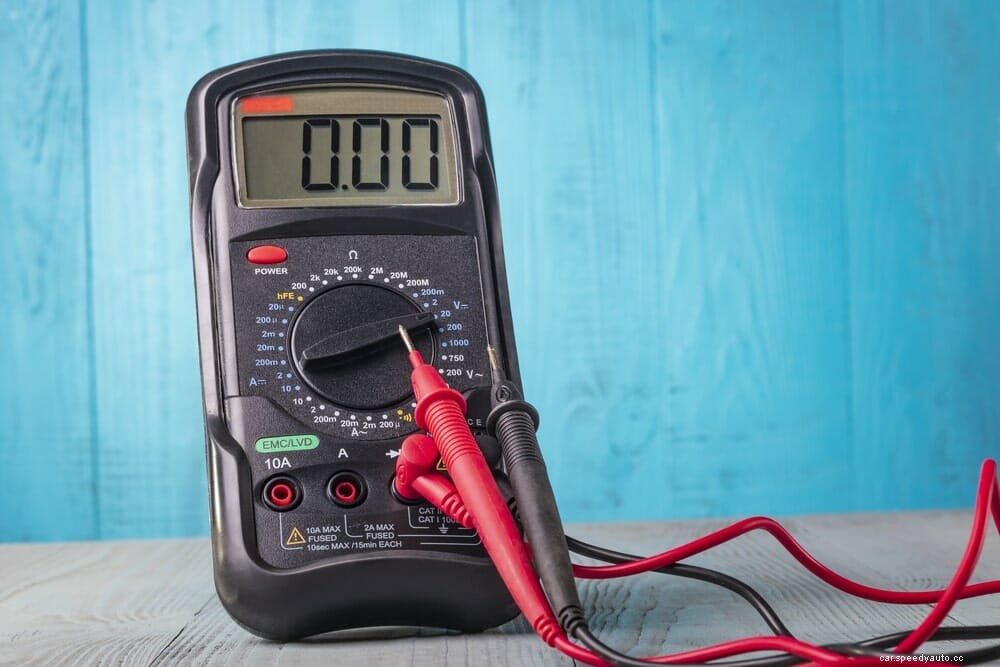
Step 2 – After a few moments, the needle will settle in one place, this will be an accurate amp reading. This amp reading should match the setting you selected for your charger, 10 amps or 2 amps, for example. You will also be able to read the current charge of the battery, this will be the % the needle is pointing at.
Step 3 – If you want a slower charge, change your battery charger to the 2 amps setting. The needle on your amp meter will move towards 2 on the ‘charge rate’ along the bottom to match. For a quicker charger, use the higher setting.
Step 4 – As the charger does its job, the needle on the amp meter will drop from 10 amps (if set to 10amp setting) and move slowly down towards 0 amps.
Step 5 – When the battery charger displays a sharp drop in current being delivered to the battery, this means it is delivering its maximum output of energy to charge the battery.
Step 6 – As your battery becomes close to being fully charged, the charger delivers fewer amps to the battery. The needle on the amp meter will point to decreasing amps on the charge rate at the bottom of the amp reader. When your battery is fully charged this needle should point at zero, as no more amps are flowing from the charger into the battery.
Step 7 – You can also read the percent charged monitor on your amp meter. This reading shows you how much charge is in your car battery. The needle will point to the current charge in your car battery and as the battery charges, the needle should move to the left, ending on 100% when the battery is fully charged.
Step 8 – As well as numbers, the displays on your amp reader also have green and red triangles. These triangles do not provide you with any additional information, but they can help you to better understand what the needles are pointing at. The red triangle refers to the charging rate you have selected, 10amps or 2amps, for example. The green triangle displays how much energy is required to fully charge the battery. As your battery charges, the needle should move from the red triangle into the green triangle.
Your car battery charger should be a minimum of 10% of your car battery’s Ah rating. If your car has a 100Ah battery you would need to use at least a 10 amp charger. If you want to charge your car battery more quickly, you can use a higher amp battery charger.
If you are using a 12 amp setting on your battery charger, you will know when the charging process is complete when the needle settles around 6 amps, or just below. If you are using a 2 amp setting on your battery charger, you will know the battery is fully charged when the needle settles near the end of the small red triangle on the amp meter.
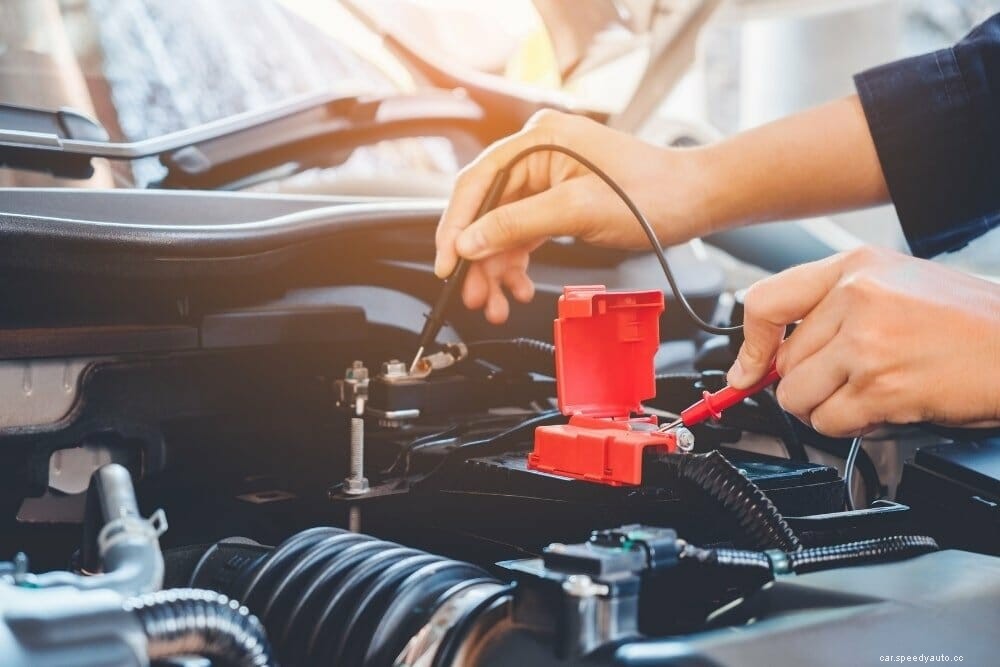
You can charge your car battery when it is connected or you can disconnect it first. It is always best to disconnect the battery before you charge it. By disconnecting the battery you can give it a clean prior to connecting the charger. It is important to always disconnect the negative lead first and reconnect it last (the negative lead is black).
You must always use a battery charger that is able to charge your battery without causing damage. Higher amp chargers may overcharge and damage smaller batteries or batteries with a low Ah rating. Using a 2 amp charger is a good option when charging smaller batteries, motorcycle or mobility scooter batteries, for example.
Also, if you intend to leave your car unattended while charging the battery, a 2 amp battery charger is your safest option as they take a long time to charge large batteries and you will not have the risk of overcharging the battery. Ten-amp battery chargers and higher amp alternatives are great for charging car batteries quickly.
To determine whether your car battery is fully charged you can either measure the amps using an amp meter or the volts using a voltmeter. We have shared how to read if your battery is fully charged using an amp meter in this article. If you want to know the volts running through your car battery, you can measure this with a voltmeter. A fully charged car battery should measure 12.6 volts or above.
Charging a car battery is a simple process, but it is important to know when your battery is fully charged. Knowing how to correctly read an amp meter will help you to monitor the charge of your car battery and be aware of how many amps are being passed from the charger into the battery.
We have shared an easy-to-follow step-by-step guide in this article and we hope you now have a better understanding of how to read a battery charger amp meter.
Find other relevant tips from VehicleFreak in these posts:
How Long Does a Car Battery Last?
Can A Car Battery Die While Driving?
What Happens If A Battery Runs Out Of Water?
