
Maintainance is key to increasing the lifespan of an engine. One of the aspects of maintenance is keeping your fluids at an optimal level. Adding coolant is one of the easiest parts of maintenance. But how do you add coolant the right way? Let us discuss the steps of adding antifreeze the right way, and why you even need it.
Antifreeze or coolant is simply the liquid that acts as the coolant for your engine. It is what maintains the temperature of the engine at optimal. By doing so it ensures that the engine is working properly and it is performing at its best. During the hottest summers or the coldest winters, the antifreeze works to keep your engine running.
Without antifreeze, chances are your engine will have a hard time running. It will not be efficient nor perform at its fullest capability. Ultimately, it could end up failing altogether.
Antifreeze is a water-based liquid. Some might even use water as antifreeze. Some people tend to use water as antifreeze. Water can cool down the engine and keep it at optimal temperature. Though it has cooling properties, it can corrode the system. So can you use water as antifreeze?
In case of emergencies, you can but if you are planning to use it regularly, it is not such a good idea.
The problem is that water freezes at low temperatures. A frozen solid coolant cannot flow. So in cold climates, water will not be such a good idea. Due to this, we tend to use a water-based coolant. It is mostly water. But to keep it from turning rock-solid, certain compounds are added.
Ethylene glycol, polyproline glycol, Methanol, or a similar compound is added to keep the water from freezing. It will help water to stay as liquid, and still maintain its properties to absorb heat from the engine.
The radiator that is at the top of the engine, is what stores the coolant. From there it flows around the engine. It is pumped using a water pump, and it circulates the engine and gets back to the radiator.
The coolant starts its journey from the radiator. It is pumped through hollow structures called water jackets. These water jackets run through the engine.
The coolant absorbs all the heat from the engine and comes back to the radiator. The heated coolant moves through thin tubes inside the radiator. It is cooled by the flow of air coming in. The coolant immediately drops down in temperature and is ready to go on another lap around the engine.
This process goes on continuously as long as you drive. Usually, the water pump is powered by the crankshaft of the engine.
You might have heard drag racers purposefully remove their water pumps. If so you might be wondering, they are driving without coolant, why can’t you?
Drag racers drive short distances. Races are finished within a minute. Therefore their engine is not going to overheat so soon. Blown engines are common in drag racing, but are rarely caused by the lack of a water pump.
The reason why they remove their water pump is to add some extra horsepower to the wheels. The water pump is powered by the crankshaft. When the water pump draws power from the engine, the output on the wheels is reduced. Removing the water pump gives them a few extra horsepowers that could decide the race.
You cannot do the same with your daily driver. One of the reasons is that you will be driving for long periods. This will allow the engine to overheat. And you are not in a race, 10 more horsepower is not going to make a big difference. Therefore you should never drive without coolant.
The primary task of antifreeze is to maintain your engine’s temperature. As you already know, the engine is made out of multiple metal components. When the engine operates these metal components rub against each other. This builds up immense amounts of heat.
The optimal engine temperature is around 190 to 210 degrees Fahrenheit. This is around 74 degrees Celcius. At this temperature, your engine will perform the best. When the engine temperature rises to about 230 degrees Fahrenheit, your engine overheats. There are a ton of risks associated with an overheated engine.
Without coolant to reduce the temperature, the friction will steadily increase the temperature to the point at which your engine overheats. This is exactly why you need antifreeze. As it circulates around the engine, it absorbs the heat in metal components. This cools down the engine and prevents it from overheating.
Other than the cooling factor, antifreeze has a few more benefits as well. Antifreeze helps avoid corrosion, prevents scale build-up, and lubricates your engine. Apart from these, by maintaining the temperature of your engine, antifreeze helps reduce air pollution.
Adding coolant to your car is a simple task. Anyone can do it, no matter how inexperienced you are working on automobiles. Whether you are just topping off your coolant or going for a coolant flush, there is a process behind it.
It all starts with getting the right type of coolant.
It would have been convenient if the same coolant was used in every car. Unfortunately, it isn’t. Different manufacturers suggest the usage of different coolants. With time, even the manufacturing process of coolant has changed.
If you go shopping for antifreeze, you will see different brands and different names. There are a few different types of coolants in the market. Some of those types are Inorganic Additive Technology, Organic Acid Technology, Hybrid Organic Acid Technology, Phosphate-Free Hybrid Organic Acid Technology, Phosphated Hybrid Organic Additive Technology, etc…
Among these 3 stand out as the main types of antifreeze.
This coolant is produced using ethylene glycol, with phosphates and silicate. This is often found in green color. This is a type of coolant that has been around for a while.
This is excellent at preventing corrosion. But it is considered to be weak at removing debris from the system. This is because some of the newer coolants are great at cleaning the dirt and debris from the system.
Another factor that makes Inorganic Additive Technology obsolete is its lifespan. This coolant tends to last for about 24,000 miles or 2 years. Compared to new brands, this is quite a short lifespan.
This is primarily made out of propylene glycol. This is dyed orange to be able to distinguish it from other liquids.
This is a type of coolant that is used by General Motors and Volkswagon. Unlike Inorganic Additive Technology, this type can last a lot longer. Vehicles that use this formula require a change only after 50,000 miles.
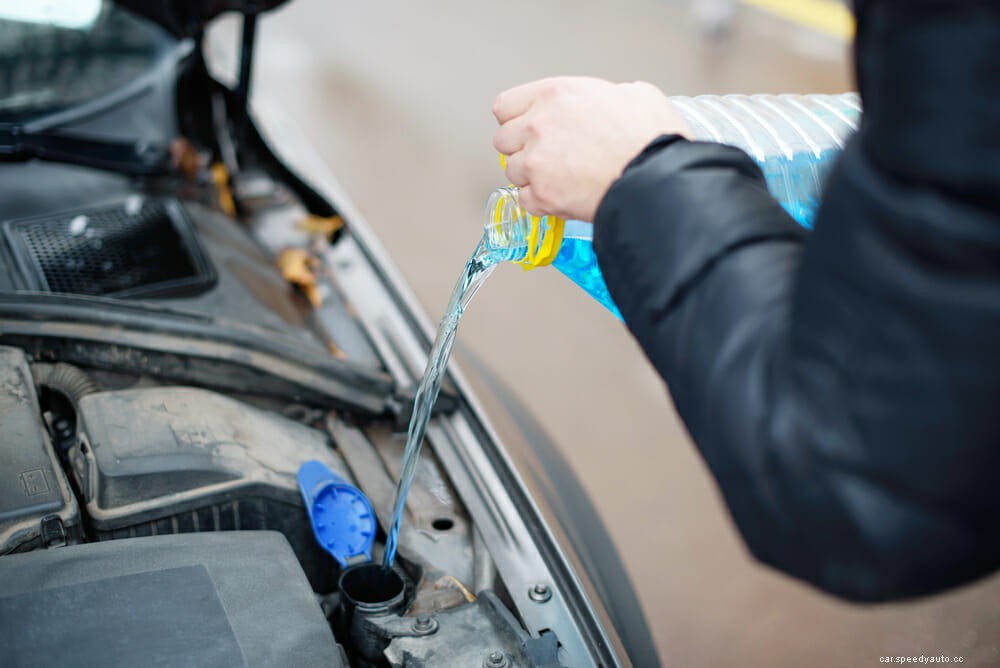
Finally, we have the hybrid organic acid technology. This is made out of organic acid and silicates. You might see this in a variety of colors such as yellow, pink, blue, or orange. But it is more commonly seen as a yellow coolant.
Due to silicate addition, it is a great liquid to prevent corrosion. This type has a lot of variations as well. Remember talking about coolant types like Phosphate-Free Hybrid Organic Acid Technology and Phosphated Hybrid Organic Additive Technology. These are derived using Hybrid Organic Acid Technology.
This is probably one of the most popular types of coolant in the market. These are used in Ford, Chryslers, and most European cars.
This also requires a change after about 50,000 miles. Sometimes manufacturers suggest a different period for replacement. If so you need to follow the manufacturer’s suggestion.
The best way to find the correct coolant for your car is to go to the dealership. They will suggest the coolant that works well with your exact model. This will be 100% accurate. So you do not have to worry about getting the wrong type of coolant.
Another option would be the owner’s manual. This would also have suggested a specific type of coolant. This time you have to go to the store and find the exact coolant.
Finding the exact type of coolant is a challenge in itself. You shouldn’t depend on color in this case. Just cause you poured yellow coolant last time, you shouldn’t pick a yellow coolant this time. As you might have noticed earlier, coolants are produced in a variety of colors. Different manufacturers use different colors. So you need to read the description properly and find out the exact type of coolant before you purchase it.
The last way to find out the right type of coolant for your car would be through the internet. As long as you choose the right source to get the information you need, it will be accurate.
Now that you know which antifreeze type you should purchase, we can start adding the antifreeze to your car. Finding the right antifreeze is actually the hardest part. Adding it to your car is child play.
Start by turning your engine off. Make sure your car is parked at a safe spot and the parking brake is on.
Wait till the engine cools down. Operating on a hot engine is never a good idea. One of the reasons is that you could get injured. Almost every square inch of the engine will be hot. Wherever put your hand on, you’d be risking a burn.
Other than that operating on a hot engine will also make you lose focus, thus make mistakes.
Let the engine cool for at least 15 minutes before operating on it. In the case of antifreeze replacement, you have no other choice. The radiator cap is one of the hottest things you’d find in an engine. So, wait patiently till the engine cools down.
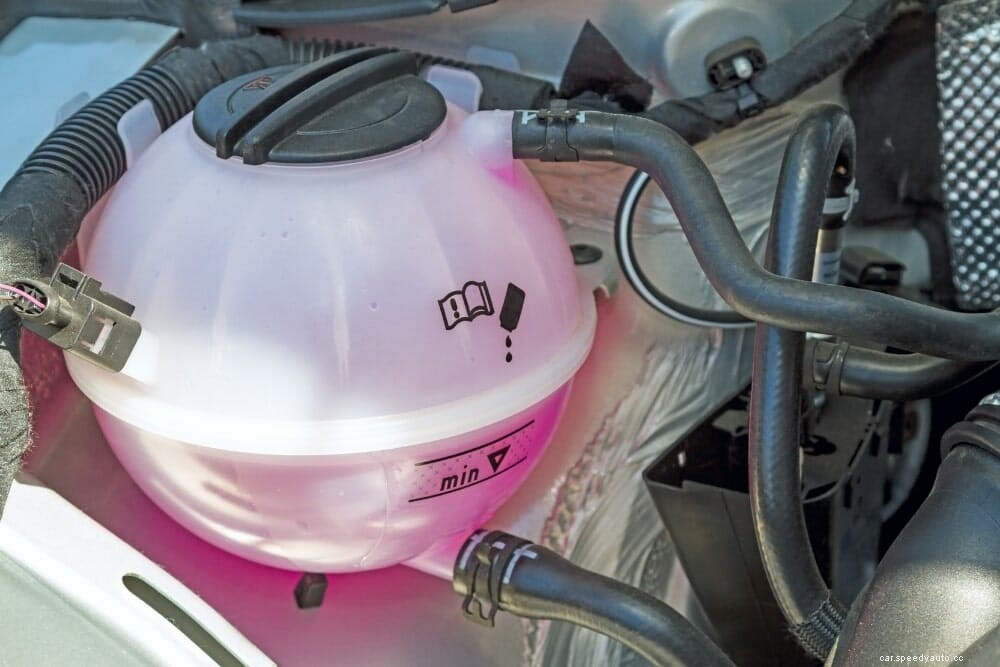
Next, you have to locate the coolant reservoir. This is pretty easy since it is a big component and is meant to be easily accessible. If you can’t find it right away, here’s what you should look for.
The reservoir is basically a big white tank. It has a colored lid which is usually yellow. Further, you will notice that it has warning signs saying that you should not touch it while the engine is hot.
Once you know what you are looking for, finding it is simple.
Check your coolant levels before adding more. The coolant reservoir is transparent. So you can easily check the coolant levels. You should be able to understand whether you need to add coolant with one glance.
If you do not know what is the optimal level, do not worry. On the exterior of the tank, there are lines to indicate the minimum and maximum levels. With a transparent container and a brightly colored liquid, you do not even have to open the cap to check fluid levels.
Now that you know the level of coolant you have in your reservoir, you can decide whether it needs to be topped off. If you think that you need to top off your coolant reservoir, make sure to remove the cap safely. Make sure it is not hot before you grab it. Try not to damage the cap as you remove it.
Use a funnel to add the antifreeze. You do not want coolant anywhere other than the reservoir. Top it off as necessary.
Finally, finish it off by putting the cap back on. Make sure to fasten the cap properly. The system is pressurized, so you do not want to have gasses entering or leaving the reservoir.
If you want your entire cooling system to run with brand new antifreeze, you might want to flush your coolant first. Even though it might sound a bit complicated, it is still a simple process that you can do on your own. The process is exactly the same as we looked at previously, except for one additional step. You have to drain the coolant, before adding the new liquid.
As mentioned in step 01, you should wait till the engine cools down completely. To make the process easier and more comfortable, jack up the front tires. This will give you more room to work under your car making it easier.
Now crawl under and find the radiator drainage valve. If you are having trouble finding it, try looking at the area directly below the radiator. Make sure to place a large enough vessel to collect the fluid, that you’d be replacing. Open the valve and let everything drain out.
For a complete flush, you need to follow this step as well. Once you removed the old liquid, close the radiator drainage valve. You will see that the coolant reservoir is now empty. Fill that with clean water. Now start the engine and let it run for about 15 minutes.
This will ensure that water flows through the entire cooling system, and drags any trace amounts of old coolant left. Repeat the procedure and drain the water that you poured in. Once you’ve got everything out of your system, close the drainage valve.
Now you can follow the exact procedure that you go through to top off your coolant.
The best way to know when you need antifreeze is to check it. It is a good practice to regularly pop the hood open and check your fluid levels. Checking the level of the antifreeze isn’t hard either. All you need to do is open the bonnet and take a peek inside.
But if you are not someone who regularly checks fluid levels, it is all right you have a few signs that you can look out for.
The first sign is an overheating engine. This doesn’t mean that you need to check the heat of the engine every time you drive. When an engine overheats, the check engine light will illuminate. There is also an engine temperature warning. So when one of these lights illuminates, it is worth checking your antifreeze levels and topping it off as necessary.
Here are some of the most common questions about how to add coolant to a car.
Flushing and replacing coolant is a part of a vehicle’s scheduled maintenance. It is recommended that you flush your coolant every 2 years or 30,000 miles. Though it is not necessary to do so, it is a good practice.
With time coolant will become dirty. It drags all the impurities and with time it will lose its capabilities. Flushing your coolant will lubricate the cooling system better. By removing the dirty coolant, you will be removing harmful deposits and scales that can damage your radiator.
New coolant does a better job at protecting your engine against rust. So flushing your coolant every 30,000 miles is worth it.
This is one of the cheapest aspects of maintenance for your car. This is an easy task and you should try to do it yourself, even if you are not handy with tools. Even if you are paying a professional to do it for you it will not cost more than $50. By doing this yourself you can save a good chunk from that $50.
It is not necessary that you keep your coolant filled to the brim all the time. More than 50% in your reservoir is enough to keep your engine temperature maintained.
You should always try to keep it at least one-third of the way full at all times. This will make sure that your engine is in perfect condition and doesn’t suffer any damage from overheating.
Usually, antifreeze and coolant refer to the same thing. But there is a small difference between the two. Antifreeze is a concentrated glycol-based liquid. This is mixed with other compounds that benefit the engine. This mixture needs to be diluted with water before use. When it is diluted, it becomes a coolant.
On the other hand, coolant is a mixture of antifreeze that has already been diluted. This is a prepared solution of antifreeze and water.
Are you afraid that your engine will be damaged if you add coolant while the engine is still hot? Your engine will not be affected in any way. The same can’t be said about your safety.
The radiator cap reaches temperatures 210 degrees Fahrenheit. If you try to remove the cap at this temperature, you will get burnt. Other than thte initial, temperature, you will be bombarded by the steam exiting the coolant reservoir. The reservoir is basically a preasuer cooker when the engine is hot.
Waiting patiently for 10 to 15 minutes until the engine cools down will be worth it.
Antifreeze is the main fluid that helps keep your engine cool. Engines are made of a ton of metal parts that rub together when operating. The friction that is produced can easily overheat and damage the engine. Your coolant makes sure that doesn’t happen.
For the well-being of your engine, you must regularly make sure that you have enough coolant in your tank to cool the engine. If you notice that the coolant levels are low, you must top it off as needed.
Adding coolant to your car is not a hard task. It doesn’t take a lot of your time. So you should never starve your engine of antifreeze. Now that you how to put coolant in a car, that is how to add antifreeze the right way, you do not need to dread thinking about your next coolant replacement.
