
Whether you’re moving into a new place or transporting business cargo, the U-Haul is an invaluable tool. Renting the truck is not particularly expensive, and as long as you know how to drive one, you’ll save a ton in comparison to a professional moving crew.
One of the downsides of a U-Haul is that you have to put in the fuel yourself, which leads to the question – what type of fuel do U-Haul trucks take?
The majority of U-Haul trucks take unleaded gas, with a few diesel options. The gas mileage depends on the size of the truck, city or highway drive, and the weight of your cargo.
U-Haul truck rentals are an excellent way to move your belongings from one place to another, whether you’re moving across town or the country. But what exactly is a U-Haul truck?
A U-Haul truck is a specially designed moving truck available for rent from U-Haul locations across the United States. These trucks are specifically designed to make moving large items and lots of belongings easier and more convenient.
U-Haul trucks come in a variety of sizes, so you can choose the perfect size for your needs. The most popular size is the 26-foot truck, which can hold up to four bedrooms worth of furniture and belongings. But if you’re moving to a smaller home or apartment, a 16-foot truck may be more than enough.
Each U-Haul truck comes equipped with a ramp for loading and unloading heavy items, as well as tie-downs and furniture pads to keep your belongings secure during transport. You’ll also find a dolly on board to make it easier to move boxes and other smaller items.
When you’re ready to rent a U-Haul truck, simply visit the nearest U-Haul location or book online. Then, just show up at your chosen pick-up time and drive away – it’s that easy!
All moving trucks are generally assumed to be diesel, but this isn’t always the case. While U-Haul has both fuel types available, gas trucks are slowly taking over.
The main reason for this change is the increased fuel efficiency of gas trucks. With the price of diesel steadily rising, it’s no wonder that people are making the switch to gas.
However, there are still some advantages to diesel engines that you should consider before making your decision.
Diesel engines tend to be more powerful than gasoline engines and can tow heavier loads. They also tend to last longer, with many trucks going over 500,000 miles without any major problems.
On the other hand, gasoline engines are cheaper to maintain and easier to find parts for. They’re also much quieter than diesel engines, which can be a major selling point if you’re looking for a moving truck that won’t disturb your neighbors.
So, which type of engine is right for you? If you’re looking for a powerful truck that can tow a heavy load, diesel is the way to go. However, if you’re looking for a cheaper option that’s easier to maintain, gasoline is the better choice.
Ultimately, the decision comes down to personal preference and what you value most in a moving truck. Whichever type of fuel you choose, U-Haul has you covered.

When it comes to deciding between a gas or diesel U-Haul, there are a few things you should take into consideration.
First, think about what you’ll be using the truck for. If you’re planning on doing a lot of heavy lifting and need a truck that can tow a large load, diesel is probably the way to go.
On the other hand, if you’re just looking for a cheap way to move your belongings from one place to another, gasoline may be the better option.
You should also consider how much money you’re willing to spend on fuel. Diesel is typically more expensive than gasoline, so if you’re on a budget, gas may be the better choice.
Finally, think about convenience. Gasoline is widely available and easy to find, while diesel can be more difficult to come by.
It’s no secret that diesel trucks are more fuel-efficient than their gasoline counterparts. But what about when it comes to the environment? Are gas U-Haul trucks really better for the planet?
Diesel trucks emit less carbon dioxide than gasoline trucks do, but they still release other harmful pollutants into the air. In fact, diesel trucks are responsible for a large percentage of the smog in cities. They also produce more particulate matter, which can cause respiratory problems.
So, while diesel U-Haul trucks may be more fuel-efficient, they’re not necessarily better for the environment. If you’re looking to rent a truck that’s good for the planet, you might want to consider renting a gas truck.
Here’s a quick guide to help you pick the perfect U-Haul truck for your needs:
U-Boxes – Convenient for moving and storage containers can be delivered right to your door. Perfect for long-distance moves or storing your belongings while you’re in between homes.
| Sub Category | Pickup Truck | Cargo Vans | 10′ Truck | 15′ Truck | 20′ Truck | 26′ Truck |
| Home Size | Studio Apt Small Loads |
Studio Apt Deliveries |
1 Bedroom Apt | 2 Bedroom Apt | 3 Bedroom Apt | 3-4 Bedroom Home |
| Equivalent Storage Size |
5′ x 10′ x 8′ | 5′ x 10′ x 8′ | 5′ x 10′ x 8′ | 10′ x 10′ x 8′ | 10′ x 15′ x 8′ | 10′ x 20′ x 8′ |
| Sub Category | Pickup Truck | Cargo Vans | 10′ Truck | 15′ Truck | 20′ Truck | 26′ Truck |
| Equivalent Truck Sizes |
6′, 7′, 8′ | 7′, 8′ 9′ | 9′, 10′ | 11′, 12′, 13′, 14′, 15′ |
16′, 17′, 18′, 19′, 20′ |
21′, 22′, 23′, 24′, 25′, 26′ |
| Interior Dimensions Storage Size |
7’10” x 5’2″ x 1’9″ | 9’6″ x 5’7″ x 4’8″ | 9’11” x 6’4″ x 6’2″ | 15′ x 7’8″ x 7’2″ | 19’6″ x 7’8″ x 7’2″ | 26’2″ x 8’2″ x 8’3″ |
| Deck Height From Ground |
3′ | 2’5″ | 2’5″ | 2’10” | 2’11” | 2’11” |
| Deck Length | 7’10” | 9’6″ | 9’11” | 12’5″ | 16’10” | 23’5″ |
| Volume | Open Bed | 245 cu. ft. | 402 cu. ft. | 764 cu. ft. | 1,016 cu. ft. | 1,682 cu. ft. |
| Gross Vehicle Weight | 6,700 lbs. max | 9,000 lbs. max | 8,600 lbs. max | 14,500 lbs. max | 14,500 lbs. max | 25,999 lbs. max |
| Sub Category | Pickup Truck | Cargo Vans | 10′ Truck | 15′ Truck | 20′ Truck | 26′ Truck |
| 34 Gallons | 25 Gallons | 31 Gallons | 40 Gallons | 40 Gallons | 60 Gallons | |
| Fuel Tank Size | 34 Gallons | 25 Gallons | 31 Gallons | 40 Gallons | 40 Gallons | 60 Gallons |
| Miles per Gallon | 19 | 18 | 12 | 10 | 10 | 10 |
| Miles per Tank | 646 | 450 | 372 | 400 | 400 | 600 |
The U-Haul Environmental Fee is a charge assessed to customers for the company’s environmental protection efforts. This fee helps offset the cost of recycling and disposing of materials used in U-Haul operations, as well as funding other environmental initiatives undertaken by the company.
While the specific amount of the fee varies depending on location, it is typically a few dollars added to the total cost of renting a U-Haul truck or trailer.
U-Haul has been working to reduce its environmental impact for many years. The introduction of the Environmental Fee is just one more way that the company is working to operate in a more sustainable manner.
In addition to recycling and disposal programs, U-Haul also invests in energy-efficient vehicles and solar-powered facilities.
The company’s efforts to reduce its environmental impact are paying off, as U-Haul was recently named one of the most eco-friendly companies in America by the Environmental Protection Agency.
So, when you see the U-Haul Environmental Fee on your next rental bill, know that it is helping to support a company that is working hard to protect the environment.

Some states require that you stop at weigh stations if you are driving a U-Haul truck. However, generally speaking, you do not have to stop at weigh stations when moving residences with a U-Haul truck. Check with the Department of Motor Vehicles in your state to be sure.
To drive a U-Haul truck, you will need a valid driver’s license. You do not need a special driving license to operate a U-Haul truck. However, you must be at least 21 years of age to rent a U-Haul truck.
No, you do not have to return the U-Haul truck on the same day that you rented it. You can keep the truck for up to 30 days. After 30 days, there is a daily fee for every day that you keep the truck.
Yes, you can put your furniture in storage if you’re not ready to move into your new house. U-Haul offers a variety of storage options to meet your needs.
If you’re finished using your U-Haul truck, there are a few things you need to do before returning it.
First, check your rental agreement to see where you’re supposed to return the truck. You should also make sure the truck is clean and empty before returning it.
Finally, fill up the gas tank, so you don’t get charged for fuel. Once you’ve done all of that, you can return the truck to the location specified in your rental agreement.
If you have an In-Town Rental agreement, it must be returned to the location where you picked it up. All One Way contracts will include a return address or a phone number to allow you to drop the truck off in the city you’ve moved to.
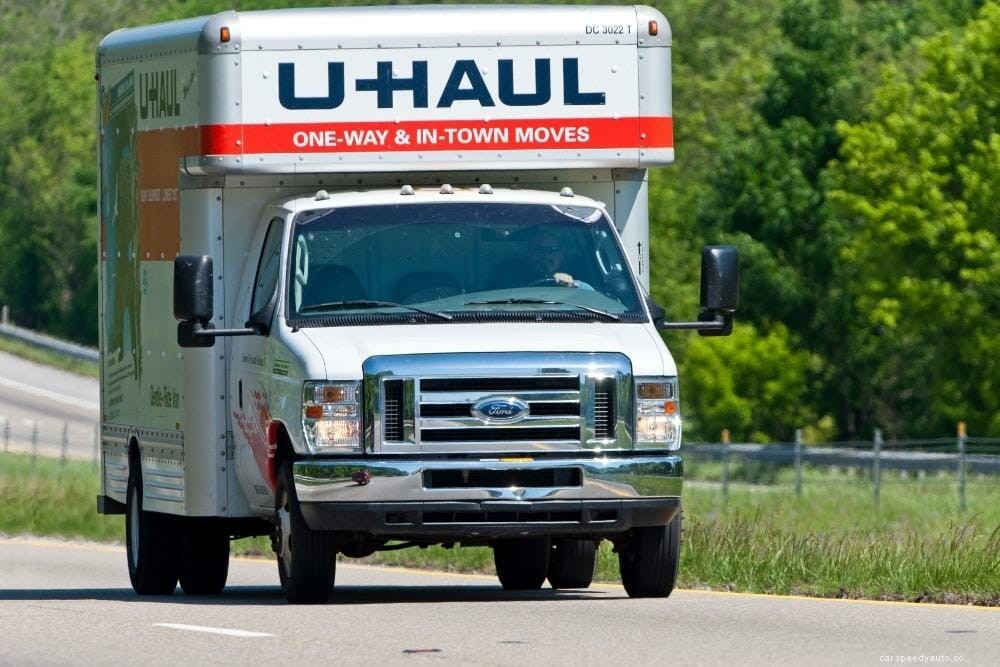
Generally speaking, U-Haul trucks run on unleaded gasoline, although there are some diesel options available.
The decision between the two comes down to how far and how heavy of a load you plan on hauling. For shorter distances, going gas or diesel won’t make much of a difference, but long-distance travel can be a lot cheaper if you get a diesel.
