
It can happen at any time without warning. Sometimes, it happens intermittently and will disappear altogether.
Hey I’m Vince –
Have you ever wondered why your steering wheel shakes at high speeds? I’m talking about a wobbly, shaking, or vibrating steering wheel when driving your car. Have you ever felt this before? If not, you’re in luck. But if you’re reading this, I assume you’re searching for the cause of that irritating wobble or shaking of the steering wheel.
Don’t worry too much. If the car is still good enough to drive despite the problem, you might be dealing with an issue on the tires, suspension, brakes, or wheels. Those are the first things that need to be checked at the first sign of a vibrating steering wheel.
First things first
if your car is relatively new and still covered by the warranty, take it back to the dealership. Let them handle the repairs. With their plethora of sophisticated diagnostic machines, an expert technician can easily determine the cause of a shaky or wobbly steering wheel.
However, if you have an older car, keep reading because you may be able to fix it yourself. There are many possible causes of a vibrating steering wheel while driving. If you notice this symptom the next time you go for a drive, stop the car in a safe place, activate the hazard lights, and check the front tires for damage or cupping. We’ll discuss more on this later.
But if the steering wheel vibrates when you step on the brake pedal, you might be dealing with warped brake rotors or faulty calipers. Do you feel the steering wheel vibrating or shaking only at low speeds? You might need to purchase new tires.
You see, the list of possible causes will vary. So let’s get down to business.
Remember that tire wobble is consistent at a specific vehicle speed. You might feel the steering wheel vibrate at low speeds and it may disappear as you speed up. Pay attention. I used to have this same problem in my wife’s Mitsubishi Mirage. There is no steering wobble at 15 to 20 mph, but I can feel the severe vibration at speeds of 30 to 50 mph!
Granted the car was still new, I immediately found out the culprit of a vibrating steering wheel at low to medium speeds: inadequate or faulty tire balancing.
That’s right. Something so small and trivial can cause such a worrying problem. Let’s examine the causes of a vibrating steering wheel that only occurs at certain speeds.

If you feel the steering wheel shaking at low speeds or your car is shuddering when accelerating, this is the first sign of tire failure. This sort of problem can also be caused by a badly damaged or bent wheel and cupping tires. But most of the time (and especially at low speeds), you might be dealing with tire separation.
Dont cheap out on your mud tires!
That sounds bad, right? Yup.
Tire separation means the treads are falling apart. This is a serious safety issue, especially if the tires in your vehicle are worn, bald, or if the front tires are more than five years old. Here’s how you should inspect your tires:
Again, if you feel consistent shaking at low speeds, check the condition of the front tires. If you feel the rear of the car shaking or wobbling at low speeds, check the rear tires.
More often than not, premature tire wear or damage is inherent on those cheaper tire brands. I’m not saying cheap tires are inferior (because certain cheap tires are actually good value for money), but if you’re paying way less money on a new set of tires, you better be wary. Inferior quality tires are often constructed using weaker belt seating and tread layers, which will result in ‘oblong’ tires.
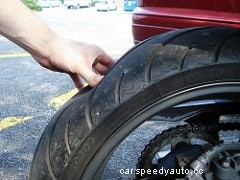
In some cases, premature tire damage or wear can also be caused by suspension or alignment issues. Worn out suspension components will severely affect how the tires are making contact with the road surface. If there is excessive play in the suspension, maintaining the proper wheel alignment will be next to impossible. This problem can cause severe tire wear or uneven tread wear.
If you previously felt the vehicle pulling to one side in straight-line driving, and there are now vibrations in the steering wheel, this means one or both tires are wearing unevenly. Pulling can be caused by improper wheel alignment caused by worn out suspension or steering components, bad camber or toe adjustment on the front wheels, or using incorrect tires.
Yes, using a different or wider tire size may cause problems with steering and handling, which in turn will lead to accelerated tire wear. I had a sports coupe equipped with 17-inch wheels. I purchased a new set of wider tires (235/40/R17) to improve the stance of my ride. To my horror, my car immediately had a pulling sensation at the wheel after installing the front tires. After 2-3 days of driving, the tires had signs of uneven wear. I had no choice but to purchase a new set of tires.
To avoid lots of these tire issues, make sure to keep an eye on the Low Tire Pressure light and inflate your tire pressure to their correct levels!

You need to consider two things if you feel the steering wheel vibrating at speeds of 30 to 50 mph. It can be caused by improper tire/wheel balancing, or probably a moderately bent wheel. If you’re not sure, it is best to take your vehicle to the nearest tire shop. The technician will remove the wheel from the hub and run it on a balancing machine. All the existing weights attached to the wheel will also be removed to determine the proper balance.
What does tire balancing do?
Simply put, tire balancing is designed to reduce vibrations in the steering, suspension, and chassis as you drive the vehicle. After fitting new tires to the wheels, the front wheels should be rebalanced with the new tire using a balancing machine. If the machine detects imbalance, the technician will stick or apply corrective weights to the inside of the wheel. This will serve to counteract the unbalanced nature of the wheels and tires.
Most of the time, a vibrating steering wheel at higher speeds can be caused by improper tire balancing or engine and drivetrain issues. There are times when a misfiring engine will transmit the vibrations to the steering wheel, which will cause the tiller to shake or wobble. In some cases, broken or faulty engine mounts or transmission mounts may also cause the steering to wobble.
We recommend grabbing an Android or iPhone OBD2 scan tool and doing a full diagnostics scan.
If all the tires and wheels are fine and you still feel the steering wheel shaking or vibrating as you drive, it is time to consult a professional mechanic. There could be problems with the suspension, brakes, wheel bearings, or the chassis.
As you have learned, there are many possible causes of a vibrating sensation in the steering wheel. This problem is mostly caused by tire issues, so it’s a good idea to check the front tires first before moving on to other possible faults. Early diagnosis is the secret in preventing accidents or damage. If you feel the steering wheel vibrating, have the tires or the alignment checked and corrected. Again, if you feel the steering wheel vibrating at lower speeds, take the car to the nearest tire center immediately.
