
Is your car or diesel pickup suffering from bad fuel injector symptoms? Does your engine not start, sputter, lacks power, cannot rev high, and blows black smoke? If so, you might have a leaking, clogged or broken fuel injector. Read on to learn the most common symptoms and two methods to test these parts!
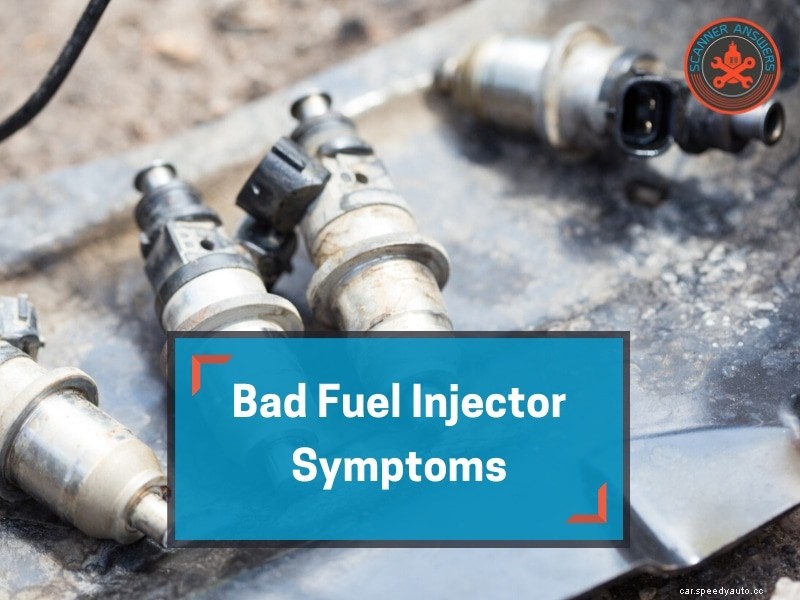
The fuel injectors are responsible for supplying the fuel inside the combustion chamber. When a fuel injector goes badly, it creates a lot of symptoms that are amazingly similar to other engine problems. This is the reason why it takes the proper equipment, skill set, and knowledge to correctly diagnose a fuel injector malfunction. (read more about how fuel injectors work)
Truth be told, there are a variety of ways on how to check for a bad fuel injector. My firsthand experience in dealing with this issue is not a pleasant one. I eventually ended up buying parts that I don’t need, and I learned a valuable lesson there. This article is meant to give you some insight on how to check for a fuel injector malfunction so you can save time and money in fixing your vehicle.
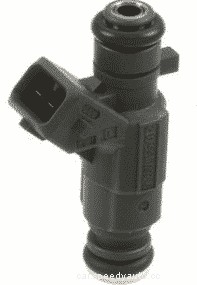
As you can see, the symptoms are aplenty, although it all depends on the make and model of your vehicle and the severity of the issue. In my experience, the symptoms came first before the check engine light.
Some or all of the symptoms listed above can also be caused by other problems like bad or fouled spark plugs, a clogged fuel filter, bad fuel pump, or engine vacuum leaks.
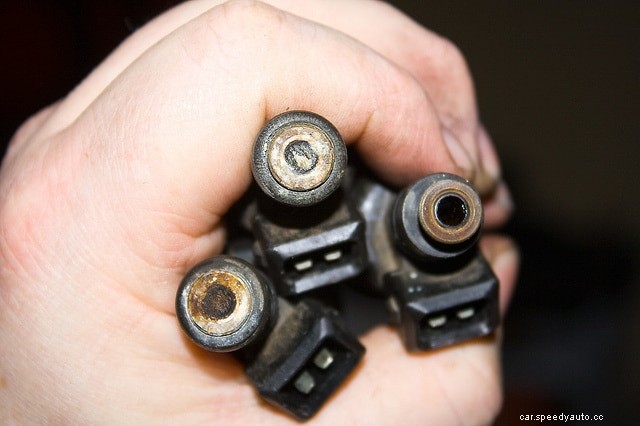
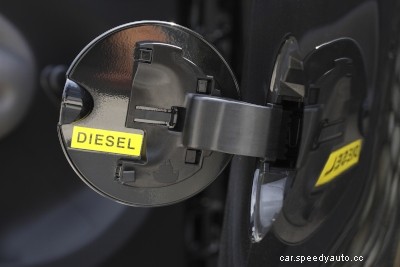
If you’ve got a clogged, broken, or leaking fuel injector in your beloved Dodge Cummins 5.9L or Ford Powerstroke or even Duramax Diesel, you’ll have similar problems as a gasoline engine. However, here’s 4 of the most common engine trouble we’ve noticed in diesel engines
Some might argue that “rolling coal” is the reason to own a diesel, however, if your truck is blowing black smoke it’s a sign that the fuel-to-air ratio is off and likely an injector issue. Leaking fuel injectors in diesels often product a thick black smoke.
A diesel engine requires more fuel to start than a gasser so if your injectors are not performing correctly, your truck is going to have starting issues.
I’ve seen this one usually combined with the black smoke. Because your ECU/ECM cannot control the fuel-to-air ratio properly due to the clogged fuel injector your engine will be burning much more fuel than needed.
Your Cummins motor comes from the factory fine-tuned by master engineers who devoted their life to making sure your truck is cranking out 1,000 Torque… so when parts start going out and you notice no power, this is a sure sign that there’s an issue. Failing Injectors in diesels are a major culprit to loss of power.
Related: Does fuel injector cleaner work?
There are many ways to do it. My mechanic is an eccentric fellow, but he was able to figure out the problem using unconventional methods. I’ll discuss the steps on how to test a fuel injector along with alternative ways to do it.
This is box title ChrisFix did a quick video showing how to test with a Screwdriver. This helps if you’re a visual learner like myself!You can check the condition of the fuel injectors without removing them from the engine.
All you need is a long metal rod or screwdriver. Make sure the metal rod or screwdriver is at least 12-inches long. You’ll use this as a stethoscope.
However, if you happen to have an engine stethoscope lying around in the garage, you can use that as well.
If the engine refuses to start, skip to the next method below.
Find the location of each injector and prepare to listen. For clarity’s sake, the fuel injectors are usually located on the side of the engine near the head or intake manifold. If you have a four-cylinder horizontally-opposed engine, the injectors are on the side of the engine facing the firewall. If you have a V6 or V8, the fuel injectors are on the outside of the V-configuration.
Grab the metal rod or screwdriver and place one end near each injector. Next, move your ear towards the other end of the metal rod and listen for a constant clicking sound. Be careful when doing this. You don’t want your hair or piece of clothing getting snagged on all those rotating belts in the motor.
What you’re looking for is an intense and continuous clicking sound. Move the metal rod to each injector until you find the faulty part. You’ll know you struck gold if the injector is silent or is producing an intermittent clicking sound.
After you singled out the injector that is not making any noise or randomly makes a slight click noise, you’ll want to clean or replace the injector.
Should I replace all fuel injectors at once?
This is a hotly debated issue and comes down to your financial situation. The thinking goes that if one injector is bad, the others are likely to follow. And since you already have the fuel rail off and the Labor invested, might as well swap them all out. But fuel injectors can be expensive (Diesel sets run over $1,000!) to replace all at once.
Bottom Line What I suggest is you consider cleaning and flow testing followed by putting new seals on your injectors. This can be done at home, or you can send them to a company like Fuel Injector Clinic who can test them for $15 bucks a piece.
Naturally, you won’t be able to listen to the fuel injectors if the engine refuses to start. This next method is not for beginners. Make sure you know what you’re doing since you’ll be removing the fuel rail.
I’m glad you asked. Recently I encountered bad fuel injector symptoms on my Ford Ranger and below is a brief story of what my mechanic found when fixing it!
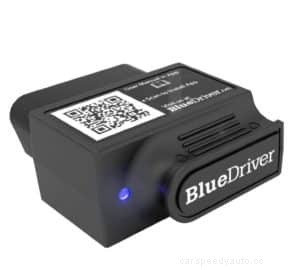
If there’s an illuminated check engine light (CEL), make sure to scan the ECU to get the OBD2 Diagnostic trouble codes (DTCs). In my case, my car had the P0261 code (Cylinder 1 Injector Circuit Low). It’s also common to find a p0300 – p0308, or p0200, p0203, p0201 codes showing.
Three OBD2 scanners we suggest are:
True to form, the fuel injector in cylinder #1 was not spraying fuel when we removed the fuel rail. But since my car was still relatively new (although it already racked up a lot of miles), my mechanic decided to check the wiring harness in injector #1. He refused to believe that my injector is faulty at 70,000 miles! He told me it’s relatively common for fuel injectors to keep working past 200,000 miles, or maybe more.
Lo and behold! The mechanic found a frayed ground wire! He had to peel off the casing on the wiring harness to find it, but he was certain the broken ground wire was causing my engine problems.
But in order to double check, he decided to do something that is more unconventional. He removed fuel injector #1 from the fuel rail and swapped it with injector #2. Now, injector #2 is sitting on the rail of injector #1. Remember he did all this while the fuel rail and the injectors were still removed from the motor.
I cranked the motor and he confirmed that fuel injector #2 is not spraying fuel. This painted a clearer picture of what was going on.
The issue is not caused by a bad injector. It was a basic wiring issue!
Imagine if he didn’t find this earlier and I ended up buying a new set of fuel injectors! The funny thing is you don’t replace just one injector. If you replace one, you need to replace them all!
Long story short, he fused the broken ground wire and tested again. Once fuel injector #1 is spraying fuel, he bolted the rail back to the engine and started the motor. He cleared the trouble code, wrapped the wiring harness with insulating electrical tape, and we went for a test drive.
The moral of the story is simple: diagnosing bad fuel injector symptoms requires sufficient engine knowledge. It’s easy to check for malfunctions but what’s difficult is to verify the real cause of the problem. In my case, the injector was fine. The wiring was the main issue.
