
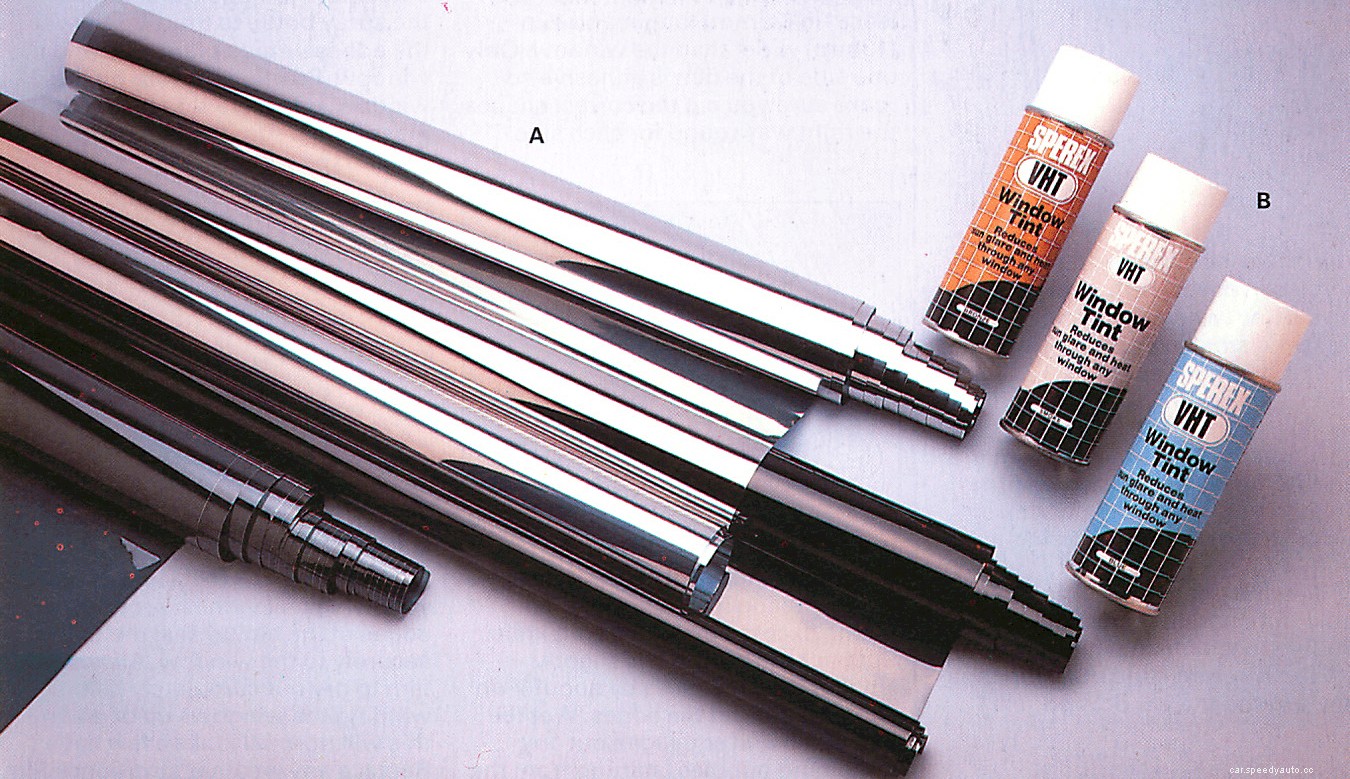
More and more top-of-the-range cars are being fitted with tinted windows as standard. Tinted windows have practical benefits. They provide extra privacy inside the car, making it more difficult for a thief to peer inside for any valuables; they help to protect the upholstery from sunlight, which might otherwise fade the fabric; and they also help keep the interior cool.
You can buy ready-tinted windows from your car dealer and fit them in place of the old ones. But this is very expensive and involves a lot of work. It is simpler to tint the existing windows.
These are available from accessory shops in two forms - as sheets of plastic film that you stick inside the windows, or as a spray-on tint in an aerosol can.
The spray-on tint is the more expensive, but is quicker to apply and generally gives a better result on windows that are curved. The disadvantage is that you can end up with areas of light and dark unless you apply the tint very evenly. Stick-on tints take longer to apply and are generally more fiddly, but if you apply them carefully the result can be better than a spray-on because you get an even tint.
The tints are available in a range of colours - grey, green, blue, gold and even a mirror-effect tint rather like mirror sunglasses.
There are legal restraints on tinting the front windscreen because of the possibility of reducing the driver's vision. Legally, any tint that you apply to the front windscreen must allow at least 75 per cent of the light to come through. And it is illegal to use mirror tints on the front windscreen because of the danger of dazzling other drivers.
If in doubt, it is safer not to tint the front windscreen, although you can put a narrow tinted strip on the top of the screen. Choose one that progressively fades away.
To get a good finish with stick-on sheets you need to work in a warm, dry area out of direct sunlight. The conditions need to be just right or the adhesive may not stick properly.
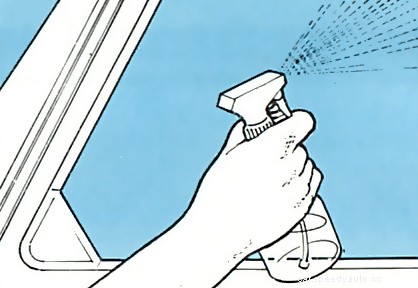
1. Remove weather strips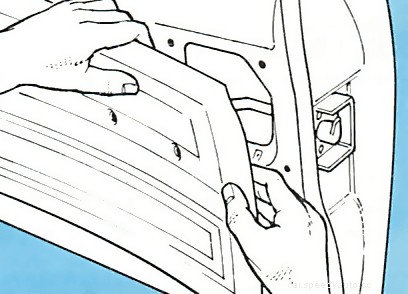 2. Clean the windows
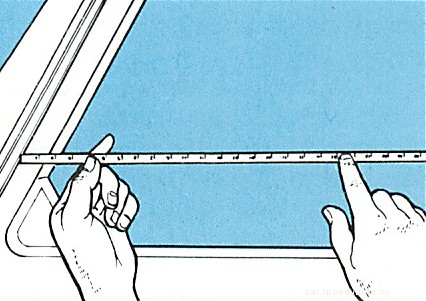
 3. Measure and cut
 4. Sticking on
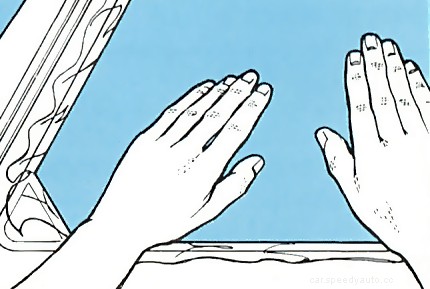 5. Trimming down
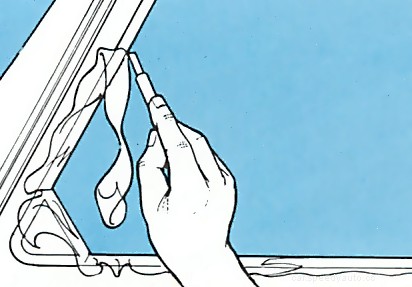 6. Finishing
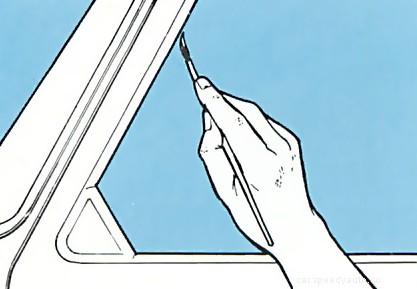
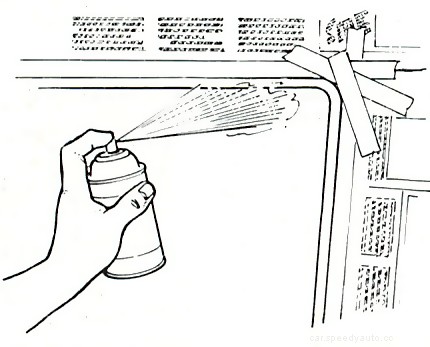 If you are using the spray-on tint, start by cleaning all the glass so it is absolutely free of all dirt, grease and grime. Protect nearby areas of bodywork, upholstery and trim from the spray by covering them with plenty of newspaper and masking tape. Cover up the
dashboard
and instruments too. Take care when masking to get a good 'edge' on the glass.
Wind the window down a small way so you can cover the top edge of the glass. Then, when dry, wind the window a small way up so you can cover the bottom edge.
Shake the spray can thoroughly to mix up the tint material. Holding the can about 6in (15cm) away from the window, spray the glass with firm even
strokes
. Apply the tint more thickly than you would if using a spray-on paint can.
Allow the tint to dry completely and don't operate th'e window-winding mechanism while it is doing so. Finally remove the masking tape from around the window edges.
If you are using the spray-on tint, start by cleaning all the glass so it is absolutely free of all dirt, grease and grime. Protect nearby areas of bodywork, upholstery and trim from the spray by covering them with plenty of newspaper and masking tape. Cover up the
dashboard
and instruments too. Take care when masking to get a good 'edge' on the glass.
Wind the window down a small way so you can cover the top edge of the glass. Then, when dry, wind the window a small way up so you can cover the bottom edge.
Shake the spray can thoroughly to mix up the tint material. Holding the can about 6in (15cm) away from the window, spray the glass with firm even
strokes
. Apply the tint more thickly than you would if using a spray-on paint can.
Allow the tint to dry completely and don't operate th'e window-winding mechanism while it is doing so. Finally remove the masking tape from around the window edges.
