
Power applications in automotives are dynamically experiencing changes and improvements. One of the benefits of slimming down the vehicle body weight is less power energy consumption. Getting more kilometers out of the same amount of energy can be possible by fully exploiting the technology available in the market.
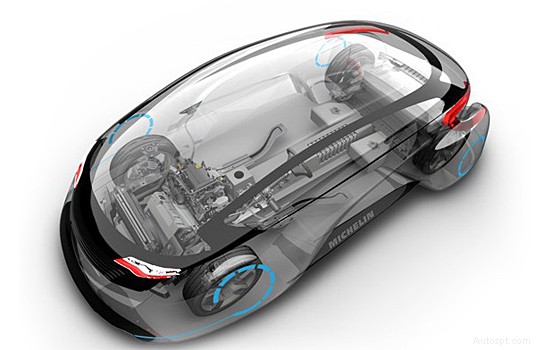
A multitude of innovative concepts, technologies and materials are in the market and are used in the vehicles and transport carriers today. The relative high costs associated hindered the development and implementation of advanced materials and production technologies.
Potential novel materials applications have large scope, but the focus on two issues:
We already discussed reducing structural weight in Automotives Body Weight Reduction that discussed on different materials role in reduction of body weight of automotives. While, innovative automotive electrochemical storage applications based on nanotechnology technical content and scope is:
Ford has come up with volume production plans for large-capacity Li-ion rechargeable batteries that are being made targeting electric vehicles and other applications in automobiles. As per Ford, Li-Ion batteries are the obvious energy storage option for PHEV with 50% less weight and 30% less volume with
Lithium Ion Technology is one of the satisfactory methods that still most car manufacturers would agree for long distance EV use. Energy and power density, cost and safety improvements are needed at a higher ratio. The developmental projects shall solely address the development of innovative materials and technologies for battery components, material architectures and systems for automotive electrochemical storage at cell level within a responsible, sustainable and environmental-friendly approach looking at the entire life cycle.
The effect of the battery properties at the nanoscale across a full cell includes modelling and simulation. The focus is on innovative technologies, architectures and chemistries and should address the issues like:
Proof of concept in terms of product or process is encouraged as is participation from the manufacturing industrial sector within strong interdisciplinary consortia.
Globally many events take place on the power applications in automobiles and the industry members are thriving to bring a breakthrough in the technology.
Ticona Material Innovations for Fuel / Hybrid Systems presented its innovative automotive power solutions at ITB Automotive Energy Storage Systems 2012. Being a supplier of engineering polymers, Ticona showcased material innovations for automotive fuel and hybrid powertrain systems that are solutions for aggressive gasoline, diesel and bio-diesel fuel applications, including ESD polymers and hybrid Powertrain Systems Solutions for battery separator films and power distribution, and materials that can reduce overall system weight to offset battery mass, improve packaging and ensure powertrain reliability.
A123 systems, transportation energy storage solutions are advanced lithium ion energy storage solutions that enable higher performance and increased efficiency in passenger and commercial electric vehicles, hybrid electric vehicles and plug-in hybrid electric vehicles.
The knowledge of electric drive-train technologies allows A123 to work closely with its customer’s fully-integrated system level to help commercialize new vehicle concepts. When compared to other battery chemistries, A123’s automotive class lithium ion battery systems delivers durability, reliability, high power density, extended life cycling, superior abuse tolerance for excellent safety performance and higher usable energy due to a wide usable state of charge range.
The game changing energy solutions are yet to be available full-fledged in the market. Energy storage has become the name of the game in which investments are taking place beyond imagination. A lot of scope and space is available in the market for component and other technical supporters that fall in the manufacturing process of these automotive energy solutions.
