
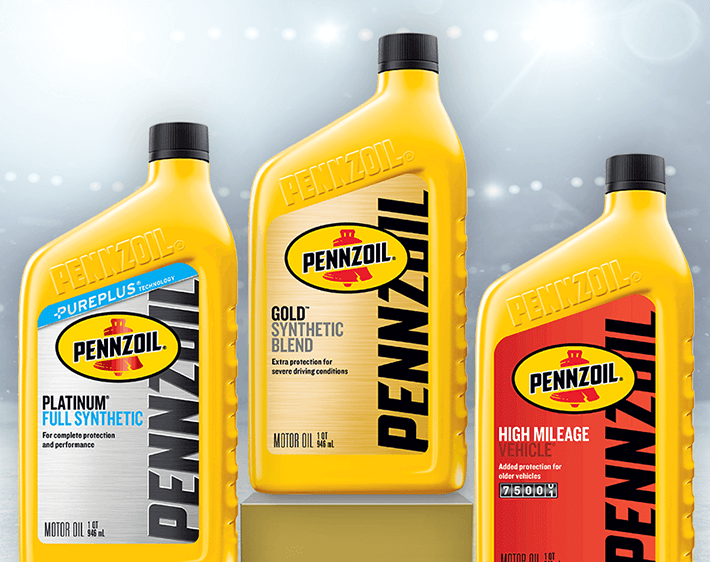
 If the engine is the heart of your car, the oil is its lifeblood. Especially in winter. The season’s single-digit temps can cause your motor oil to flow either too slowly or not at all—which can really take a toll on your engine at startup. And that’s what makes choosing the right motor oil so important.
Motor oil is measured by its viscosity—basically how thick or thin it is. The higher the viscosity, the slower it flows. All motor oils are given a ratings grade by the Society for Automotive Engineers. An example is 5W30—the “W” stands for winter and the oil’s cold weather rating. The lower the W number, the better the oil will perform in colder temperatures. Typically, a 5W oil is recommended for winter use, but synthetic oils can be formulated to flow even more easily when cold. This way, they are able to pass tests that meet the 0W rating.
Today’s motor oil is formulated to be 80% base oil and 20% additives. The base oil can either be conventional, synthetic, or a blend of both. And the additives can include detergents, dispersants, friction modifiers, viscosity index improvers, and more. So which is best?
Choosing the correct oil won’t matter if you’re not scheduling routine oil changes. Why? In the same way bathing keeps you clean, fresh motor oil keeps your engine clean and helps you avoid the potentially damaging effects a worn-out oil could inflict on your vehicle. If you want to maximize performance, fuel economy and, more importantly, your car’s engine life, don’t skip this important step.
A multi-viscosity 5W30 oil flows quicker in cold weather and is recommended for year-round protection, and a synthetic 5W30 multi-viscosity will provide the best protection you can get in both extremely cold weather and extremely hot engine temperatures. However, what's really important is that you follow your vehicle owner’s manual to determine the proper viscosity grade, engine oil specification and oil drain interval. You can also visit a Firestone Complete Auto Care location near you to talk to one of our oil experts. We’ll walk you through the various types of oil and why one may be more beneficial to your vehicle than another.
