
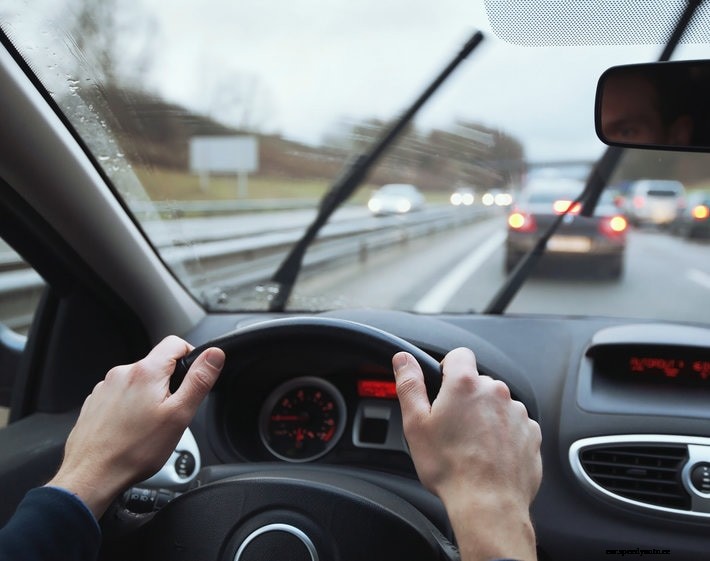
During driver’s education, you may have been told to “pump the brakes” when your car starts slipping and sliding. If you live in a climate that's used to wet or icy roads, the practice has probably been drilled into your head. However, this information is now more like misinformation, since virtually all modern vehicles are manufactured with a system that pumps the brakes for you: the anti-lock brake system (ABS)! Break free of the "pump the brakes" myth and learn how ABS works, what it does, and how it helps in slippery (and dangerous) driving situations.
If you’ve ever driven or witnessed a car sliding helplessly down the road, you know that skidding tires are basically… useless. When tires start spinning they are not getting needed traction, which makes braking extremely difficult. ABS steps in by preventing the wheels from locking up and the tires from losing traction, thus preventing the skid.
While the theory behind ABS is simple, the actual mechanism is a bit more complex.
It's no longer necessary to "pump the brakes" because your ABS is essentially doing it for you, only much better, faster, and more accurately.
When the roads are slick, whether from a summer rain or winter snow, ABS can help prevent minor inconveniences and major accidents. That being said, there's simply no substitute for safe driving and a well-maintained braking system. While it’s an excellent safety feature, ABS will not work as effectively as the vehicle manufacturer intended when driving recklessly, or if your vehicle has low brake fluid or worn brake pads. Luckily, brake problems are no problem for our experienced technicians. If your brakes aren’t responding like they used to, schedule a brake inspection and service at your nearest Firestone Complete Auto Care location. Our technicians can help keep your brakes and anti-lock brake system in tip-top shape.
