
 Brakes are a very important part of your car. Keeping the engine in your car in good condition is very important, as the repairs to a broken engine can be costly and time-consuming. Brakes don’t often get the same attention the motor in your vehicle does because they usually work well, don’t require much maintenance and when they do, you can usually find a $99 special to get them changed. The brakes in your car are indeed a relatively simple system so they don’t require much maintenance, but they are as important if not more important than the engine in your vehicle. The ability to stop during regular driving or emergency situations depends on the good upkeep of your brakes.
There are two different kinds of brakes installed on passenger cars and trucks today – disk brakes and drum brakes. Nearly every vehicle on the road today has disk brakes a least on the front and more and more cars are being built with disk brakes on all 4 wheels. Drum and disk brakes are very different devices that accomplish the same goals. For the sake of simplicity, and since most cars have them, this article will only deal with disk brakes.
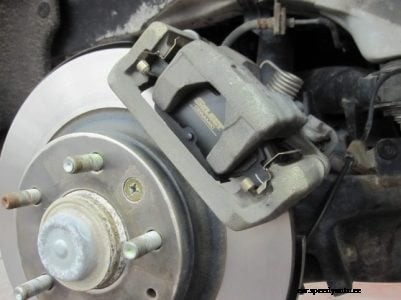
Disk brakes are called such because the main stopping device is a disk that is installed just inside the wheel and tire of your vehicle. This disk is held on by the wheel and lug nuts and spins with the tire of your car. There is a caliper that fits over the disk and has pads on either side of the disk. A piston, or up to 4 on some vehicles, push against these pads when the brake pedal is applied by the driver. The force of the pistons causes the pads to squeeze the disk creating friction and making it more difficult for the disk to spin. As the disk slows down it also slows down your wheels and tires and ultimately your vehicle.
The most common problem with a disk brake system is squeaky brakes. There are a few reasons you may find your vehicle getting squeaky brakes, but the most common is some component sticking or getting stuck in the system. When you press or release the brake pedal the amount the pistons and pads move is almost microscopic. Because of this small amount of movement, it’s easy for the pads to get stuck in a certain position causing them to vibrate, ring or squeak the next time they are applied. This can be cured using “Disk Brake Quite” or “caliper lube” in the right places. Start by removing your brake caliper and applying lubrication to the back of both brake pads and to any surface which may slide during braking including the caliper slides. This can help everything to move as it should during braking, keeping the squeaking or squealing from happening.
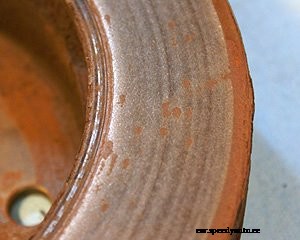 A similar noise may occur when you are not braking at all like a grinding or squeaking noise when driving. Assuming your brakes pads still have plenty of friction material on them, it may simply be due to rust on the brake disk. The brake disk is made of a steel alloy that is prone to rust in wet environments like we all drive in. The section of the disk where the pad rubs for braking will always remain clean as long as you drive regularly but the outer edge or inner part of the disk will rust over time. As your brake pad wears down, it may come into contact with a new area of the brake rotor where it will contact the rust, even if you are not applying your brakes. This symptom should go away after a few days of normal driving as the brake pad clears the rust from the new area. Be sure to inspect your brakes regularly to ensure you have plenty of friction material on your brake pad as a worn brake pad can make a very similar sound.
The last problem disk brakes can have is for the disk to lose its circular shape. Over time, due to heat, water, hard braking or a combination of these, brake disks tend to lose their true shape and warp. This warping of the brake disk will cause it to push against the brake pads every time the out-of-round section passes through the brake caliper. This can cause a vibration in your steering wheel, even when you are not using the brakes, a ‘whomping” sound or a pulsation in your brake pedal during braking. An out of round brake disk, or warped rotor, will cause excessive wear of your brake pads and could lead to premature failure. In some cases, the brake disk can be machined back to its original shape, but often it is more economical to simply replace the warped brake disks.
Regularly checking the condition of your disk brake pads can keep you from costly repairs and stopping more slowly can help your brake disks maintain their shape longer. If you experience any of the sounds or conditions mentioned above, check your brakes to make sure they are in good shape and your vehicle is safe to drive.
Pictures provided by: www.handymanyless.com and www.laurenwantstoknow.com
