
Most car owners have had to replace their tires at some point, depending on how long they’ve had them. Even if the tires are brand new, there’s a constant risk of running over a nail or a blowout on the highway. It’s essential to be aware of these possibilities and prepared to choose the new best car tires whenever you might need to do so.
Tire life is determined by a variety of factors, including:
The average mileage range for standard, all-season tires is 40,000 to 80,000 miles. Usually, manufacturers will estimate how long a tire should last based on their testing. It’s crucial that you know which factors you need to take into account for your individual needs. Do you drive every day? Do you take a lot of road trips or have a long daily commute? If you’re planning to put a lot of mileage on your tires, it should make a big difference in the type you buy.
If you drive long distances regularly, you’ll want to prioritize treadwear. All-season and performance tires generally last at least 65,000 miles. Tires with longer lifespans made to be more durable are an excellent choice, so you won’t have to change them regularly. Check Consumer Reports ratings for mileage estimations and consult an automotive mechanic before you buy.
Driving in the rain can be a scary prospect. The possibility of hydroplaning, along with vision impairment, make for a risky situation. Rain causes reduced grip and contact between tires and the road. Braking distances can double, and the ability to steer around obstacles can be affected.
If tires are older, they create even more of a hazard in rainy conditions. As tires wear, their ability to handle wet braking, have proper traction, and resist hydroplaning, will decline. In addition, rubber wears with age thus, older tires even while tread is still there will suffer worse performance in the elements.
Factors to consider in choosing tires for wet-weather driving:
Tires wear down over time. Like anything else, they need to be replaced and kept up-to-date to ensure safety. If you notice any of the following things in your tires, it’s time to consult a local auto repair service:
Test it:

If you think your tires might be too worn, place a quarter upside-down in the groove of your tire’s tread. If you can only see the top of George Washington’s head, you have very little treadwear left, and it’s almost time for replacements. If you conduct the same test with a penny, and can only see the top of Abraham Lincoln’s head, you urgently need new tires. In addition, federal DOT law states tire manufacturers must include a minimum tread depth indicator. Most tire manufactures set this somewhere between 2-4/32”. Europe actually has a higher tread depth standard than we do in the USA. See the image to left.
To put it, yes, winter tires can be worth the investment. While they are pretty much essential for specific regions, they are suitable for any car that drives predominantly in a winter climate to have.
Cold weather can be unpredictable. An overnight temperature drop can cause the pressure to decrease in your tires. This results in under inflated tires, which are a significant hazard. It’s vital to check your tire pressure at least once per month, especially during the winter. The rule-of-thumb is that the tire pressure will go down 1-3 PSI for every 10 degrees fall in ambient temperature.
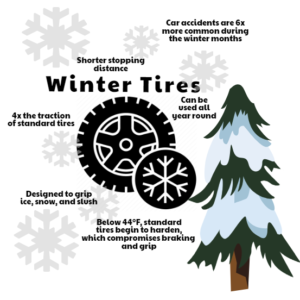
While all-season tires are generally reliable, those who live in unusually cold, snowy regions will want to invest in winter tires. Winter tires have a few significant advantages, including:
Check out some tips on preparing your car for the cold weather months here.
Rotating your tires is an excellent way to even out their wear and extend their lifespans. It’s recommended that you have your tires rotated by an auto repair specialist every 5,000 to 10,000 miles.
Since front tires play a more prominent role in braking, they wear out faster. Vibrations in suspension and alignment can also cause uneven wear. Most of all, your greatest defense with uneven tire wear is regular tire rotations. These factors can affect the longevity of your tires. Spreading wear evenly around all four tires by having them rotated regularly ensures even tread depth and grip.
