
An alternator plays a very important role in the electrical power system of a vehicle. A failing alternator may lead to many serious problems to your car in many ways. So in order to help you avoid these situations, here is the list of several bad alternator symptoms for you to learn. Stay tuned!
First of all, let’s learn some basic things about what an alternator does for your car. Whenever you turn your engine, the alternator works to change the battery and supply power for the electrical systems of the car. There are a wide range of electrical systems and devices in your car, beyond MP3 player, stereo, AC and lights. New cars have computers and sensors that all require electricity to operate. From GPS systems to lights, the alternator supplies power for them all. If the alternator is faulty, a lot of electrical devices in your car will stop running.
When it happens, it is time for you to replace the alternator with a new one. The following symptoms will give you an idea of what’s gone wrong, check them now:
Normally, a failing alternator results in flickering or dim lights. This is more obvious when you drive your car at night but also remarkable in the center dome light and dash lights. If the lights illuminate as RPMs pick up, it definitely means your alternator is faulty or died.
The next in the list of bad alternator symptoms is weird noises. After operating for quite a long time, the serpentine belt could have stretched and may not be spinning the alternator pulley efficiently, resulting in a lack of charge. Typically this leads to a weird sound. On the other hand, the internal bearings can also be worn out, making grinding or growl noise.
If your engine suddenly stops working when you are on the way, it will surely be one of the bad alternator symptoms. Fuel injection require a proper amount of electricity to run, without it the engine will stop working quickly.
One of the other signs of a bad alternator is showing on the service engine light. This sign varies by the make and model, but basically when the alternator starts to fail, it can light up a “ALT”, a battery icon indicator or a “Check Engine” light.
Of course when the alternator is going to die, lots of electrical devices such as MP3, stereo, power windows or seats may be slow to run. If there is not enough power, the devices sometimes will not run effectively or will stop running suddenly, like the MP3 turning itself off.

SEE MORE
Yes, a battery can fail due to some other reasons as well. But a dead alternator is usually the cause of a dead battery as it supplies no power to recharge it. Car batteries do not hold too much power for a long-term. They supply enough electrical oomph to start the starter motor and flow power to getting the whole works spinning.
Preparation:
When your car shows some of the symptoms above, it is time to diagnose the alternator. Here are some steps for you to look for:
1. If the “Check Engine” light turns on, connect a code reader to the diagnostic port. If it shows the code P0562, it means your alternator is going to die. (notice: that code is different depending on the make, model, year of the car). Get it checked out before it totally dies.
2. If you think your car has a failure alternator but there is no clear sign, open the hood anh check the condition of the belt. If the belt is slightly burned looking and glazed, it means the belt is slipping. When the belt is too loose, instead of traveling on the pulleys, the belt slips on them. The metal-on-rubber friction heats up the belt, wearing it quickly. In this case, you just need to replace the serpentine belt or adjust the tensioner to get the belt just right.
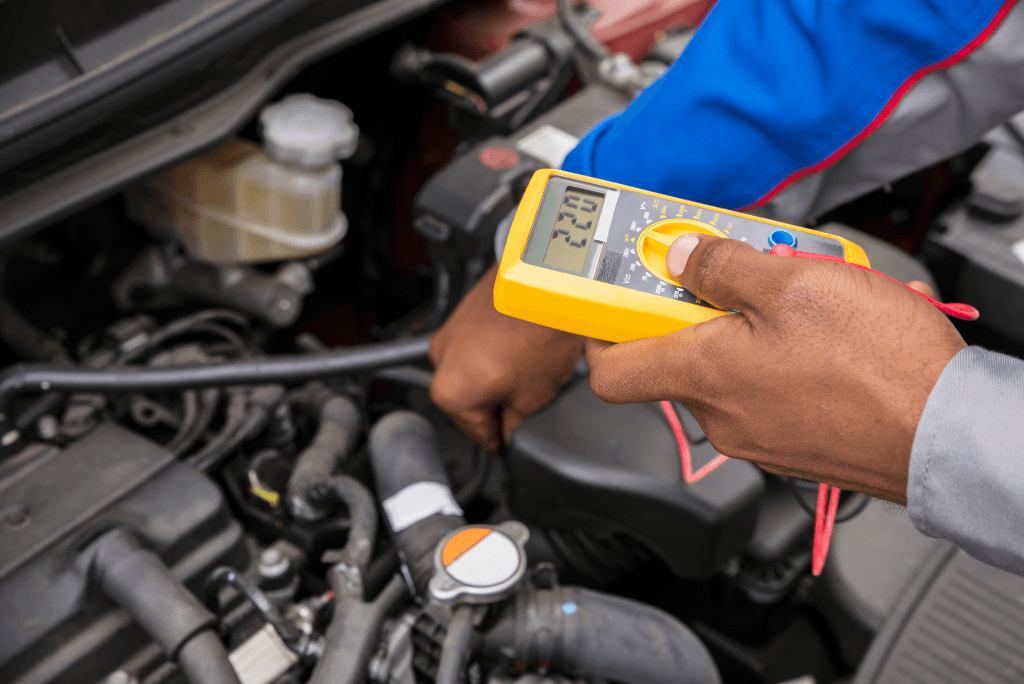
3. If everything under the hood seems good, it is time to use your multimeter and do the checking process below:
Check the video below to see the process of checking faulty alternator in detail:
A bad alternator will lead to a dead (discharged) battery, causing a car not to start or run.
The average lifespan of alternators is about 100,000 miles to 150,000 miles. Several factors can affect its lifespan, including how many electrical devices the car has, the quality of the part, and conditions in which the car is driven.
The common cause of alternator failure is bad diodes. The diodes are part of the rectifier assembly converting the alternator’s AC output to DC. The alternator’s charging output flows through 6 diodes in the rectifier assembly before it goes to the electrical system and battery. Therefore, the higher the charging load, the hotter they get.
So now you know how to tell if alternator is bad and how to repair this problem. For further maintenance tips, keep following to get updated everyday.
