
We all know that it’s dangerous to text or check an email while you’re driving. That’s been a well-known fact for over a decade. But what about other forms of distracted driving?
If you use social media, you’ve likely seen videos on TikTok, Instagram or YouTube where a person is talking to the camera while driving. This dangerous behavior is hardly new, and as crazy as it might seem, it’s not as uncommon as you might think.
Any type of distracted driving is risky. Looking down at your phone for five seconds to send a quick text is like driving the length of a football field blindfolded, and taking your eyes off the road for only two seconds doubles the chance that you will be involved in a crash.
An average of nine people are killed every day in the United States because of distracted driving, according to the National Highway Traffic Safety Administration. And one in five people who are killed due to distracted driving are pedestrians, including people walking and bicyclists. This means that when you text or look at your phone while you’re driving, you’re not just risking your own life. You’re risking the lives and safety of everyone around you.
There are three types of distracted driving: visual, manual and cognitive.
Teens and young adults are especially at risk of distracted driving.
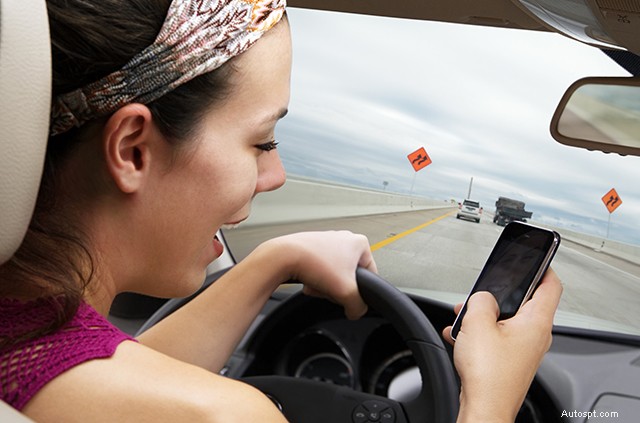
Holding a phone to film yourself while driving is extremely dangerous – it combines visual, manual and cognitive distraction.
“This is a challenging problem to quantify because many crashes could have been caused by a distracted driver who is filming themselves, but unless people actually see it happening or the driver admits to it, it won’t get classified as such,” said Mark Schieldrop, senior spokesperson for AAA Northeast. “But I think it’s safe to say that the practice is increasing based on social media and even television where it’s very common to see people talking to their phone when it’s mounted in the car. Whether they’re livestreaming, FaceTiming or recording videos to post later, it’s a highly distracting activity that will increase the risk of causing a crash, no question.”
More states are specifically targeting filming while driving. A bill banning drivers from filming, recording or broadcasting while driving passed Massachusetts’ state House of Representatives in July 2024, and was moving on to the Senate. Georgia and Washington State have banned watching videos while driving and even TikTok has posted videos warning users not to go live while driving with the camera facing forward.
Giving your phone to your passenger to film you or mounting it somewhere on your dashboard can be equally distracting. If you’re filming a video, you’re putting yourself in performance mode, and you aren’t able to concentrate on the road in front of you. While your hands might be on the wheel, you’re still engaging in visual and cognitive distraction. If you still want to film a video in your car, you can always keep the car parked.
AAA recommends keeping your phone out of sight while driving. Stow it away, turn it to airplane mode or activate call/text blocking features like Do Not Disturb.
“Unfortunately, people seem to believe that as long as technology is hands-free, it’s safe,” Schieldrop said. “But the reality is that hands-free does not mean distraction free. Even if your eyes are fixed on the road, if your brain is caught up in a phone conversation, your mind is not completely focused on your driving. Add video recording to the mix and you’ve got an even more dangerous situation.”
How do you resist using your phone while driving? Let us know in the comments below.
This article has been updated and republished from a previous version.
Last updated on November 10, 2025 by AAA Staff
