
Under normal conditions, a car’s engine should produce a recognizable sound and it should run smoothly. Even the slightest deviation from that sound can mean that the engine is not functioning properly and that it requires your immediate attention.
So, if you noticed that your car’s engine is producing a knocking or rattling sound while you are driving, you must try to resolve this issue at once, in order to prevent further damage to your vehicle.
Even though engine knocking commonly occurs as the byproduct of abnormal combustion detecting its cause and fixing it can be difficult. That’s why in this article we are going to take you through the five causes of engine knocking and how to fix it.
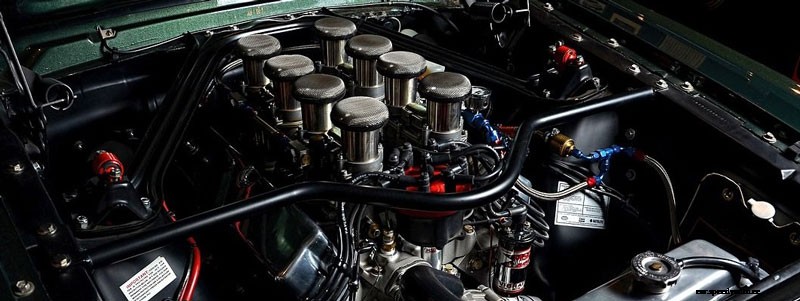
Knocking or detonation in internal combustion engines takes place if several pockets of air and fuel mixture explode outside of the combustion front, instead of being ignited by the spark plug.
These detonations generate high-frequency pressure oscillations inside the cylinders that create the metallic noise that is commonly referred to as a knock. The exact reason why knocking occurs is explained by autoignition and detonation theories.
According to the detonation theory, the knocking conditions cause the flame front travels at speeds that are much faster than regular flame speeds.
The autoignition theory, on the other hand, indicates that knocking is the byproduct of the compression of the air and gas mixture, in the end gas region which results in powerful energy outbursts.
Moreover, engine knocks are more frequent in warm climates, where aftermarket water injection systems are often installed on vehicles in order to suppress detonations. Also, how frequently knocking is going to occur depends on the type of engine your car has.
Eliminating knocking entirely in diesel engines is impossible because both temperature and pressure in these engines increase rapidly which produces the knock.
That is why nearly all modern car engines have fuel injectors, injector pumps, combustion chambers, piston crowns and cylinder heads that are designed to decrease engine knocking as much as possible.
Detecting the cause of engine knocking as soon as it starts happening can prevent serious damage to your vehicle’s engine. That is why it is important to know what can potentially trigger knocking so that you can take appropriate action before this issue produces more problems. Furthermore, you should also check if the oil leaks from the engine. If that is the case, you can check out our best engine oil stop leak additives review.
Let’s take a look at some causes of engine knocking.
It can hardly be stressed enough how important it is to use the fuel that has the octane level that is recommended for your vehicle. Filling the gas tank with a higher octane level won’t cause any damage to the car’s engine, but low octane fuels can produce a myriad of problems.
Inefficient combustion, loss of power and engine damage are potential hazards you will be facing if you decide to use the fuel that has lower octane levels than those recommended by the manufacturer.
The fuel-air ignition is a time-sensitive process that shouldn’t happen a moment too soon. Low octane fuels are known to be one of the most common causes of engine knocking.
However, engine knocking caused by low octane fuel can be fixed easily.
Spark plugs play a vital role in the fuel combustion process, as they provide the spark that ignites the fuel and air mixture. Installing the spark plugs that are not designed for the engine your car has.
The gap on the spark plugs will either be too narrow or too wide if you fail to install the right model. As a result, the spark that is supposed to ignite the fuel and air mixture is going to be too weak or too strong.
This will cause uneven firing of individual spark plugs or postpone fuel combustion, and effectively cause engine knocking. That is why you should consult with your mechanic before you purchase new spark plugs for your vehicle. You can find more information about how to clean a spark plug at this link.
The fuel that doesn’t burn entirely produces carbon deposits since all fossil fuels contain a high level of carbon. Over time carbon deposits can reduce the engine’s capacity to combust fuel, which in turn leads to engine knocking.
Performing regular maintenance checks of your car’s engine is probably the best way to keep the carbon deposits at relatively low levels. Furthermore, carbon deposits can limit a vehicle’s power and humper its performance capabilities.
You can also follow this link if you would like to find out how fuel stabilizers can help you remove carbon deposits from the engine.
A combustion cylinder is the part of the combustion chamber through which the piston that is powered by the energy created by the combustion moves.
Hence this space needs to have sufficient lubrication so that the piston can move smoothly because otherwise, the piston is going to knock against the walls of the cylinder.
In most cases, the cylinder isn’t getting enough lubrication because the engine valves or lifters are too loose, although engine knocking can also occur as the result of an oil leak.
If you are not entirely sure how a car’s engine works, you can click here to get more information.
The so-called air-fuel ratio is the mass ratio of air to solid or gaseous fuel that are present during the combustion process.
In internal combustion engines, the combustion process takes place in 2 milliseconds, however, the amount of air and gas mixture needs to be right for this process to go smoothly.
If there is too much fuel the combustion isn’t going to be even, which can cause engine knocking and further damage the pistons as well as the walls of the cylinders.
Dirt accumulation in fuel injectors is the most common reason for air and fuel disbalance, and you must replace this part of the engine in order to avoid causing more serious damage to it.
As a result of fluctuations in the fuel quality, the vast majority of modern vehicles are equipped with mechanisms that are designed to recognize engine knocking and modify boost pressure and ignition timing.
These mechanisms also reduce the chances of low octane fuel damaging the engine while at the same time they improve the engine’s performance when high octane fuels are used.
The knock sensor is basically a piezoelectric sensor that is connected to the engine and tuned to pick up any unusual sounds an engine makes.
The sensor then sends the electric signal to the vehicle’s electronic control unit that delays the firing of the spark in the combustion chamber.
Hence, your car detects engine knocking automatically, although if the sounds produced by the engine are too loud that can suggest that your car’s engine encountered a problem that cannot be fixed by the knock sensor and electronic control unit.
The best way to protect your vehicle from engine knocking is to take proper care of it since premature detonations only happen if the gas and air mixture ratio is out of balance.
However, fixing engine knocking is a relatively simple process that can be completed without professional assistance.
Here’s how to detect engine knocking and how to fix it.
Fuel combustion will reduce the engine’s efficiency because carbon molecules are going to accumulate in the combustion chamber over time.
An engine that hasn’t been cleaned properly can also have carbon deposits at the top of the pistons which will in turn cause detonations or disbalance of the gas and air mixture.
Adding a fuel additive to your gas tank is the most effective way to remove carbon deposits from the engine, although you may also need other products if you want to clean carbon deposits from other car parts.
High octane fuels burn slower than the low octane fuels, which means that a low octane fuel will burn faster in a high-pressure environment.
This means that low octane fuels can case knocking more easily as they are more prone to detonations that can prevent the cylinders from operating normally.
That is the reason why using the fuel that has a lower octane level than the one recommended by the car manufacturer can cause serious damage to the engine.
The fuel that has 87 octane rating is suitable for most modern cars, although it is advisable to check which octane level is recommended for your car before you fill the gas tank.
Malfunctioning fuel injectors are often the reason why engine knocking occurs, which manifest in hesitation during acceleration. Repairing worn-out gaskets or leaking vacuum lines on your own is not advisable unless you have plenty of previous experience with this task.
Asking your mechanic to remove the dirt from the fuel injector or to unclog carb jets is probably the easiest way to determine if air and fuel mixture disbalance is causing the engine knocking.
Keep in mind that replacing the fuel injector is the best way to prevent engine knocking from causing additional damage to the car’s engine.
Besides ensuring that the spark plugs you want to purchase match your engine, you should also avoid buying the least expensive spark plugs you can find.
The quality of spark plugs depends on their price, so spending a little extra on them initially can save you money in the long run.
You shouldn’t attempt to install spark plugs on your own since the installation process can be difficult if you never went through it before.
That is why you should ask your mechanic to recommend the spark plugs that are best suited for your vehicle and to install them for you.
In case your car has knock sensors and engine knocking is still happening, you should check if the sensors are functioning properly.
Knock sensors are designed to stop detonations in their tracks, but it can easily happen that they become faulty through time, which will prevent ECU from stopping engine knocking.
Determining if the knock sensors are functioning properly shouldn’t be too difficult since your car is going to have lower gas mileage than usual, acceleration is going to be poor and the engine is going to make unusual noises.
The cost of replacing a faulty knock sensor can vary between $120 and $500 depending on the price of the model you purchase and the fee your mechanic charges for the service.
There is no difference since both of these terms are used to describe the same problem.
The unusual sounds an engine makes are the consequence of premature fuel combustion that creates detonations in the combustion chamber, which causes the engine to make sounds it doesn’t normally make.
Engine knocking can cause extensive damage to the engine, which is why it is important to detect and fix this issue as soon as possible.
The answer to this question depends on the cause of engine knocking and the damage the car’s engine has already taken. The reparation costs can vary between a few hundred dollars to several thousand dollars depending on the severity of the damage.
If the carbon deposits are causing the engine knock, then adding a fuel additive to the gas tank can help resolve the issue. However, fuel additives can’t do much to stop engine knocking if air and fuel mixture is out of balance or if the knock sensors are malfunctioning.
Yes, but premature combustions can cause severe damage to the engine, and your car might break down unexpectedly in the middle of the road.
Detecting the cause of engine knocking as soon as it occurs may prevent more serious damage to your vehicle.
However, attempting to fix this issue on your own may not be a good idea if you don’t have the skills and the knowledge required for this task.
That is why you should contact your mechanic as soon as you hear that your car’s engine is making unusual sounds.
Hopefully, this article has helped you understand the cause of engine knocking & how to fix it. Leave a comment and share your experiences with us.
