
The timing belt in a car is a rubber belt that synchronizes the rotation of the crankshaft and camshaft to sync with each other. The timing belt also ensures that the valves open and close at the right time, ensuring proper engine function. In other words, it takes up all these little slack spots throughout an engine's cycle to make sure everything runs smoothly from beginning to end.
When you have a worn-out or broken timing belt, though, you'll usually hear some noise coming from your engine compartment as the teeth on one of these belts grind against another part of your car's innards.
This can be anything from a rhythmic tapping sound when it's only knocking now and then to a high-pitched squeal when it's not working at all. The noise will vary, but the point is that your timing belt breaking or wearing out is never good news.
This article provides five common reasons for timing belt noises and how to get rid of them.
The timing belt is a long, flexible belt wrapped around the crankshaft and camshaft. It synchronizes the rotation of these two moving engine parts, ensuring that they remain in sync with one another. This allows the valves to open and close at the right time, ensuring proper engine function.
Think of your timing belt as a very long rubber band that wraps around the main parts of your car's engine. If you've ever stretched a rubber band and released it, you know that it makes a “twang” sound. This is exactly what happens inside your engine when your timing belt stretches too tight or breaks unexpectedly: The teeth on one side of the belt hit the teeth of another part inside your engine, resulting in that “twang” sound.
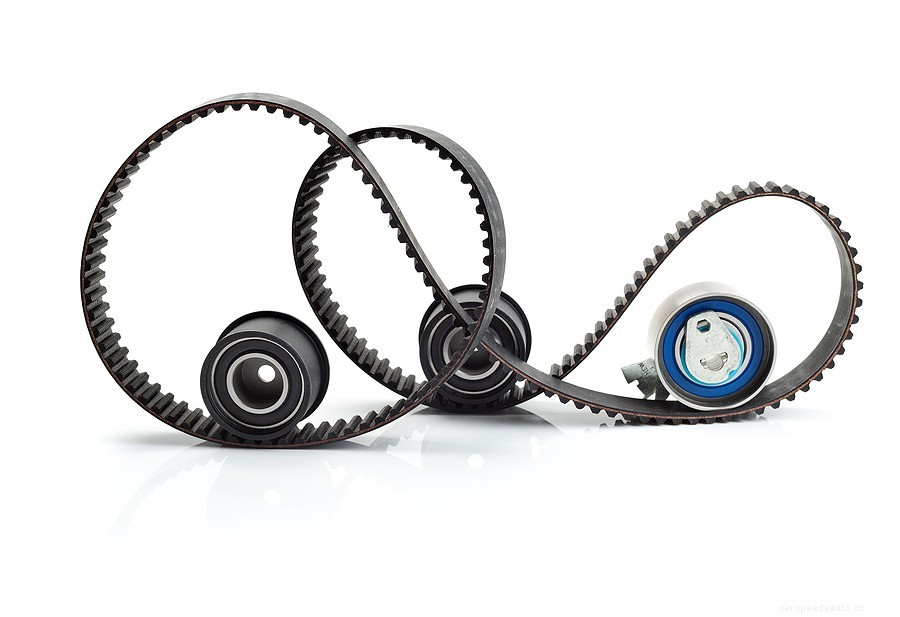
When the timing belt starts making weird noises, it usually means that something is wrong. Your timing belt may be worn out or stretched due to normal wear and tear, but it could also be because of one of these five common issues:
This is the most serious and expensive cause of timing belt noise. If your car's timing belt snaps, you need to replace it as soon as possible – even if you don't hear a noise – because the valves won't open and close at their proper times. Once this happens, major damage can be done to your pistons and engine block, and the odds of your engine seizing go way up.
A broken timing belt usually accompanies a loud, high-pitched grinding noise that gets louder as the car's RPMs increase. If you hear this sound, pull over immediately and shut off your engine, but don't attempt to move the car until you're sure it won't cause further damage.
Your car's timing belt is stretched or broken if it makes any of these noises when you start up your engine, even if the noise goes away after a few seconds:
When the timing belt is worn out, the teeth on its inside part begin to wear down. As a result, the inside of your engine will sound like it's knocking every time you accelerate or decelerate, and this noise can last for several minutes. This is another noise that gets louder as your RPMs increase.
A worn-out timing belt causes a low-pitched humming noise that lasts for several minutes.
If your timing belt becomes loose, the engine could end up with too much slack in it. This will cause a tapping noise every time you accelerate or decelerate, and it can also lead to a broken timing belt.
A loose timing belt causes a rhythmic clicking sound that gets louder as the car's RPMs increase.
The tensioner pulley is a cog that puts pressure on the timing belt, allowing it to stretch and contract as necessary. If your tensioner pulley becomes too loose or worn out, your timing belt can become loose and create timing problems: This usually causes a ticking noise rather than anything else.
A loose or worn-out tensioner pulley causes a ticking noise.
If your timing belt is misaligned, it can snap or become loose over time. This will cause a thumping sound every time the engine spins.
A misaligned timing belt causes a rhythmic thumping noise that gets louder as the car's RPMs increase.
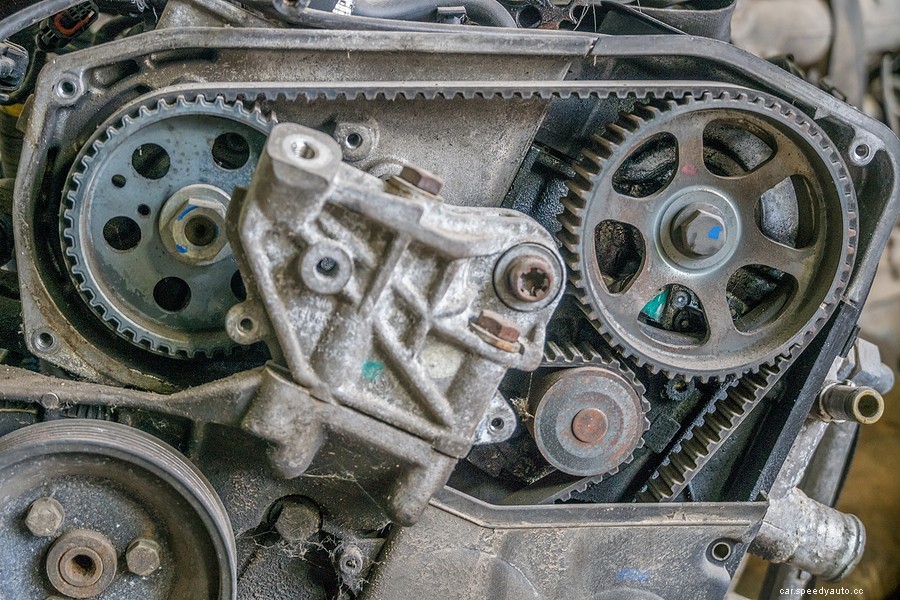
Although most of the mentioned causes for timing belt noise might look nonpreventable, there are some ways to delay or prevent timing belt noise, including:
When you get to a point where the loud timing belt requires replacing it, you'll need to do so immediately. If you have the right level of mechanical skills, you can replace the timing belt by yourself following these steps:

This section will answer frequently asked questions about timing belt noises.
Here are the different types of sounds you'll notice when your timing belt is tight:
If your timing belt is squeaking, you should immediately fix the problem. For small noises, it may be possible to lubricate and tighten the belt until you can get it repaired. However, timing belts that always squeak loudly and without any attempt to fix the problem are signs that your engine might be nearing end-of-life and should be replaced.
Squealing sounds coming from your vehicle's A/C system could be a sign that your timing belt is slipping or that it needs to be adjusted. You'll need to get this fixed immediately because waiting can cause extensive damage and lead to more serious problems with your engine.
There are a few reasons why your vehicle might be making a ticking noise, especially if it's a new one. On the other hand, if there are no signs of damage or issues with your vehicle and you hear a ticking noise coming from your engine, this is a sign that there's potential for future problems with your timing belt.
Whining sounds from your engine could be caused by several things, including the exterior belt cover of your timing belt. If you tighten this down, it may reduce the noise until you can fix it properly.
Yes, it's normal to hear your timing belt make noise. However, if the sound doesn't go away or is getting excessively loud when it comes from your engine block, this means that there are problems with your timing belt.
Timing belts are an essential component of many vehicle engines, and they make a lot of noise when there's nothing wrong with them. However, that doesn't mean you can ignore the warning signs or abnormal sounds coming from your engine. If you hear strange noises in your engine block area – especially if they don't go away after tightening down the belt cover exterior parts – it may be time to get professional help for repairs.
