Engine oil is not something that you can use forever without replacement.
The oil has its own lifespan, so as you drive the car, it degrades as time passes.
So what happens to the engine oil when it deteriorates?
We will introduce you the guidelines to determine whether your car’s engine oil is deteriorated or not.

In an engine, there is a piston in tubular shape that produces power for the car by moving up and down or in rotary motion at high speed depending on the engine.
Due to moving at such high speed, the engine produces high heat and that is when engine oil plays its role.
Engine oil’s roles are to:
And so on.
Other than that, the engine oil protects the engine by preventing rust to form due to condensation, and also it extracts carbon and sludge produced inside the engine.
As the engine oil plays so many roles under such a severe condition, it will not stay good as new and its lifespan will decrease as deterioration occurs.
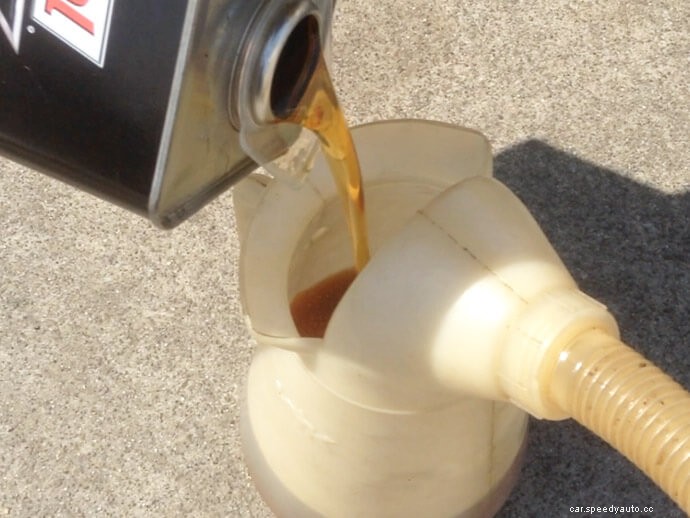
As the engine oil is doing its job inside the engine, we are not able to see its condition from the outside.
So how are we going to know if it is deteriorating or not?
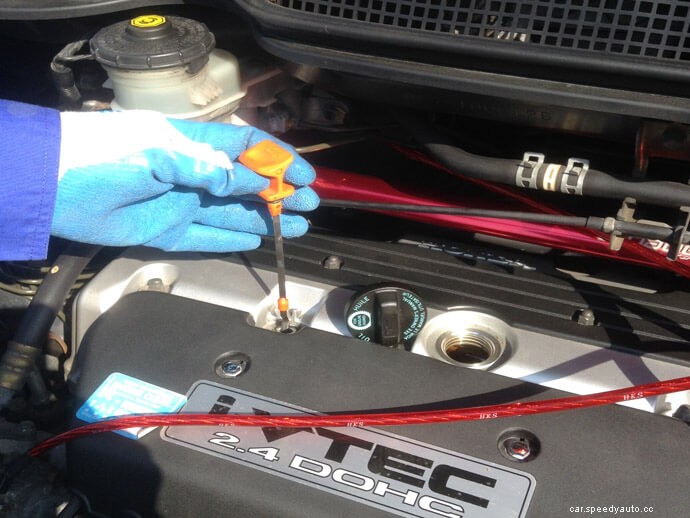
Oil gauge is always included in every engine. It is used for checking the amount of engine oil left inside the engine. And since engine oil is attached to its end, it is also can be used for checking the oil’s viscosity or stickiness, and to determine whether the oil is dirty or not.
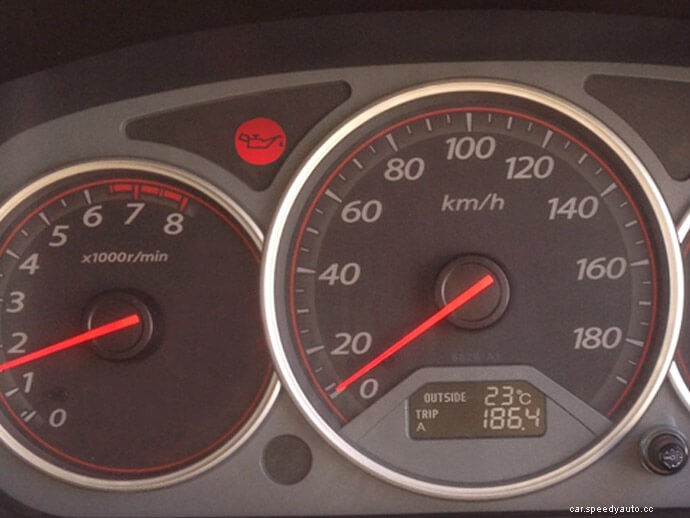
The hydraulic warning light, or simplified as oil lamp, lights up at the speedometer and it shapes like a dripping lamp.
In normal condition, it lights up when you are starting the engine, but as soon the engine is on, the lamp fades out right away.
If it lights up when the engine is on, there is something wrong with the engine oil.
As the name says it, the lamp lights up when the hydraulic pressure has dropped to its dangerous level.
In some cases, if the lamp lights up, it does not mean for sure that it is because of oil deterioration, and we also cannot deny the possibility as well.
The scary part is, as the lamp lights up due to decreasing engine oil, driving the car as it is would cause oil shortage and hence the engine will stop working. So if the lamp lights up, let's stop the car in a safe place as soon as possible.
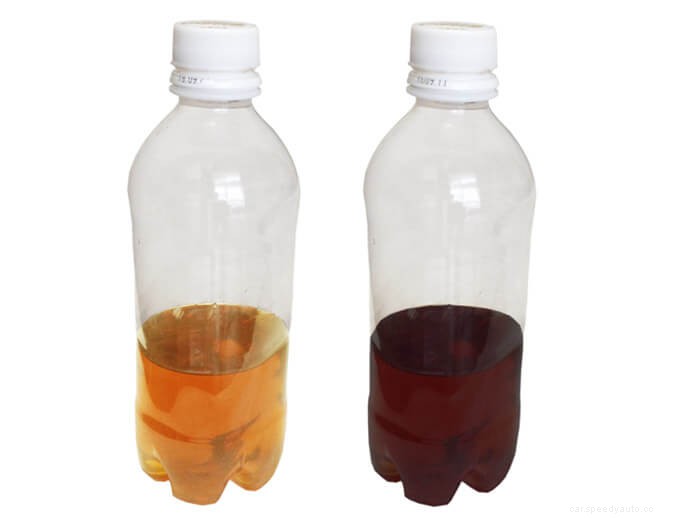
There are several criteria to determine deterioration of engine oil.
New engine oil does exactly smell like oil. But, deteriorated oil has carbon and sludge mixed in it; so it has that bad smell of burnt oil.
New engine oil has a transparent fox color, but deteriorated oil has black and dirty color.
New engine oil is supposed to be slimy and has a moderate viscosity in it, but deteriorated oil is not slimy at all and it feels like water when you touch it.
If the car’s engine is shaking in an odd way, there is a chance that the current oil has deteriorated already, thus the engine rotates roughly as there are more friction happening.
If you feel that the car’s acceleration is duller than usual, consider the engine oil deterioration. That is why the acceleration feels much better after you change the engine oil.
The engine oil deteriorates not only due to car usage, but also it deteriorates as time passes by. Depending on the oil’s type, its lifespan would be around 6 months to 1 year. Even if you are not driving the car that much, let us replace the engine oil once the lifespan expires.
Also, when you exchange engine oil by yourself, sometimes the amount of oil you bought can be too much for the engine. Engine oil is sold in 20 liters buckets in some places, and even though it is sold in 4 liters cans, there are engines that can’t take 4 liters of oil at once.
As long as the remaining oil is sealed off completely from air, sunlight, and other impurities, it can be used up to 10 years after opening without any change to its quality. But if possible, it is better to use them as soon as possible.
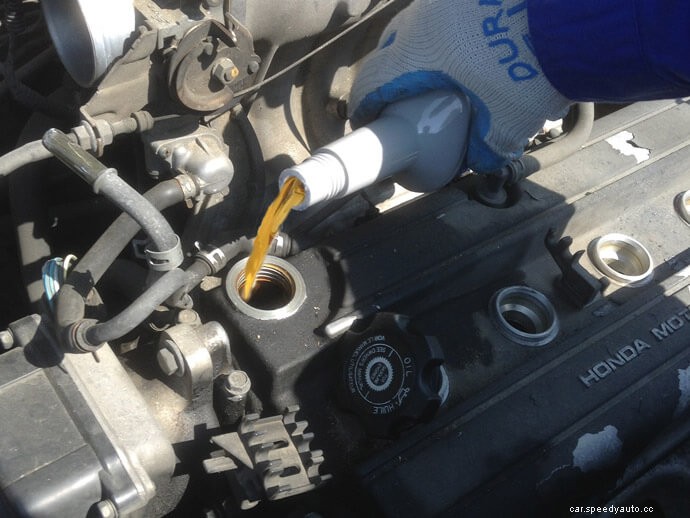
Every oil manufacturer sells 'additives’ in addition to their engine oil. These additives increase the performance of cheap low-spec engine oil and extend its lifespan.
For high-spec engine oil, the additives are already included in the oil, so there is no need to add anymore.
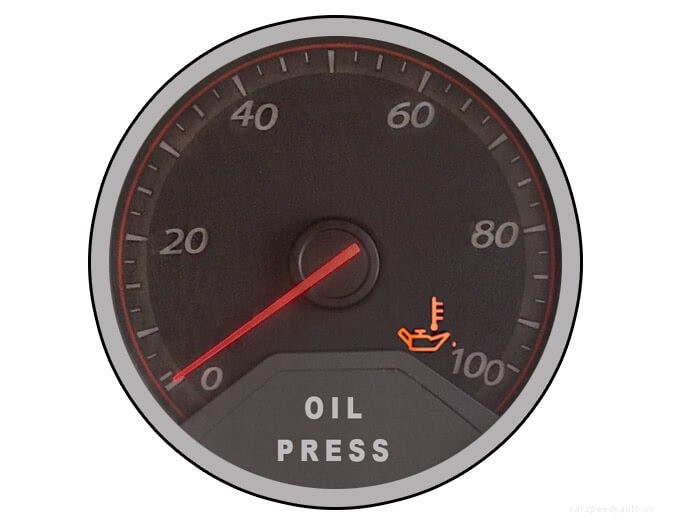
For racing cars and some high-performance sports cars, an oil temperature gauge is installed to indicate the oil temperature in a specific way. This gauge is installed because racing cars and high-performance cars put a huge load to its engine, and the temperature of the engine will be very hot when it runs.
Engine oil produces its best performance for the car at 100 ° Celsius. However, if the oil temperature rises more than that, the performance will drop and so deterioration occurs.
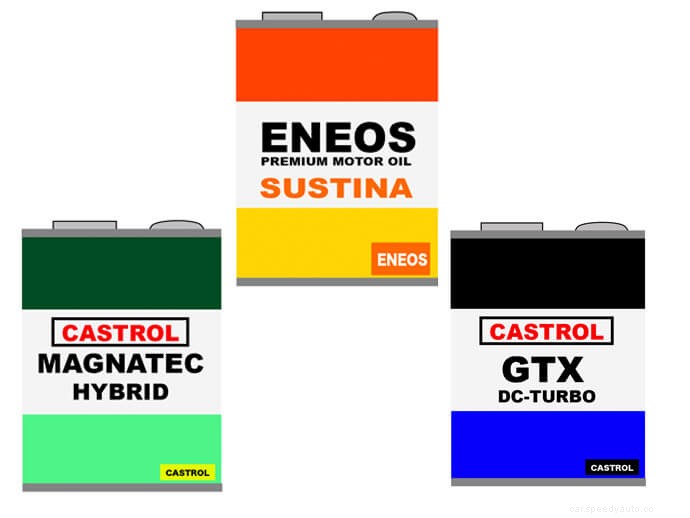
There are varieties of engine oils available in different types and grades. The types of engine oil are based on the engine type such as gasoline engine, diesel engine, turbo engine, etc. And the grades are based on outdoor temperature and car usage.
Let’s choose the best engine oil that suits your car by considering what kind of engine your car has, the outdoor temperature where you live in, and how you drive the car.
If you choose the wrong oil, not only it will shorten its lifespan, but there is a possibility that the performance will go bad, and in some cases, the engine can break down.
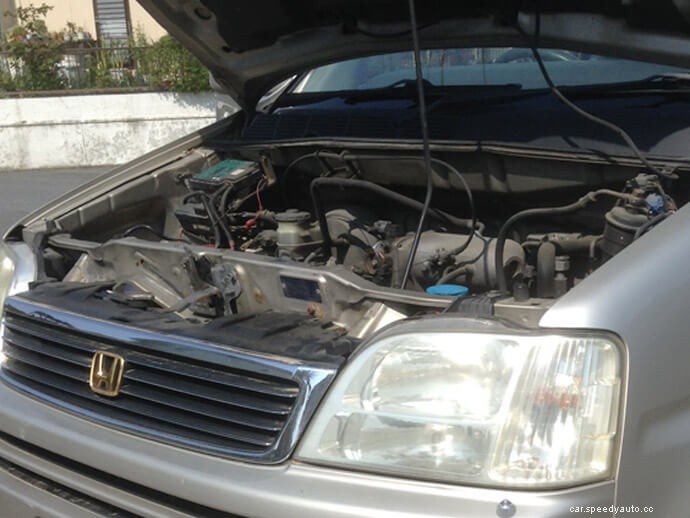
When the engine oil deteriorates, there are several bad symptoms that could occur to your car. We will explain to you the symptoms in different levels.
MildAssuming that you are climbing a hill or mountain, the car does not climb strongly even if you accelerate more.
The fuel consumption rate gets worse due to the power drop. As you tend to accelerate more than before, the amount of gasoline the car consumes increases.
As the amount or viscosity of the engine oil decreases, the engine will not run as smooth as before and it will start to vibrate.
Unusual sound comes out from the engine. As the engine does not run smoothly due to the deterioration of its engine oil, the engine parts will start to rub against each other and produce unusual sound.
Engine blow
The worst case you could get for neglecting the engine oil is that the engine blows up and it won’t work anymore.
The engine blow / break down will not happen before the previously mentioned symptoms occur. So if it is still in mild level, it is better to realize it quick and replace the engine oil before it is too late.
As engine oil is not visible at all times, we recommend you to schedule your car’s oil replacement, for example 3000 km after replacement, or every 3 months, and so on, and utilize this guideline to determine the engine oil degradation for your next car inspection.