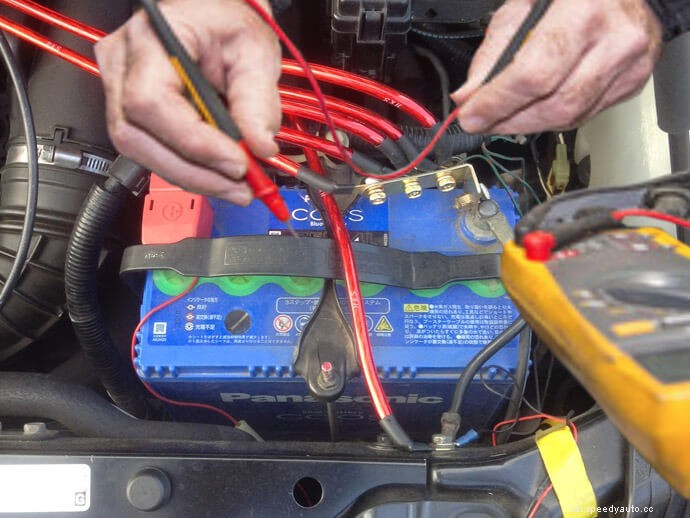
Batteries are always installed in every car. These batteries may weaken or run out of energy, and so the car will not be able to move anymore.
So in this case, we have to recharge the battery, and we will explain it to you how to do it and what the important things to remember are.
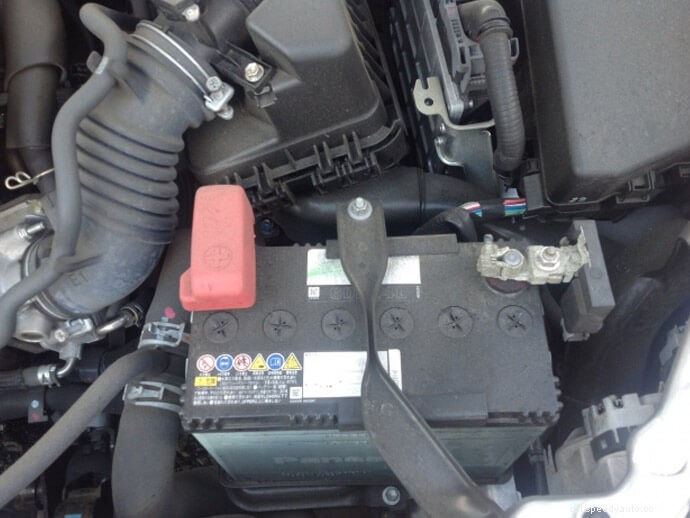
The battery of a car here refers to a ‘Storage Battery’ that stores electricity used by a car and usually installed inside the engine room.
As for hybrid cars, they use a different type of battery called the ‘Auxiliary Battery’, and it stores large capacity of electricity up to 200 Volt in order run the motor.
There are lots other places where the car uses electricity, such as remote-control keys to lock the car, cell motors to start the engine, lights such as headlights and winker lights, air conditioners, car navigation systems, audio system, power windows and so on.
To operate these features, batteries are very essential for cars.
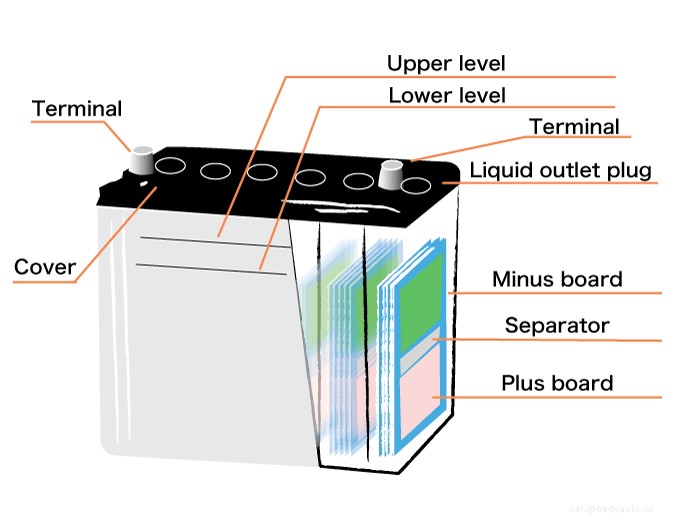
As shown in the above figure, a car battery may look like a box, but inside it is divided into several layers (cells).
For normal cars, 12 Volt car batteries are usually used, and it is divided to 6 layers. So, for every layer, it generates 2 Volt of electric power.
Every layer of a car battery consists of separated positive and negative electrodes stored together in one plate and it is filled with electrolytes used to store electricity. All the positive electrode plates are connected to the plus terminal of the battery, and the negative electrode plates are connected to the negative terminal of the battery.
Car batteries do not discharge just like any ordinary dry batteries. If it only discharges electricity, the battery will run out in just one day.
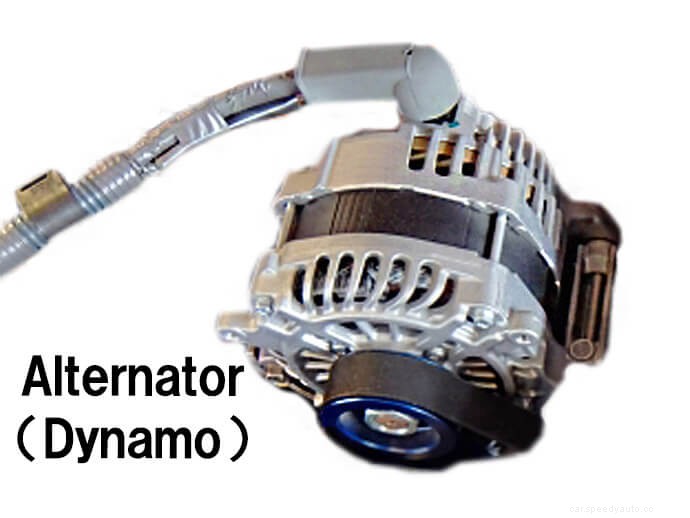
As for the charging mechanism, the car starts a generator called ‘Alternator’ when the engine starts, and it constantly charges the battery as the car is running.
In hybrid car, the motor drive also has the function to constantly charge the battery as well, so you won’t be able to find any alternator in the car.
Car battery is always charged whenever the car’s is on. But there are times when it ran out and the car won’t be able to start, so we need to recharge the battery.
When the battery is starting to get weak, you will most probably notice it soon enough. But, there are times when the battery can suddenly ran out as well.
If you continue to use your cars electronic features while the engine is off, the battery will start to run out as it keeps on consuming electric power.
And also, leaving your car in the garage without driving it will dry up your car's battery since features such as clock and auto-lock are on at all times.
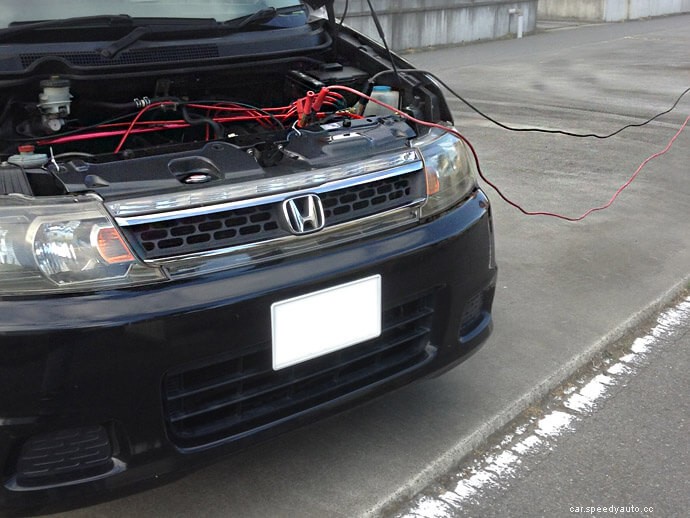
When your car’s battery ran out, as a first aid, you can use other car's battery to start your car's engine and let your car’s battery recharge by itself.
In order to do that, you need a “rescue” car and driver to help you. And also, you need a cable called “Booster Cable” to connect your car's battery to the other car's battery.
The booster cable is made up of two cables, one red-colored for plus, and one black-colored for minus. If you connect both batteries correctly using this cable, you can start the charging.
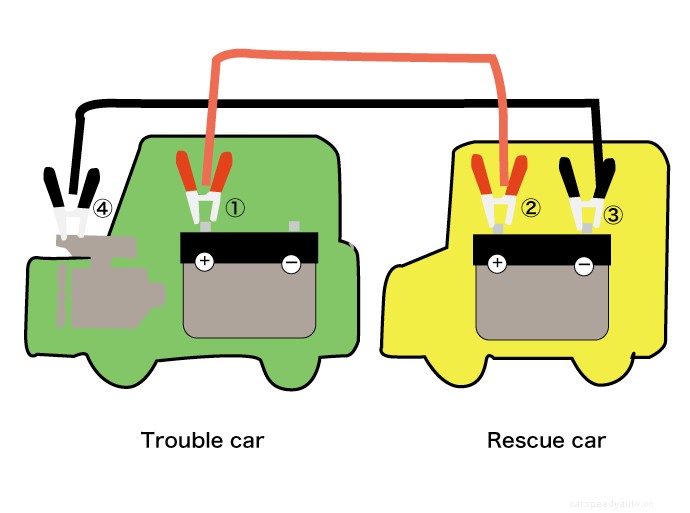
Here is an outline of how to do this method:1. Positive terminal of faulty car
2. Plus terminal of the rescue car
3. Minus terminal of the rescue car
4. Unpainted metal parts such as engine blocks or engine frames of the faulty car
Notes for this charging method
Connecting the plus terminal and the minus terminal of the faulty car first and then connecting the plus terminal and the minus terminal of the rescue car will result a short circuit to the battery. This is very dangerous since it could cause a fire and heavy accident.
If you mistakenly connect the plus terminal and the minus terminal, the fuse of the rescue car's battery will melt and the car's engine will not be able to start unless you change the fuse with a new one. So, let's check it carefully.
The reason for this is that the voltage flow down from high to low, and in this case, the faulty battery has the low voltage.
If the last cable you connect is the one to the faulty battery's minus terminal, it could cause sparks of fire due to sudden electric flow. There is a chance for the sparks to mix with the battery's hydrogen gas, and cause an explosion.
So, in order to avoid such accidents, the last cable you should connect is the one that goes to engine block or engine frame, far from the faulty battery.
Just for you to know, hybrid cars cannot be used as the rescue car due to its high electric flow in this method. If you connect it to a normal battery, the high electric flow could cause the hybrid system to break down.
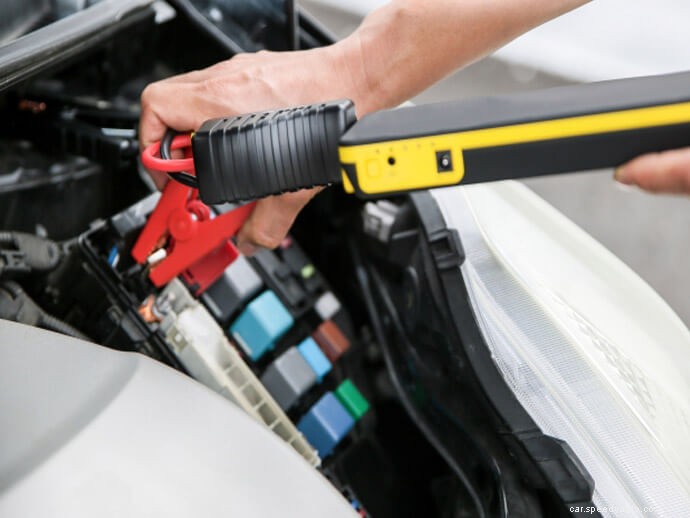
A jump starter is useful when you have no help from other car or driver when the battery ran out.
Basically this jump starter is a substitute for the rescue car, and it is recommended to put this in the car in case of emergency.
Here's how to use it.
*Depending on the type, some jump starter tools can be charged using the cigarette socket or the USB port so let’s not forget to charge it.
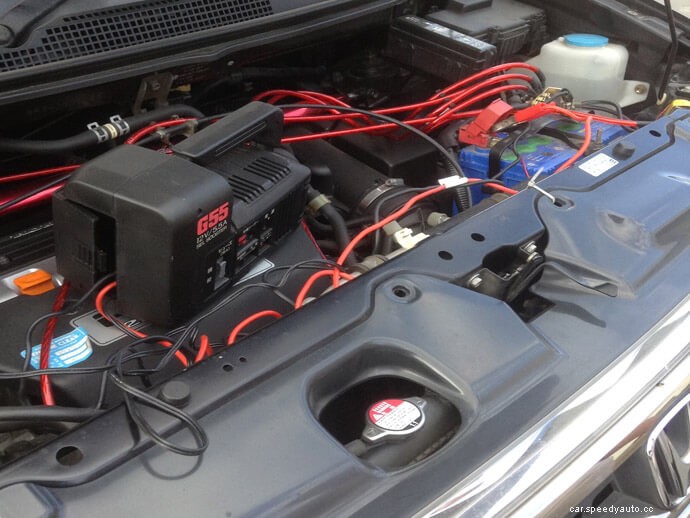
In this method, you are able to charge the battery from 0% back to almost 100%.
The electric current used to charge the battery should be set to one tenth of the battery's capacity.
The time needed to charge the battery from 0% up to 100% is about 12 hours. So, if the battery left is about 25%, you should charge it for 9 hours, 50% for 6 hours, and 75% for about 3 hours. Also, please note that some chargers have different amount of electric current when it charges, so let us adjust the time as well according to the charger.
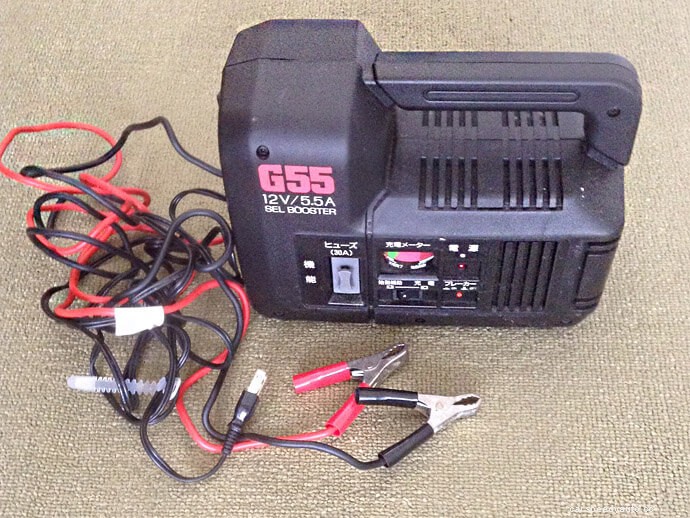
There are few things to check when choosing a car battery charger.
Since the battery of a typical car is 12V, we choose a charger that charges 12V battery batteries. If you choose a wrong one, the charging time needed will be longer, and it could degrade the performance of the battery. In worst case, it could lead to a fire.
The reason is that if you continue to charge the battery even after it is fully charged, it will start to overcharge and cause a great damage to the battery, shortening its life.
If you can't find one, you can choose one with a timer. The charging will stop when the timer rings off, so in this way you can avoid overcharging your car's battery.
Considering the lifespan of the battery, let us do a checkup at least once a year and learn its state in order to avoid unexpected battery outage.