
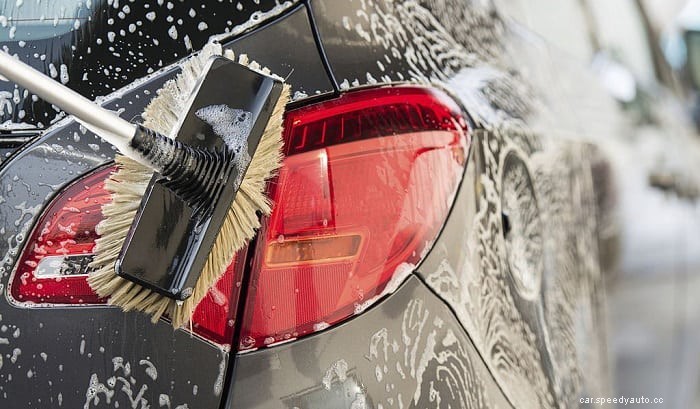
So you just came from the car wash, and to your shock, you found yourself in a “car wash scratched my car, what to do?” kind of situation. You can always take your car to a professional for car polishing. But if you’d rather go DIY to avoid high expenses, just read this article to know what to do.
In a nutshell, to get rid of car wash scratches by yourself, you’ll need to polish your car either by hand or with an orbital buffer. But before car polishing, some preparatory steps must be done first, such as giving your car a thorough cleaning and inspecting it for scratches.
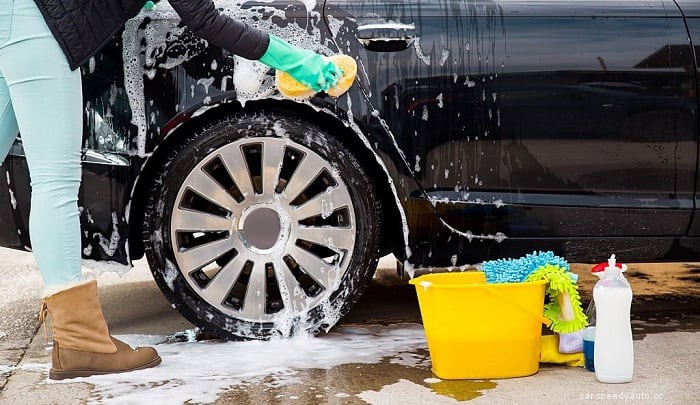
Wash your car first for you to be able to remove car wash scratches. To avoid causing any more scratches to your car, it would be best to use either the touchless or two-bucket methods.
Remove stubborn contaminants left behind after car washing using a clay bar and clay bar lubricant. Spray clay bar lubricant on the surface, then gently glide the clay bar on it in straight lines or crisscross patterns to remove the stubborn contaminants.
For stubborn stains on your car, you can clean them off using a tar or bug remover. Just follow the instructions on the product label on how to use it.
Go around your car to thoroughly inspect it for car wash scratches that need polishing. If you’re working outdoors with natural bright light from the sun, then it will be easy to spot scratches.
But if you’re working indoors or in a shaded area, it would help to use a bright flashlight to shine a light over the paintwork to see the scratches.
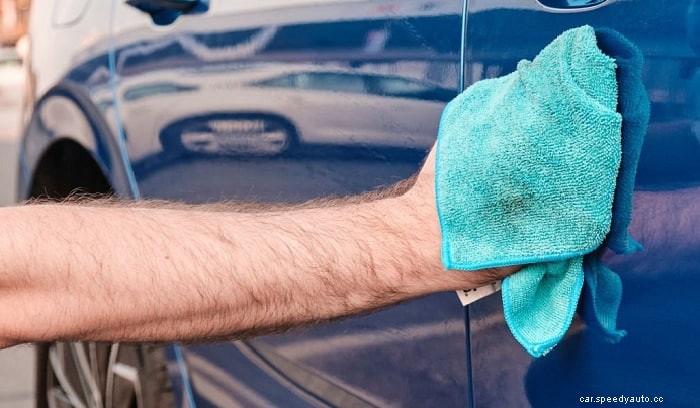
Shake the compound bottle first to ensure that all its ingredients get mixed, and put a small amount of the compound on the hex grip applicator.
Then spread it with the hex grip applicator, working in circular motions starting from the middle going out to avoid loading the products into the car’s cracks.
Work the compound repeatedly in circular motions, mimicking the rotations of an orbital buffer. You may also use linear motions in between. After working the compound onto the paintwork, wipe away the excess product from the surface using a microfiber towel.
Like the compound, you would first have to shake the bottle of refining polish before putting some of it on a hex grip applicator.
Then take the other unused hex grip applicator and put a small refining polish on it.
You’re also going to work the refining polish on the paintwork the same way as the compound. Finally, use a microfiber towel to wipe away the excess refining polish from the surface.
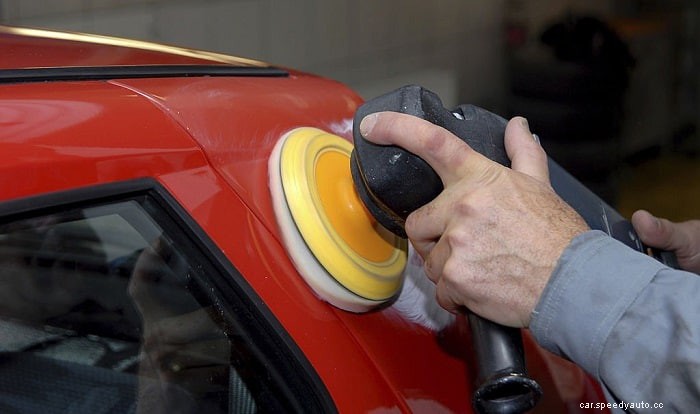
To start, shake the compound bottle and put dime-sized amounts of the compound scattered around the buffing pad.
Then, without turning the orbital buffer on, transfer some of the compound applied on the buffing pad onto the surface by pressing the pad onto different spots around the area. Apply the compound evenly to prevent the product from flinging off when the orbital buffer is turned on.
Turn the polisher on, put it into the medium setting and start polishing. It’s advisable to work with just the right amount of pressure to notice a change of pitch from the applied pressure.
Work in one small area at a time, gently moving the orbital buffer back and forth. And when moving on to another side, significantly overlap with the side you previously worked on. This technique ensures that the polishing is well-blended and that there are no spaces left unpolished.
After polishing the surface with an orbital buffer, wipe away the excess product using a microfiber towel.
First, replace the polishing pad with a new one. Then shake the bottle of finishing polish and apply the finishing polish on the orbital buffer the same way you did the compound.
You’re also going to apply and work the finishing polish with the orbital buffer on the paintwork in the same way as the compound. Lastly, wipe the excess product off with a microfiber towel.
After your unfortunate car wash experience, you should be more cautious and avoid automatic car washes to prevent scratches from car wash brushes.
But there’s still another safer option for quick, effortless car washing, which is the touchless car wash that doesn’t use brushes.
Moreover, an extra step you can do for your paintwork’s protection is to apply wax, sealant, or ceramic coating to it after polishing it.
Among the protection options, the longest-lasting is the ceramic coating, which could last as long as two years. Next is the sealant, which can last for five to six months. While the wax can last for a couple of weeks to a few months.
If you fail to repair the scratches yourself, you might want to rely on professional and reliable service to make it right:
Now that the “Car wash scratched my car, what to do?” scenario has been sorted out for you. Hopefully, you’ll be able to polish your car successfully. We’d also like to know your thoughts on this article, so kindly tell us in the comments. Kindly also share this article to help educate more car owners.
