
Read any guide on how to wash a car, and you’ll find that most recommend using a pressure washer. But just how safe is it to pressure wash your car? And are there any precautions you should take when jet washing your paintwork?
If you’re worried that using a pressure washer could damage your car, we’re here to allay your concerns and offer some helpful tips on using a jet wash the right way.
Pressure washers are a godsend for cleaning cars. They remove dirt and grime in seconds compared to manual washing, and use considerably less water than a hosepipe to achieve the same results.
But the nature of pressure washing does mean that you need to take precautions when using one to clean your car. Because if you’re not careful, you could end up damaging the paintwork or tyres or letting water into the interior.
To help you pressure wash your car safely, here are some dos and don’ts.
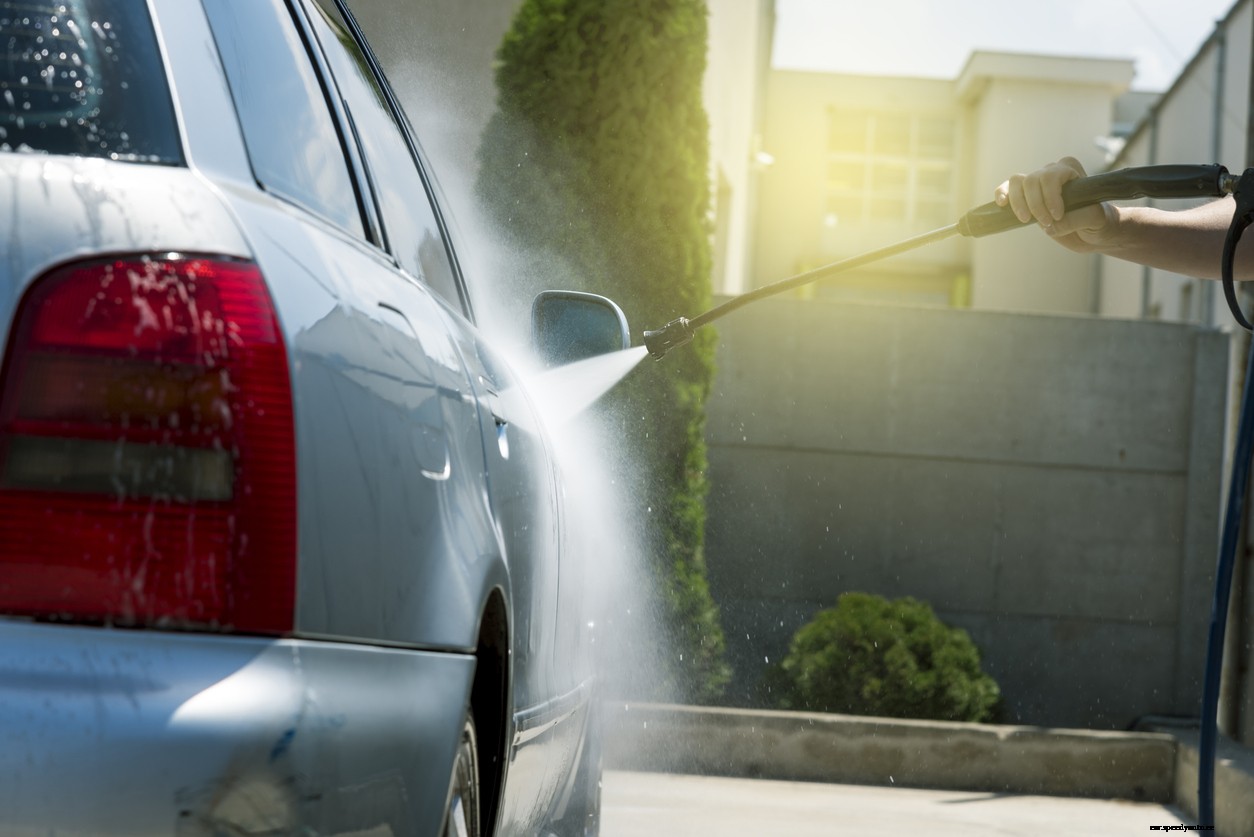
If you’ve never used a pressure washer or are worried about damaging your paintwork, follow our steps below to pressure wash your car safely and effectively.
Step 1: Rinse the Paintwork
Park somewhere flat and make sure you have plenty of space all around the car. You’ll need a decent-sized hose to make sure it’s not dragging on the paintwork; a minimum five-metre reel is best for safe pressure washing.
Rinse the paintwork from top to bottom, working in smooth, even lines so you don’t miss any areas. You might need a step ladder or stool to reach the roof without getting too close to the paintwork.
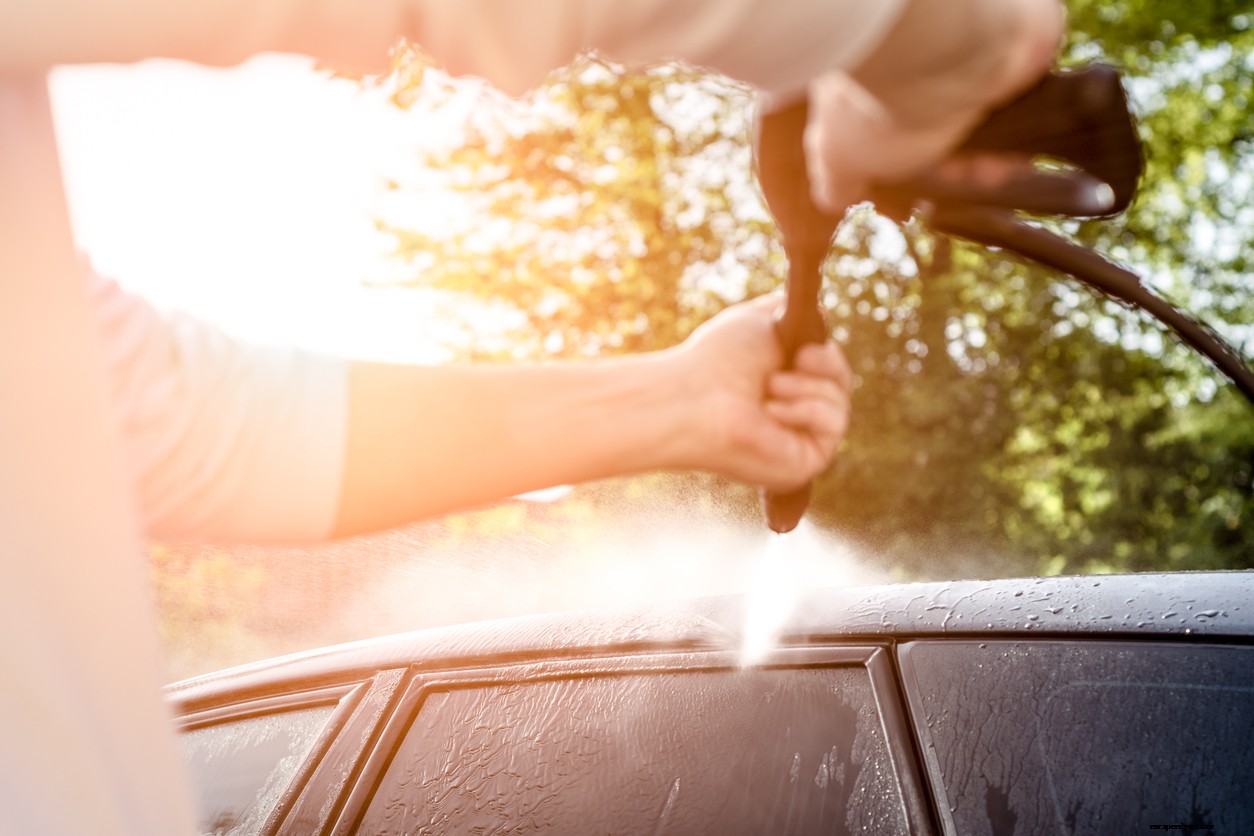 This is all about removing loose dirt and grime before shampooing. It’s not a good idea to use a sponge on heavily soiled paintwork, as you risk swirl marks from working dirt into the paint’s surface.
If your pressure washer has a variable speed setting, turn it down when pre-rinsing your car. This will help to avoid blasting dirt at other areas of the paintwork.
Step 2: Shampooing
When you’ve given the car a thorough rinse, it’s time to shampoo the paintwork. Using a high-quality shampoo that will clean and protect your car, work from the top down, cleaning panel by panel to give the car a complete wash.
When shampooing, we’d recommend the two-bucket method. This is when you have one bucket for your clean shampoo mix, and another for rinsing your sponge. That way, you avoid reapplying dirt to the paintwork from a dirty bucket.
As well as a sponge, you might also want to use a soft-bristled car cleaning brush to remove stubborn dirt, particularly from hard-to-reach or heavily soiled areas such as the wheels and wheel arches. Whichever tools you use, make sure they’re designed for use on cars, as you could easily damage the paintwork if you use the wrong type of equipment.
Step 3: Rinse Again with the Pressure Washer
When you’re happy you’ve cleaned all areas with shampoo, you can start pressure washing again. Here, you’re looking to remove all remaining dirt and shampoo residue, ensuring only water remains before you start drying.
Working from the roof down, use the pressure washer on its highest setting to give a deep final clean. You want to be as thorough as you can here, so pay attention to any nooks and crannies that you might have missed (for example, under spoilers, inside wing mirrors, and beneath windscreen wipers).
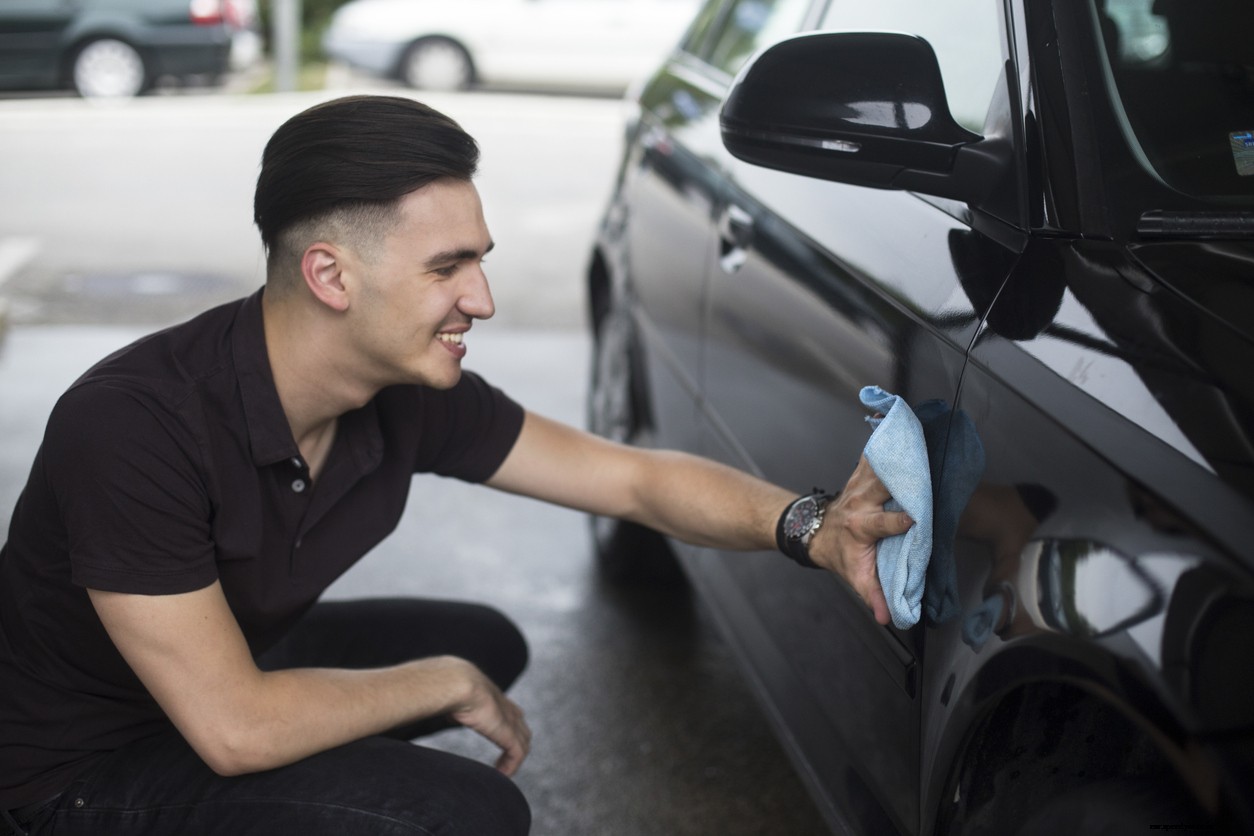 Step 4: Dry the Paintwork
The final step is to dry the paintwork thoroughly using a chamois leather or microfibre towel. This is something that a lot of people neglect to do, but it’s important if you want to avoid water marks and guarantee a great long-lasting shine.
Work panel by panel and remove as much water as you can. If your car’s dripping wet after pressure washing, a squeegee can help to remove excess before you start towelling.
And that’s it – you’ve safely cleaned and pressure washed your car. After cleaning, you may like to apply a coat of wax to ensure your paintwork is sealed, shiny, and protected from dirt, salt and deposits.
And if you’re looking to take your car cleaning to the next level, we’d recommend investing in a snow foam cannon for your pressure washer. This is an attachment that allows you to quickly cover the paintwork in a layer of dense snow foam, which is designed to break down dirt and grime. Click here to learn more about using snow foam as part of your routine car wash.
We hope this guide has alleviated any concerns you might have about using a pressure washer to clean your car. For more car care tips and advice, click here to explore the rest of the Simoniz blog. Or to browse our complete product range, visit the homepage.
