
 1
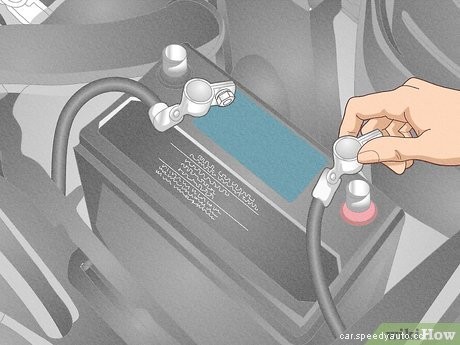
Disconnect your vehicle’s battery if it’s still hooked up. Before you get started, make sure your vehicle is safely parked and turned off completely. Pop the hood (or the trunk, as the case may be) and use a socket wrench of the appropriate size to loosen the nuts holding the connector cables to their respective terminals. Undo the negative terminal first, followed by the positive terminal.
1
Disconnect your vehicle’s battery if it’s still hooked up. Before you get started, make sure your vehicle is safely parked and turned off completely. Pop the hood (or the trunk, as the case may be) and use a socket wrench of the appropriate size to loosen the nuts holding the connector cables to their respective terminals. Undo the negative terminal first, followed by the positive terminal.
 2
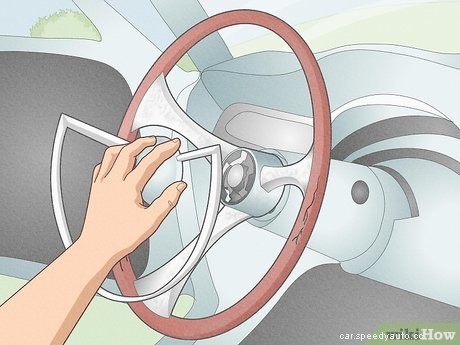
Remove the horn ring and mounting nut holding the steering wheel in place. Press down on the horn ring at the center of the wheel and twist it counterclockwise (left) to unscrew it. Use a suitably-sized wrench or socket to loosen the mounting nut beneath. Set both of these pieces aside somewhere you won’t accidentally misplace them.
2
Remove the horn ring and mounting nut holding the steering wheel in place. Press down on the horn ring at the center of the wheel and twist it counterclockwise (left) to unscrew it. Use a suitably-sized wrench or socket to loosen the mounting nut beneath. Set both of these pieces aside somewhere you won’t accidentally misplace them.
 3
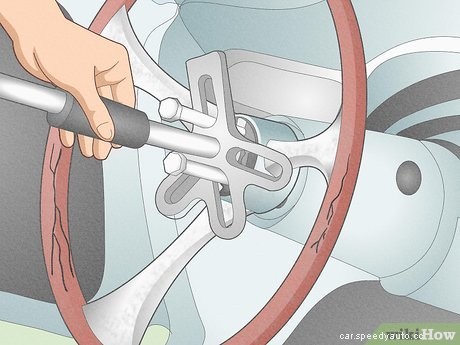
Fit a wheel puller tool onto the center of your steering wheel. Make sure that the device is aligned with the now-open slot in the middle of the wheel. Slip the 2 included fixing bolts through the slots on either side of the body of the puller and into the holes in the face of the steering hub. Tighten both bolts with your wrench or socket by turning them clockwise.
3
Fit a wheel puller tool onto the center of your steering wheel. Make sure that the device is aligned with the now-open slot in the middle of the wheel. Slip the 2 included fixing bolts through the slots on either side of the body of the puller and into the holes in the face of the steering hub. Tighten both bolts with your wrench or socket by turning them clockwise.
Alternative: It’s possible to remove some older steering wheels by simply taking a firm grip on both sides and pulling forcefully.
 4
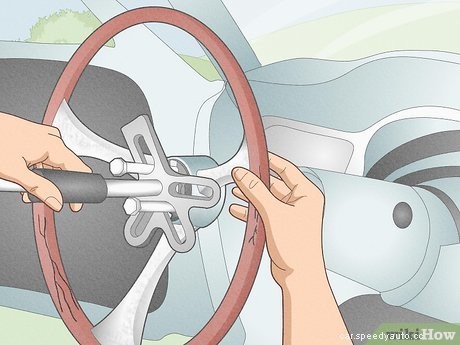
Tighten the tool's central bolt to remove the wheel from the steering shaft. Insert the third, larger bolt into the middle of the wheel puller and begin turning it clockwise, the same way you did the smaller fixing bolts. Applying gradual rotational force to the central bolt will cause the wheel to release from its seat, at which point you can simply slide it off.
4
Tighten the tool's central bolt to remove the wheel from the steering shaft. Insert the third, larger bolt into the middle of the wheel puller and begin turning it clockwise, the same way you did the smaller fixing bolts. Applying gradual rotational force to the central bolt will cause the wheel to release from its seat, at which point you can simply slide it off.
 5
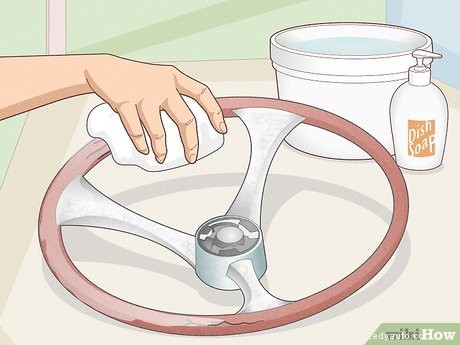
Wipe the wheel with a mixture of warm water and mild liquid dish soap. Wet a soft, lint-free cloth or paper towel with the soap solution and scrub the wheel from top to bottom to remove accumulated dirt and grime. When you’re done, saturate a second, clean cloth or paper towel with plain water and go back over the wheel to clear away the remaining soap solution.
5
Wipe the wheel with a mixture of warm water and mild liquid dish soap. Wet a soft, lint-free cloth or paper towel with the soap solution and scrub the wheel from top to bottom to remove accumulated dirt and grime. When you’re done, saturate a second, clean cloth or paper towel with plain water and go back over the wheel to clear away the remaining soap solution.
 6
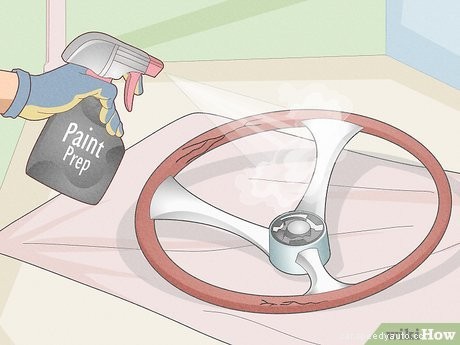
Spray the wheel with a paint prep solution and wipe it down a second time. Lay the wheel out on a plastic tarp, canvas dropcloth, or layer of newspapers to work cleanly and efficiently. Wet one side of the wheel with the spray and buff it thoroughly with a separate cloth or paper towel, then turn it over and repeat on the opposite side.
6
Spray the wheel with a paint prep solution and wipe it down a second time. Lay the wheel out on a plastic tarp, canvas dropcloth, or layer of newspapers to work cleanly and efficiently. Wet one side of the wheel with the spray and buff it thoroughly with a separate cloth or paper towel, then turn it over and repeat on the opposite side.
 1
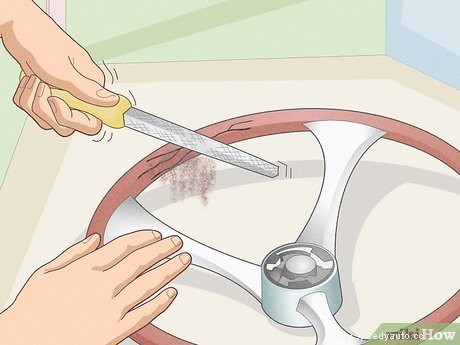
Use a triangle file to widen small cracks along the wheel’s outer surface. Fit one of the file’s angled edges into each crack and run it back and forth using a moderate pressure. This will give the crack a neat, even V-shape, making it easier to fill in with the epoxy paste that you’ll be using to rebuild the wheel.
1
Use a triangle file to widen small cracks along the wheel’s outer surface. Fit one of the file’s angled edges into each crack and run it back and forth using a moderate pressure. This will give the crack a neat, even V-shape, making it easier to fill in with the epoxy paste that you’ll be using to rebuild the wheel.
 2
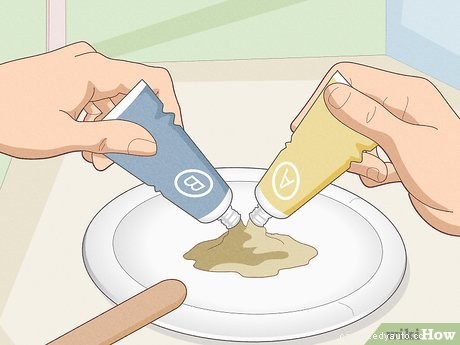
Mix up a strong 2-part epoxy paste or putty. Most products come with separate containers of resin and hardener that form a thick, quick-drying paste when combined. Blend the components according to the instructions laid out on the packaging of the product you’re working with.
2
Mix up a strong 2-part epoxy paste or putty. Most products come with separate containers of resin and hardener that form a thick, quick-drying paste when combined. Blend the components according to the instructions laid out on the packaging of the product you’re working with.
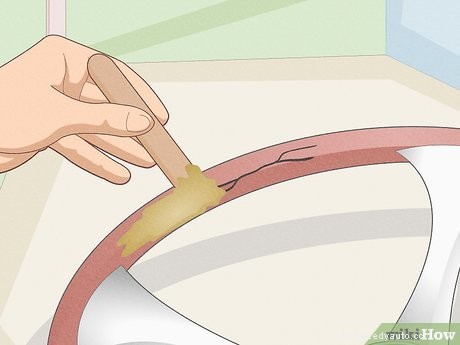 3
Fill in the damaged spots along the wheel with the epoxy. Dab the compound into the cracks and crevices using the same tool that you used to mix it. If your chosen product didn’t come with its own applicator, wooden popsicle sticks and flexible plastic putty knives can both serve as great makeshift spreaders. Be sure to overfill each area slightly, as most epoxies have a tendency to shrink a bit as they dry.
3
Fill in the damaged spots along the wheel with the epoxy. Dab the compound into the cracks and crevices using the same tool that you used to mix it. If your chosen product didn’t come with its own applicator, wooden popsicle sticks and flexible plastic putty knives can both serve as great makeshift spreaders. Be sure to overfill each area slightly, as most epoxies have a tendency to shrink a bit as they dry.
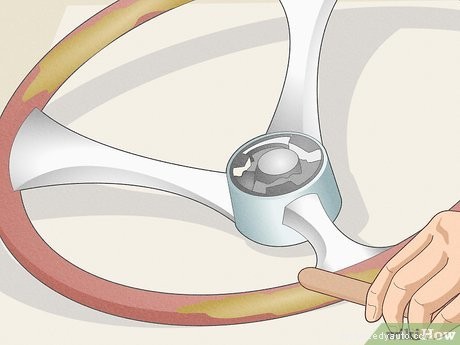 4
Shape the epoxy until it matches the contours of the steering wheel. If you’re working with a paste, use your applicator to carefully distribute the compound and remove any excess, if necessary. Putties can simply be molded by hand. Take your time and work carefully. It’s important for the wheel to have a smooth, consistent finish all the way around.
4
Shape the epoxy until it matches the contours of the steering wheel. If you’re working with a paste, use your applicator to carefully distribute the compound and remove any excess, if necessary. Putties can simply be molded by hand. Take your time and work carefully. It’s important for the wheel to have a smooth, consistent finish all the way around.
Tip: For greater efficiency and control, wet one finger and use it to smooth paste-style epoxies while they're still nice and soft.
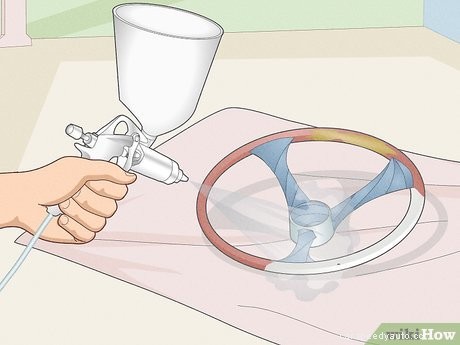 5
Allow the epoxy to dry for at least 24 hours. Under normal conditions, the majority of epoxies will harden to a paintable consistency in about one full day and cure completely within two. Avoid handling the wheel in the meantime. Touching the fresh compound could cause it to lose its shape, ruining all of your hard work.
5
Allow the epoxy to dry for at least 24 hours. Under normal conditions, the majority of epoxies will harden to a paintable consistency in about one full day and cure completely within two. Avoid handling the wheel in the meantime. Touching the fresh compound could cause it to lose its shape, ruining all of your hard work.
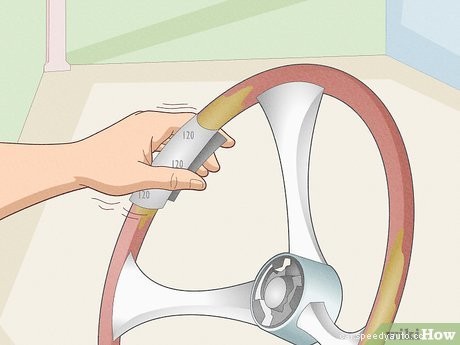 1
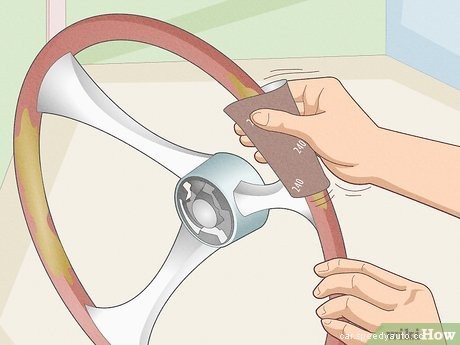
Sand the wheel to an even texture using a high-grit sandpaper. Wrap the sandpaper around the edge of the wheel and glide it back and forth while applying light-to-moderate pressure. Focus on areas where the dried epoxy has expanded beyond the wheel’s outer surface. A good sanding will not only do away with uneven spots but also encourage your cover-up paint to stick better.
1
Sand the wheel to an even texture using a high-grit sandpaper. Wrap the sandpaper around the edge of the wheel and glide it back and forth while applying light-to-moderate pressure. Focus on areas where the dried epoxy has expanded beyond the wheel’s outer surface. A good sanding will not only do away with uneven spots but also encourage your cover-up paint to stick better.
 2
Switch to an extra fine sandpaper to achieve as smooth a finish as possible. Once you’re done with your preliminary sanding, repeat the process with a sheet of sandpaper in the 240-400-grit range. This will gently wear down the roughness of the dried epoxy and surrounding material, leaving the wheel almost as perfect as the day it came off the assembly line.
3
Prep the wheel with an even coat of urethane-based automotive primer. For maximum efficiency and professional-grade results, load your primer into a high-powered spray gun. If one of these tools is outside your budget, you can also get the job done using an ordinary spray can. Hold your sprayer 10–12 inches (25–30 cm) away from the wheel and wave it back and forth from various angles to coat the entire outer surface. Allow the primer to dry for about one full hour before proceeding.
2
Switch to an extra fine sandpaper to achieve as smooth a finish as possible. Once you’re done with your preliminary sanding, repeat the process with a sheet of sandpaper in the 240-400-grit range. This will gently wear down the roughness of the dried epoxy and surrounding material, leaving the wheel almost as perfect as the day it came off the assembly line.
3
Prep the wheel with an even coat of urethane-based automotive primer. For maximum efficiency and professional-grade results, load your primer into a high-powered spray gun. If one of these tools is outside your budget, you can also get the job done using an ordinary spray can. Hold your sprayer 10–12 inches (25–30 cm) away from the wheel and wave it back and forth from various angles to coat the entire outer surface. Allow the primer to dry for about one full hour before proceeding.
Tip: Use painter’s tape to mask any sections of the wheel that you don’t want to re-color, such as the hub spokes or outlying detail work.
 1
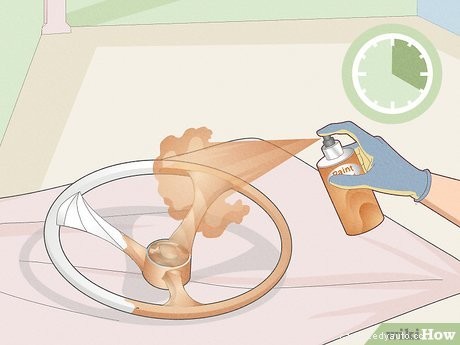
Spray on your first coat of paint and let it dry for at least 20 minutes. Apply your paint the same way you did the initial primer, positioning your sprayer at a distance of 10–12 inches (25–30 cm) and moving it constantly. This technique will provide the optimum balance between depth of color and distribution.
1
Spray on your first coat of paint and let it dry for at least 20 minutes. Apply your paint the same way you did the initial primer, positioning your sprayer at a distance of 10–12 inches (25–30 cm) and moving it constantly. This technique will provide the optimum balance between depth of color and distribution.
Tip: Keep the nozzle of your sprayer perpendicular to the surface of the wheel at all times to avoid inconsistencies in the thickness of the paint.
 2
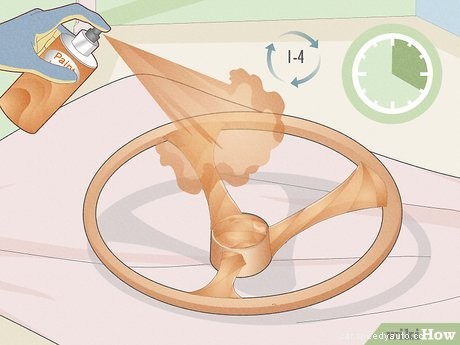
Follow up with 1-4 additional coats, waiting 20 minutes between each. Plan on using a minimum of 2 coats total (though most automotive experts recommend 4-5 total for best results). Layering multiple light coats, as opposed to a slapping on a single heavy coat, will guarantee maximum coverage without creating drips or streaks.
2
Follow up with 1-4 additional coats, waiting 20 minutes between each. Plan on using a minimum of 2 coats total (though most automotive experts recommend 4-5 total for best results). Layering multiple light coats, as opposed to a slapping on a single heavy coat, will guarantee maximum coverage without creating drips or streaks.
 3
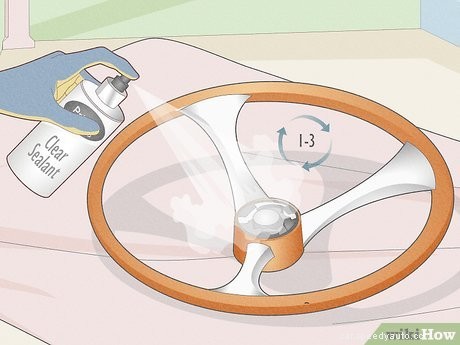
Apply 1-3 coats of clear sealant to protect the new finish. Hold the can of sealant 12–16 inches (30–41 cm) away from the wheel and everywhere that you’ve applied new paint. Allot at least 15 minutes of drying time between coats. Once the final coat cures completely, all that’s left to do is remount your steering wheel and marvel at how new it looks!
3
Apply 1-3 coats of clear sealant to protect the new finish. Hold the can of sealant 12–16 inches (30–41 cm) away from the wheel and everywhere that you’ve applied new paint. Allot at least 15 minutes of drying time between coats. Once the final coat cures completely, all that’s left to do is remount your steering wheel and marvel at how new it looks!
