
 1
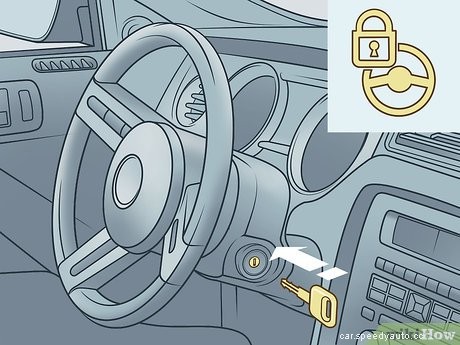
Insert the key into the ignition. Your steering wheel is likely locked because there was a bit of force on the wheel as you turned the car off last. Unlocking it will require using the ignition key in the same way you would when starting the vehicle.
1
Insert the key into the ignition. Your steering wheel is likely locked because there was a bit of force on the wheel as you turned the car off last. Unlocking it will require using the ignition key in the same way you would when starting the vehicle.
 2
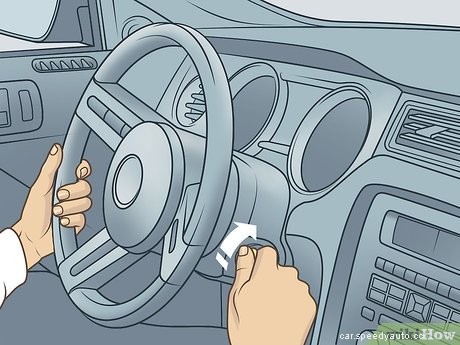
Turn the key gently. If the key and wheel both remain locked in place, you will need to apply pressure to the key in the direction you would usually turn it. Be careful not to apply the pressure too high up on the body of the key, as that may cause the key to twist or even break while inside the key hole. Instead, apply firm but gentle pressure until the ignition comes unlocked.
2
Turn the key gently. If the key and wheel both remain locked in place, you will need to apply pressure to the key in the direction you would usually turn it. Be careful not to apply the pressure too high up on the body of the key, as that may cause the key to twist or even break while inside the key hole. Instead, apply firm but gentle pressure until the ignition comes unlocked.
Note: If the key doesn't turn with slight pressure, applying more will not increase the likelihood of it turning. Instead, maintain light pressure on the key and move on to the next step.
 3
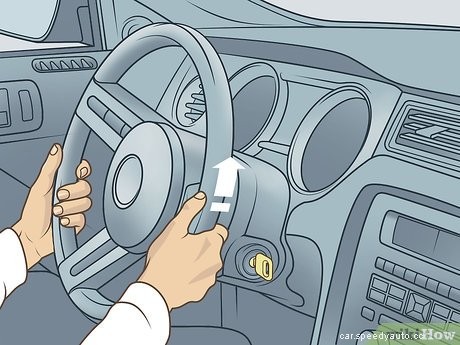
Apply pressure to the steering wheel. The steering wheel is locked in place using a pin on one side. When locked, the wheel will not be able to move in either direction freely, but one side will not allow any movement whatsoever (the side with the locking pin). Determine which direction the wheel cannot move, then apply pressure in the other direction while turning the key with your other hand.
3
Apply pressure to the steering wheel. The steering wheel is locked in place using a pin on one side. When locked, the wheel will not be able to move in either direction freely, but one side will not allow any movement whatsoever (the side with the locking pin). Determine which direction the wheel cannot move, then apply pressure in the other direction while turning the key with your other hand.
 4
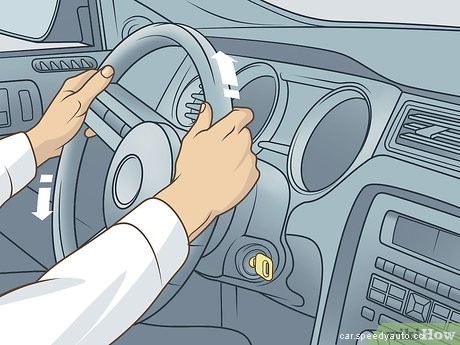
Do not shake or rock the wheel. You may be tempted to shake the wheel back and forth while attempting to unlock it, but doing so will actually decrease your chances of successfully unlocking the wheel. Instead, apply steady pressure in one direction on the wheel until it unlocks.
4
Do not shake or rock the wheel. You may be tempted to shake the wheel back and forth while attempting to unlock it, but doing so will actually decrease your chances of successfully unlocking the wheel. Instead, apply steady pressure in one direction on the wheel until it unlocks.
 5
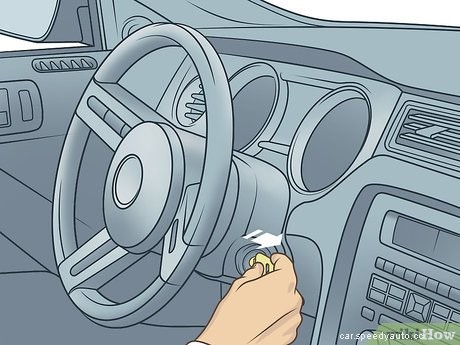
Pull the key out slightly before turning it. If the key is beginning to wear out it may not be able to turn in the ignition. You may still be able to engage the pins needed to start the vehicle by inserting the key in all the way, then pulling it back out slightly. Try to pull the key back out 1/16 of an inch, or approximately the width of a nickel, then attempt to turn it again.
5
Pull the key out slightly before turning it. If the key is beginning to wear out it may not be able to turn in the ignition. You may still be able to engage the pins needed to start the vehicle by inserting the key in all the way, then pulling it back out slightly. Try to pull the key back out 1/16 of an inch, or approximately the width of a nickel, then attempt to turn it again.
 6
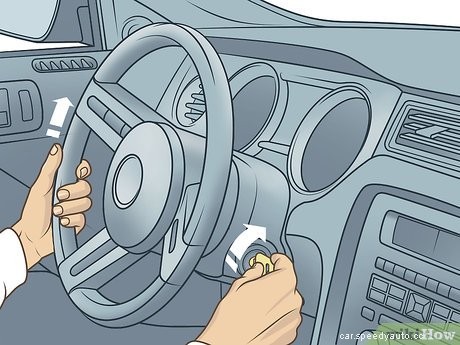
Turn the wheel and the key at once to unlock it. It may take a few tries, but if you apply pressure to the wheel in the right direction while simultaneously turning the key, it will unlock both, allowing the wheel to move freely and the vehicle to start. While it may take a fair amount of pressure, do not force either the wheel or the ignition to turn if they seem like they won't. It may result in breaking the steering pin, your key, or other internal components.
6
Turn the wheel and the key at once to unlock it. It may take a few tries, but if you apply pressure to the wheel in the right direction while simultaneously turning the key, it will unlock both, allowing the wheel to move freely and the vehicle to start. While it may take a fair amount of pressure, do not force either the wheel or the ignition to turn if they seem like they won't. It may result in breaking the steering pin, your key, or other internal components.
 1
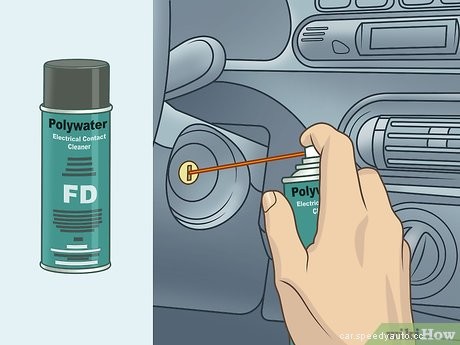
Use a small dose of electrical cleaner in the key hole. If the ignition cylinder has seized, spraying a small amount of electrical cleaner into the key hole may lubricate it enough to turn. Be careful not to spray too much into the key hole. A few short squirts should suffice. Once done, insert the key and turn it back and forth gently to work the lubricant in.
1
Use a small dose of electrical cleaner in the key hole. If the ignition cylinder has seized, spraying a small amount of electrical cleaner into the key hole may lubricate it enough to turn. Be careful not to spray too much into the key hole. A few short squirts should suffice. Once done, insert the key and turn it back and forth gently to work the lubricant in.
Tip: Liquid graphite may also work to lubricate the cylinder.
 2
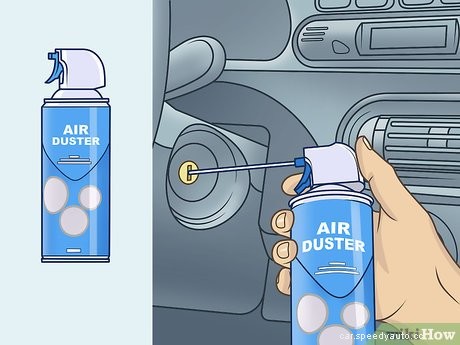
Spray canned air into the ignition. Debris caught in the ignition can prevent the key from turning, which will prevent the steering wheel from unlocking. Purchase canned air from a local retail or office supply store and insert the straw from the nozzle directly into the key hole. It should only take a few short sprays to clean out any debris.
2
Spray canned air into the ignition. Debris caught in the ignition can prevent the key from turning, which will prevent the steering wheel from unlocking. Purchase canned air from a local retail or office supply store and insert the straw from the nozzle directly into the key hole. It should only take a few short sprays to clean out any debris.
 3
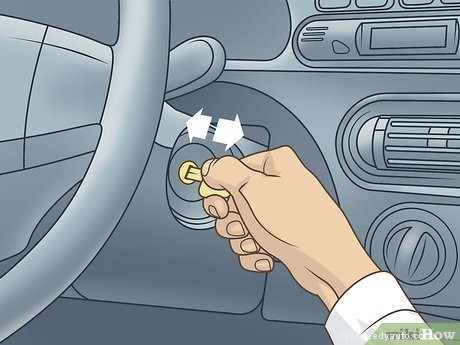
Gently slide the key in and out a number of times. If there was any debris stuck to the key when you inserted it, it may have gotten caught in the pins of the ignition cylinder. Insert the key completely, then slide it back out. Repeat the process a few times to try to move any debris that may be caught in the cylinder.
3
Gently slide the key in and out a number of times. If there was any debris stuck to the key when you inserted it, it may have gotten caught in the pins of the ignition cylinder. Insert the key completely, then slide it back out. Repeat the process a few times to try to move any debris that may be caught in the cylinder.
 4
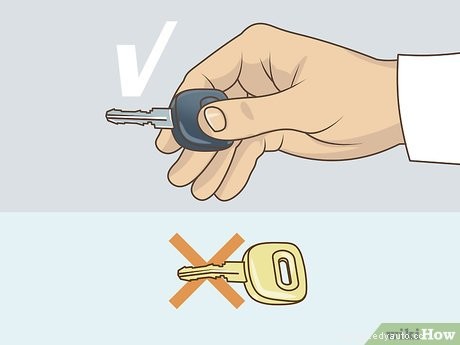
Ensure the key is not bent or damaged. If your key won't turn when you insert it into the ignition it may be because the key has been damaged. Rounded or chipped teeth on the key will no longer engage the pins in the ignition cylinder to the depth necessary to spin it. Any of these could result in the key failing to turn in the ignition, which will also prevent the wheel from being unlocked.
4
Ensure the key is not bent or damaged. If your key won't turn when you insert it into the ignition it may be because the key has been damaged. Rounded or chipped teeth on the key will no longer engage the pins in the ignition cylinder to the depth necessary to spin it. Any of these could result in the key failing to turn in the ignition, which will also prevent the wheel from being unlocked.
 1
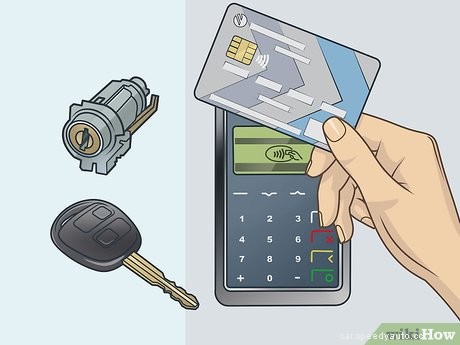
Purchase a new ignition lock assembly. Ignition assemblies are easily replaced in most vehicles and can be done at home by most hobby mechanics. Before getting started, you will need to order a replacement assembly from your local auto parts store. Be sure to give them the exact year, make and model of your vehicle to get the correct replacement part.
1
Purchase a new ignition lock assembly. Ignition assemblies are easily replaced in most vehicles and can be done at home by most hobby mechanics. Before getting started, you will need to order a replacement assembly from your local auto parts store. Be sure to give them the exact year, make and model of your vehicle to get the correct replacement part.
Tip: Vehicle manufacturers don't change part numbers often and obtaining the correct replacement from part stores is not usually an issue.
 2
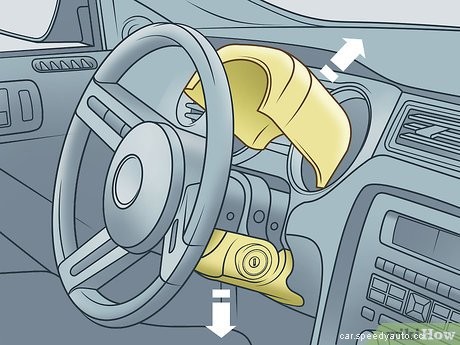
Remove the cover over the ignition. Generally, most vehicles have a split-plastic housing that covers the steering column and ignition lock assembly. Remove this plastic cover by first adjusting the tilt-wheel to its lowest position and then removing the fasteners holding the cover in place. In some vehicles, the cover will include the portion above and below the steering wheel, while in others the ignition cover will be separate.
2
Remove the cover over the ignition. Generally, most vehicles have a split-plastic housing that covers the steering column and ignition lock assembly. Remove this plastic cover by first adjusting the tilt-wheel to its lowest position and then removing the fasteners holding the cover in place. In some vehicles, the cover will include the portion above and below the steering wheel, while in others the ignition cover will be separate.
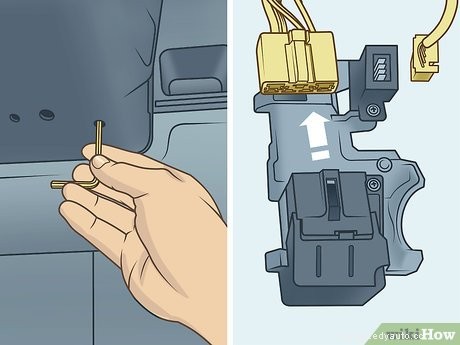 3
Use an Allen wrench to release the ignition assembly. Identify the ignition assembly and remove any trim components that prevent access to the ignition wire harness connector and tumbler release hole. Insert a 9/32" Allen wrench into the release hole while turning the ignition key backward.
3
Use an Allen wrench to release the ignition assembly. Identify the ignition assembly and remove any trim components that prevent access to the ignition wire harness connector and tumbler release hole. Insert a 9/32" Allen wrench into the release hole while turning the ignition key backward.
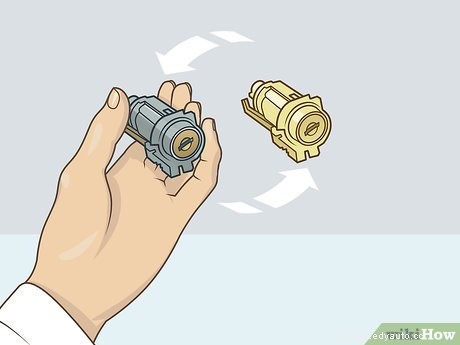 4
Make sure the new ignition switch is well-greased. Once the ignition assembly is removed, compare the new switch and ensure they match. New ignition switches come pre-lubed from the factory ready to install. Verify the presence of grease on all external moving parts and ensure the new key fits and that the cylinder rotates smoothly in both directions.
4
Make sure the new ignition switch is well-greased. Once the ignition assembly is removed, compare the new switch and ensure they match. New ignition switches come pre-lubed from the factory ready to install. Verify the presence of grease on all external moving parts and ensure the new key fits and that the cylinder rotates smoothly in both directions.
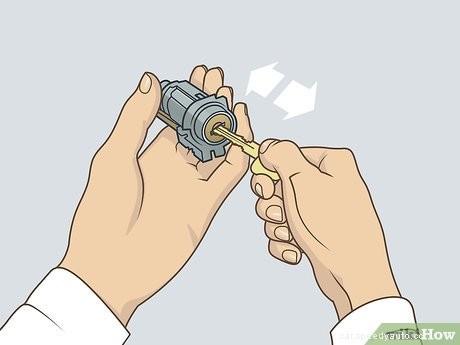 5
Ensure that the internal lock pins can move freely. You can make sure the internal lock pins move properly by inserting the key completely in and out of the keyhole several times. The key should not get caught or stuck on its way into our out of the key hole.
5
Ensure that the internal lock pins can move freely. You can make sure the internal lock pins move properly by inserting the key completely in and out of the keyhole several times. The key should not get caught or stuck on its way into our out of the key hole.
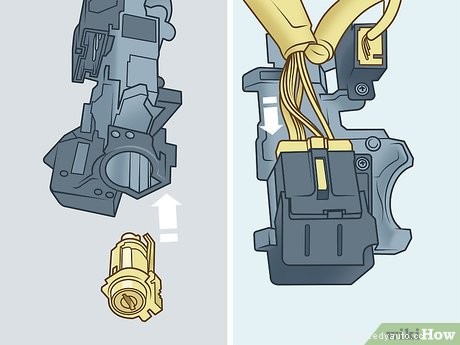 6
Slide the cylinder into place and reconnect the switch plug. When satisfied the new assembly matches the old one and is properly lubricated, slide the cylinder into position and make sure it is locked in place. Reconnect the switch plug and reinstall any trim components previously removed.
6
Slide the cylinder into place and reconnect the switch plug. When satisfied the new assembly matches the old one and is properly lubricated, slide the cylinder into position and make sure it is locked in place. Reconnect the switch plug and reinstall any trim components previously removed.
 7
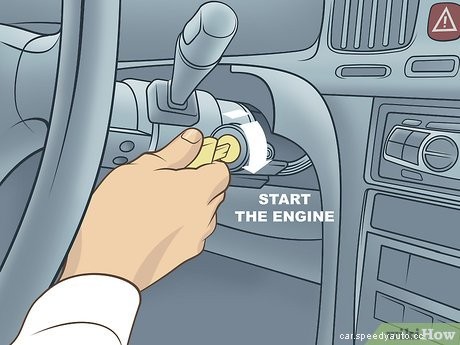
Start the engine to ensure the steering wheel lock disengages. Before securing the steering column (if disconnected) and plastic cover, check to make sure the engine will start and steering wheel lock will /disengage. Do so by inserting the key and turning it while applying pressure to the wheel in the opposite direction of the lock pin.
7
Start the engine to ensure the steering wheel lock disengages. Before securing the steering column (if disconnected) and plastic cover, check to make sure the engine will start and steering wheel lock will /disengage. Do so by inserting the key and turning it while applying pressure to the wheel in the opposite direction of the lock pin.
