
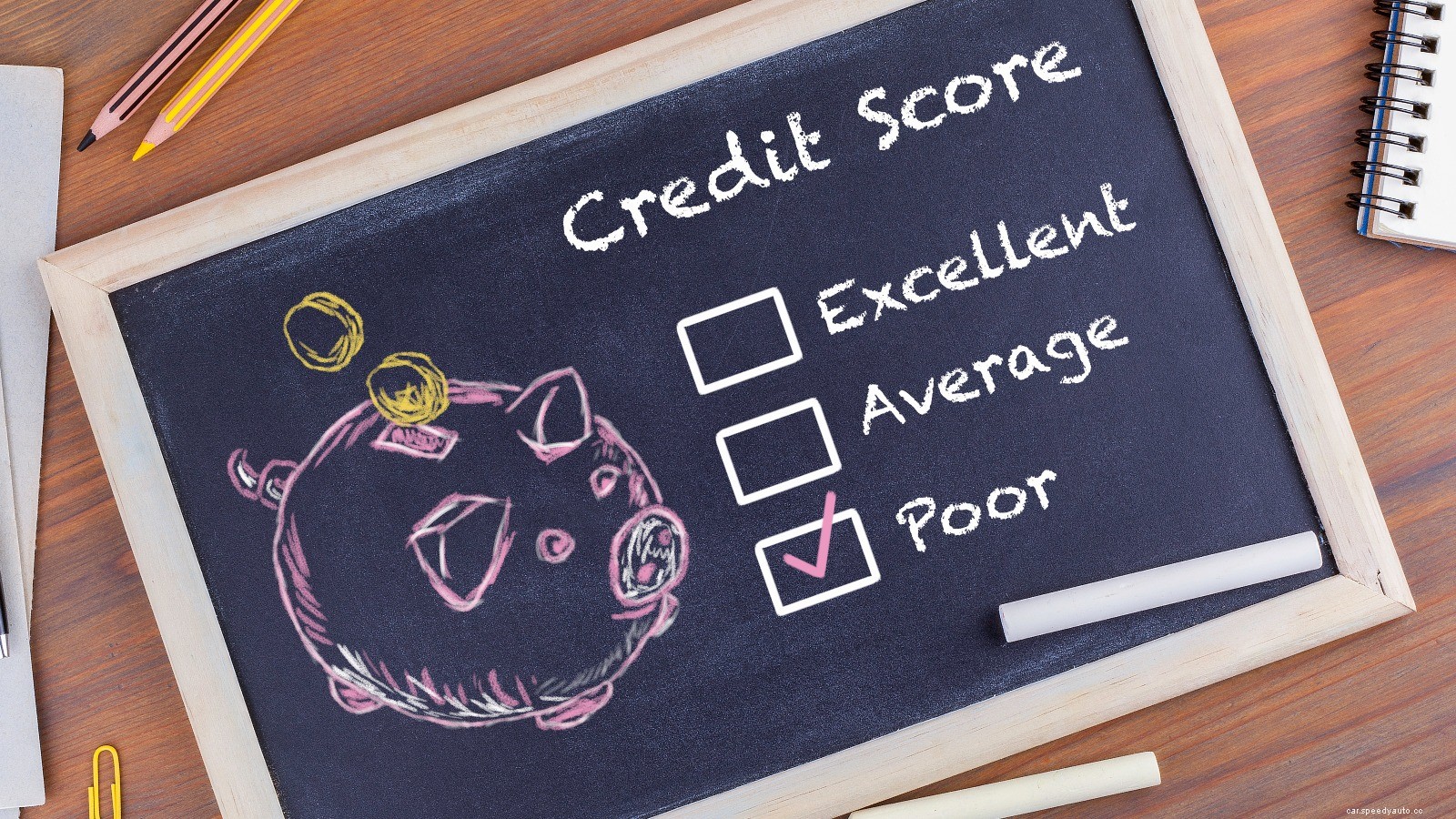
When your credit score looks less than stellar, it can result in a high interest, bad credit car loan. It may also put you in double-trouble requiring you to go to a bad credit car dealership – one of the so-called “buy here, pay here” outlets, or those that act as dealers and lend you the money at high interest rates.
There’s no getting around it: A bad credit score and a poor credit history can add up to trouble when shopping for a new or used car. What is a good and bad credit score? Let’s take a look.
Good and Bad credit scores get determined by the big three credit reporting agencies: Equifax, TransUnion, and Experian. These credit reporting agencies track your spending and paying habits and rate your creditworthiness accordingly.
The rating system results in a FICO score, an acronym for Fair Isaac Corporation, a California-based credit analytics firm.
FICO scores range from “Poor” to “Exceptional.”
According to Experian, approximately 67% of Americans received “Good” FICO scores of 670 or better in 2020. In 2021, the credit agency said the average FICO score was 714. If your credit score falls below the “Good” level and if affected by factors like the current-day pandemic, it may be a challenge to get a good car loan with bad credit.
But it’s not impossible.
There may be some impossibilities in life, but getting a car loan if you have bad credit doesn’t have to be one of them. Car buyers with bad credit scores manage to get approved for car purchases all the time. It just takes some thoughtful planning to get the loan you want and the car you need.
While cars for bad credit exist at the “buy here, pay here” dealers, traditional car dealerships also offer loans with higher interest rates and that’s the better option overall (read on to find out why).
Don’t forget — you can look at a dealership’s used cars, too.
Getting a car loan with bad credit requires you to remember the following:
This last point bears repeating: Keep your expectations in check with your credit history. In other words, it’s not smart to want a foreign-built luxury cruiser when your budget and credit rating are more in line with purchasing a second-owner domestic model that may be a trim level or two down from the top of the line.
There will be time for that later.
Banks and other lenders are in the business of making money with money. That happens by lending to others and charging interest for the use of the funds. As with most things in life, relationships with banks and lenders get built on trust. Lenders typically trust prospective buyers with excellent credit ratings and a record for punctuality in paying their bills on time.
On the other hand, banks don’t trust borrowers with lousy credit nearly as much and hedge their bets by charging much higher interest rates for a car loan. Still, car loans for bad credit do exist for buyers at traditional dealerships. Terms on bad credit loans have more restrictions than at the other end of the car loan spectrum. Check your local dealership and inquire about loans by connecting to their car finance department.
Buying a car with bad credit can be a path to a better credit score. But it’s best not to make mistakes in picking a more expensive vehicle than you can afford. Such a case of biting off more than you can chew can hurt your future financial well-being.
Another thing to consider is that after a year or so of timely payments on your car loan, your credit score will likely improve. With your credit score climbing, you may be able to refinance the loan, this time at a lower interest rate.
The number one tip to getting the best car loan is knowing how bad your credit may be. Determining your FICO score is a good start, but it will result from your credit report.
If you can live without a car in the immediate future, do your best to improve your credit score first.
Take steps and consider getting assistance from national nonprofit credit counseling agencies such as Take Charge America (TCA), a Phoenix-based credit counseling service, or Consumer Credit Counseling Services in Atlanta.
These credit counseling agencies can help those with poor credit by consolidating payments at reduced interest rates. They can help you get back on sound financial footing sooner than if you continued to pay off your debt in a traditional manner.
Improving your credit before buying a car may not be the exact plan once life gets in the way.
“There are times when it is necessary to buy a car before credit ratings can be improved,” says Michael Sullivan, a personal financial consultant at TCA. “Keeping a job may require it, or a medical condition may make it critical. A consumer with poor credit can often still get credit but needs to be careful.”
A co-signer with good credit shows that others believe in you, so perhaps the lender should, too. If possible, check with a friend, relative, mentor, or someone else who will stand by you in this time of need.
Besides buying a car that fits your needs and means, other factors can help you, especially when comparing offers for car loans. Try these tips.
Consumers can access their credit reports for free. Credit reports are available online from the three credit reporting agencies (Equifax, TransUnion, and Experian) as well as through AnnualCreditReport.com.
Upon receiving your credit report, check for mistakes and fraud. That wasn’t you requesting a credit card be sent to a United States Post Office box in Sturgis, South Dakota? Or a payment history belonging to John F. Doe found its way into John P. Doe’s credit history?
Once you check your credit history, you will know where you stand before going to a dealership and having to hear what may be potentially bad news from a third party. We’ve been there, done that, and have the T-shirt, which thankfully no longer fits.
Remember, knowledge is power.
Just as your credit history didn’t head south overnight, it will take time to improve. Just how long depends on the severity of the delinquencies and your level of dedication. According to Experian, it could take several months to several years, including if you had your last car repossessed. Collections and late payments stay on your credit report for seven years, while Chapter 7 bankruptcies remain on them for up to 10 years, the credit agency said.
RELATED STORIES: What to Do if You Can’t Make Your Car Payment
So it takes patience, effort, and a few useful tips, too.
Related Car Buying Stories:
