
Jumpstarting a car can get it running even if the battery has been depleted completely. It relies on the battery power of the second vehicle to crank the engine and get the alternator going. But knowing that you’ve got a bad alternator, can you still jumpstart your car?
Yes, jumpstarting a car with a bad alternator will work, but it won’t continue running for long.
To understand what’s going on, I’ll go into more detail on how the system works so if you’re interested, keep reading and learn what needs to be done to get your car running reliably again!
Starting and running the car’s electrical components relies on three components: battery, starter, and alternator.
Car batteries store a massive amount of power, which is necessary to make the starter crank the engine. By turning the engine over manually, the starter allows it to suck in air which is combined with fuel to create the first ignitions.
The explosions will force half the pistons down and in turn, drive the other half up to pressurize and combust the air-fuel mixture. From this point on, the engine is running independently, and both the car battery and the starter have completed their purpose.
Now that the engine is running it powers the alternator through the serpentine (drive) belt. The alternator is an electric generator that turns the rotational force into electricity to supply the dashboard, radio, headlights, ECU, and other components. At the same time, it also recharges the battery to make up for the power spent on cranking the engine.
Alternator issues are often mistaken for problems with the battery and lead to unnecessary and expensive battery replacement. Once we cover the symptoms of a bad alternator, you’ll be able to easily tell when it’s gone bad.
The end result of a bad alternator is a dead battery which prevents the vehicle from starting. Red battery light will appear on the dashboard as the first warning.
As you continue driving, you’ll experience a number of electrical issues:
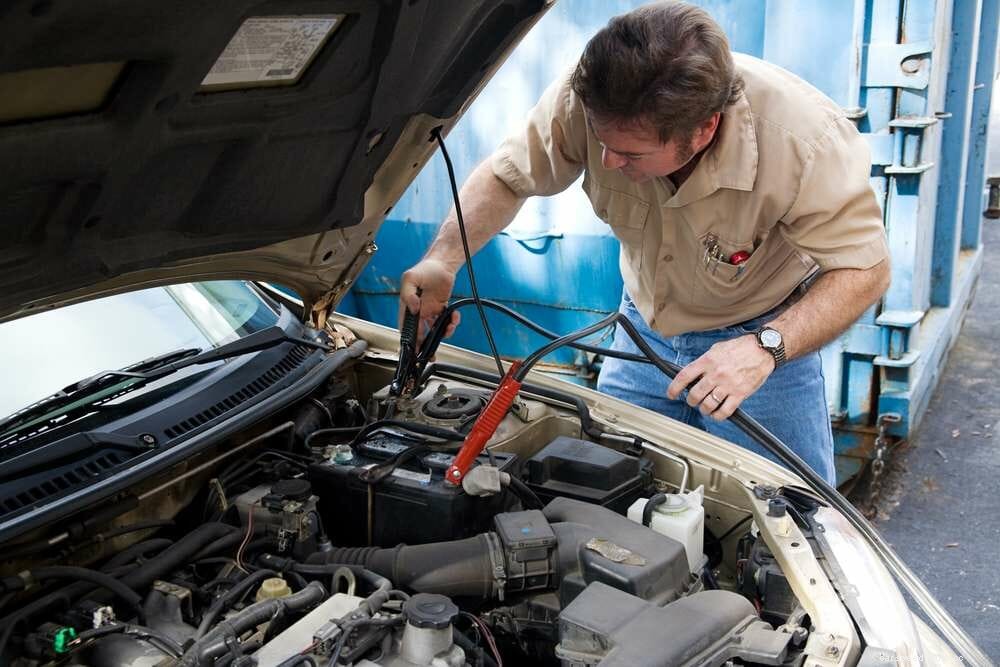
Jumpstarting is a way of quickly getting a car running once the battery has depleted. Through jumper cables, the battery of a functional car is connected to the dead battery.
To compensate for the increased load, the driver of the functional car has to apply some gas to raise the RPM and make the alternator spin faster.
The power of the running car is used to crank the engine of the dead vehicle, at which point its alternator takes over and the jumper cables can be disconnected.
The reason why you’d jumpstart the car is that the battery has depleted to the point where it cannot deliver enough power to the starter. As we’ve discussed earlier, once the car starts, the alternator takes over and the battery is no longer necessary.
However, if the alternator is dead, jumpstarting will get the car running, but the functional alternator of the other car will be responsible for powering both vehicles, which puts a lot of stress on it.
Removing the jumper cables will cut the life support and the car with the faulty alternator will quickly display electrical issues and shut off again.
To summarize, while jumpstarting the vehicle with a bad alternator is possible, it won’t let you drive the vehicle and increases the risk of an electrical component failure. If you want to get to a mechanic or back home without calling a towing service, there is a better way of doing it.
Towing service isn’t cheap, so if you’re stranded at home and need to get to a mechanic that isn’t more than 30 minutes away, you can get away with driving on battery power only. There is a low risk of decreasing the battery’s durability by doing this, but it’s still better than paying for a tow.
Unlike jumpstarting, a battery charger returns the battery power to its maximum power. The only downside is that it may take up to 24h for a full recharge, so you’ll have to charge in your garage, or take the battery out and charge it indoors.
The alternator acts as a primary power supplier when the engine is running. Should it fail, the battery has to take over, but it only has so much power in it. Technically, the car itself is draining the battery and not the alternator, but it has to be repaired or replaced to make the car run normally again.
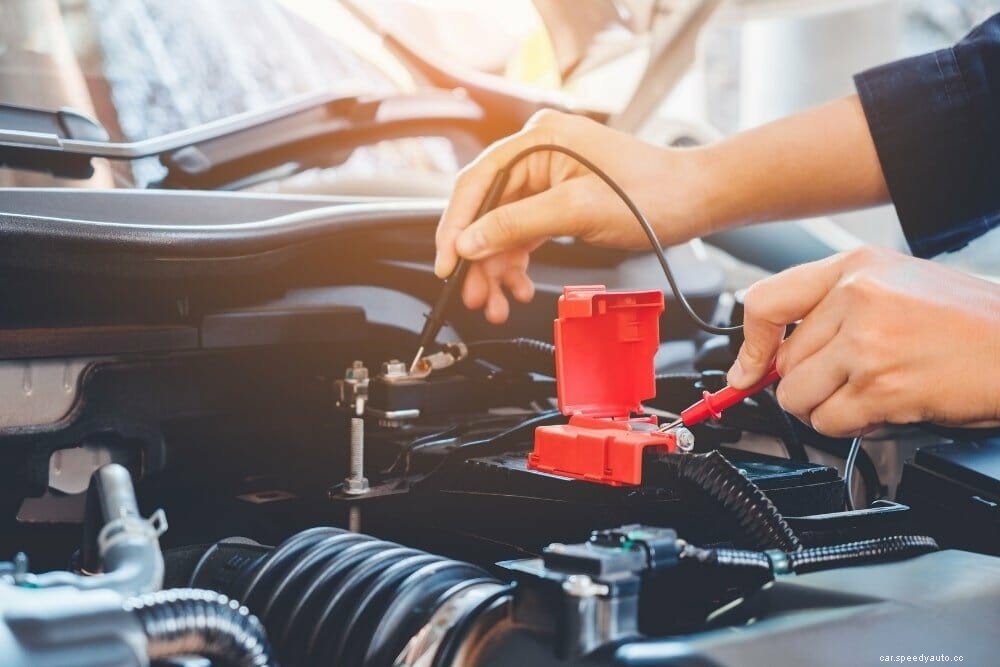
Aside from checking the list of symptoms and scanning the error code, you can use a multimeter to confirm the alternator is running properly. Start the engine and set the meter to 20 volts DC.
Place the test leads on positive and negative terminals of the battery and read the voltage – it should be as close to 12.6V as possible. If the reading is off in either direction, that’s a clear indicator that the alternator has gone bad.
The size of the battery and the number of electrical consumers greatly impact the time it takes for the battery to deplete completely. You can get anywhere between 30 minutes and 2 hours of driving.
Avoid driving at night as you need to use the headlights, turn off the radio, keep the AC off and focus on getting to your destination safely.
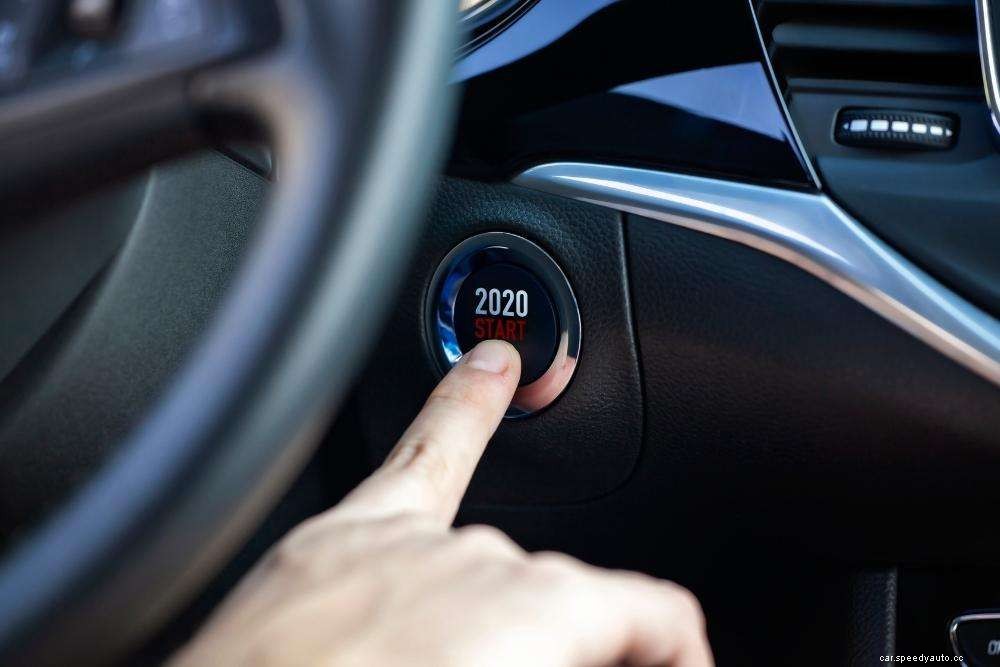
If the battery has charged but the engine isn’t cranking, it means that the starter has failed and has to be replaced.
The most common reason for the alternator to squeal is a bad belt pre-tensioner, bad alternator, or misaligned pulleys.
The alternator may get damaged by the snapping of the serpentine belt, but in almost every case it simply reaches its functional lifespan.
Yes, the power of a car battery will deplete over time, especially if it’s sitting in a car where some residual power consumers run at all times. However, it will take several weeks, if not months for the battery to drain to the point where it cant crank the engine.
Abad alternator will cause an error code to appear, usually the P0562 code. Apart from the check engine light, you’ll get a red battery icon on the dashboard.
Alternator overcharge is most likely caused by a bad voltage regulator. It’s not an easily fixable problem and requires you to take off the alternator and get it repaired or replaced.
The primary role of a jumpstart is to bypass the dead battery and get the engine running. The alternator will then take over and charge the battery while the engine is running.
There’s no need to disconnect the battery terminals – use a multimeter to check the voltage over the battery with the engine running.
Some people will say once a week is necessary to keep the battery in optimal condition, but the most important thing is how you do it. You can leave the car for a few weeks and the battery will still have enough charge, but once you start the car, you should drive it for at least 30 minutes.
When you’ve got a bad alternator, jumpstarting the car is not the best way to get it back on the road. Recharge the battery completely and don’t drive unless you absolutely have to. Replace the alternator as soon as you can to make the car usable and safe to use.
Check out some of these guides to help you:
Can You Jumpstart A Car With A Bad Alternator?
How Long Does It Take to Replace an Alternator?
Honda CR-V Alternators: What You Should Know
