
If you seek the answer to the question: Can I use any charger to plug in my electric vehicle? Read on, and your learning curve will soon get straightened out.
There is both a simple answer to this question and a more complex one. The most straightforward answer is yes. The EV manufacturer provides you with a mobile charging cord that can plug into a regular household outlet or a more powerful 240-volt outlet (shown above) that you would use to power an electric clothes dryer.
Where it gets more complex is your vehicle’s compatibility with public charging stations and what charging choices you will have at home. Mass-market electric vehicle (EVs) and plug-in hybrid vehicles (PHEVs) offer a decade-long charging history and the systems continue to evolve.
This article will explain what chargers you can use, the exceptions, a description of the three levels of charging speeds, and details to help you identify the four connector types. We will also recommend strategies for charging your EV or PHEV at home.
Let’s start by unraveling the complexities and a short explanation of your charging choices. Remember, each EV and PHEV is different.
The two most significant inconsistencies with charging systems are:
Besides the exceptions, all EV and PHEV vehicles in the U.S. use a standardized connector called the CCS1. More on that below.
Your car’s user manual will tell you if your vehicle has any limitations on the safest and most economical type of charging for your model. But for now, this is the basic layout of charging types:
The lowest charging rate is to plug into an average 120-volt wall plug. This charge rate could take up to 30 hours to fully charge an EV and 10 hours to charge a PHEV.
The faster way to charge is with a 240-volt plug like the type that would power an electric clothing dryer. A public charging station supplies this charging level, as does a wall unit or 240-volt outlet at home. With it, a Level 2 charge can take between 4 to 7 hours.
NOTE: You should consult your electrician before charging your EV or PHEV with a 240-volt outlet at home.
A fast or rapid charge is also known as a direct current or DC fast charger. This is the fastest you can charge an EV and it’s only available at public charging stations, including Tesla Supercharger stations. This 400- to 600-volt charge provides direct power to the battery and can reach an 80% charge in less than a half-hour. These types of chargers are only available for EVs, not PHEVs. Some EV batteries cannot handle charges at such high wattage. For instance, some can accept 350 kW while some only can accept 50 kW.
Sadly, a dirty little secret about Level 3 charging is that the highest speed is the toughest on your battery. Many automakers even added a warning inside their car manuals. For instance, some EV models may note that frequent use of DC fast charging can negatively impact battery performance and durability, and recommend minimizing its usage.
Please read your manual to review the limitations of your EV when it comes to rapid charging.
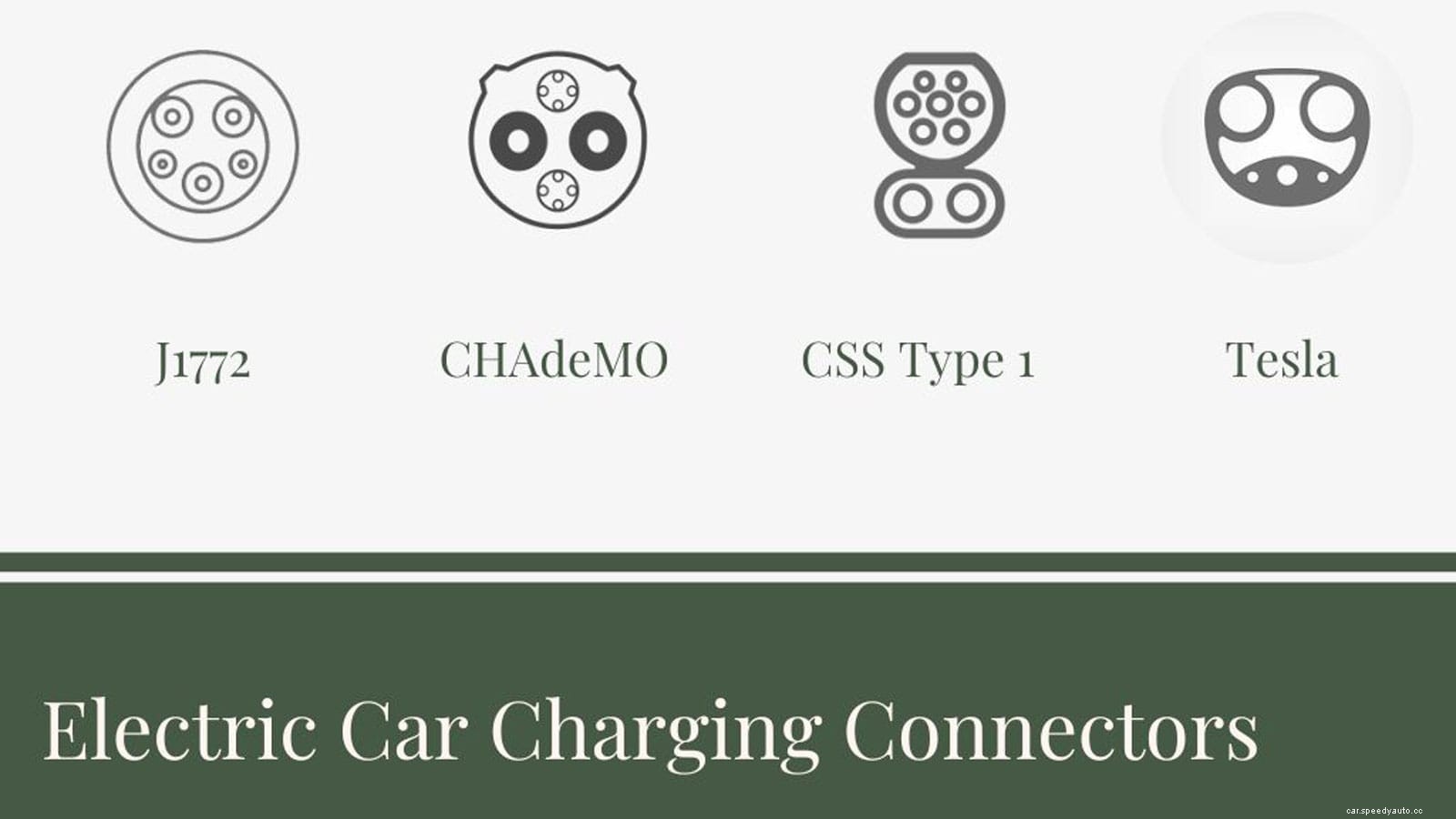
The main two plugs covering 96% of cars in the U.S. market are the Combined Charging System Type 1, or CCS1, and the Tesla connector, exclusively for use with Tesla models. You need only one plug to charge your vehicle at all levels for cars equipped with these two plug types.
A standard plug type was developed and endorsed by the Society of Automotive Engineers (SAE). CCS1 “combines” the standard J1772 connector with two high-speed charging pins. About 80% of EVs and 85% of PHEVs carry this plug connector. Like Tesla, this single plug can be used for Level 1, Level 2, or Level 3 (DC fast charging).
First, embrace that, much like Elon Musk himself, Tesla chargers are unique. Most of Tesla’s public charging stations provide Level 3 Tesla Superchargers, giving an 80% charge in only 20 minutes. Tesla is busy building its proprietary Supercharger stations across the country. Still, at this point, there are only around 6,000 Tesla charging posts compared with the more than 47,000 regular public charging stations.
Instead, drivers of other EVs can take advantage of Tesla Destination Chargers, which are Level 2. An electric vehicle owner can buy a Tesla-to-J1772 adapter and connect a Destination Charger to their car’s charging port.
While a third-party adapter works for the Level 2 Tesla Destination Chargers, non-Tesla EVs cannot use Tesla’s fast chargers yet. Only Tesla models can use Superchargers. Tesla plans to open its Supercharger network to other EVs, but as of this writing, it’s not yet available.
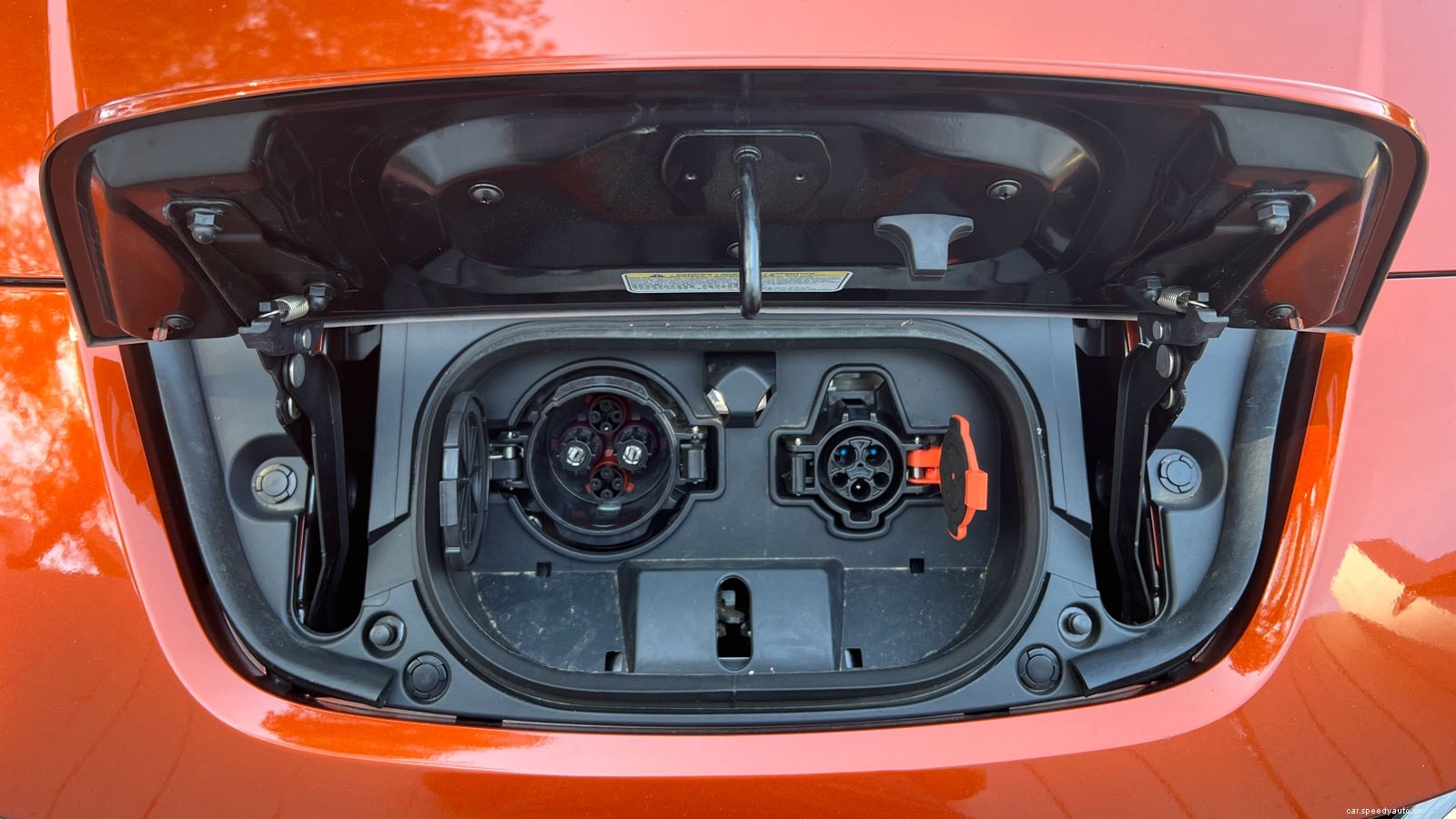
What differentiates these three vehicles is that they have two (not a single) connector slots. One is for Level 1 and Level 2 charging, and the other is for Level 3 DC fast charging. The good news is that the J1772 connector for Levels 1 and 2 works at regular (non-Tesla) charging stations. The other connector is a CHAdeMO and is a standard Level 3 (DC fast charging). However, this technology is being phased out at public charging stations. In the past decade, the CHAdeMO, lost the battle for standardization in the U.S. market.
It would be nice if that was the entire story, but here in 2022, we are still in a transition. Two current models carry two outlets for charging — the Nissan Leaf and Mitsubishi Outlander PHEV — but only with regard to their DC fast charging. These two 2022 models have not yet phased out of the CHAdeMO Japanese standard plug. In these vehicles, there are two separate plugs — a J1772 connector for Level 1 and Level 2 charges, and the CHAdeMO plug. There are nearly a million Leaf models worldwide that share this non-standard plug structure.
Since you can still find used 2015-2019 Kia Soul EVs in the market, it’s worth mentioning how these plugs differ from other Kia EVs. During those model years, the Kia Soul EV still used the two-plug combo of J1772 and CHAdeMO. However, the manufacturer began using the CCS1 single plug on its current electrified models, including the Niro EV and the EV6.
Owning an EV or PHEV is like entering a new world. Here’s a quick-reference chart to overview the experience you can expect when charging up your vehicle.
Power: 120 Volt/3k Watt | Plug: J-1772 | Location: Home
Time to Full Charge: 30+ hours for EV; 10 Hours for PHEV
Range per 30 Minutes: 2 miles
Power: 208/240 Volt/7k-22k Watt | Plug: J-1772 | Location: Home or Public Charging Station
Time to Full Charge: 10 Hours for EV; 3 Hours for PHEV
Range Per 30 Minutes: 12 miles
Power: 480 Volt | Plug: CCS1, CHAdeMO, Tesla | Location: Public Charging Station
Time to Full Charge: 30 minutes for EV (only)
Range Per 30 Minute Charge: 60-200 miles
RELATED STORIES: An EV Charger Buying Guide: See All Your Options
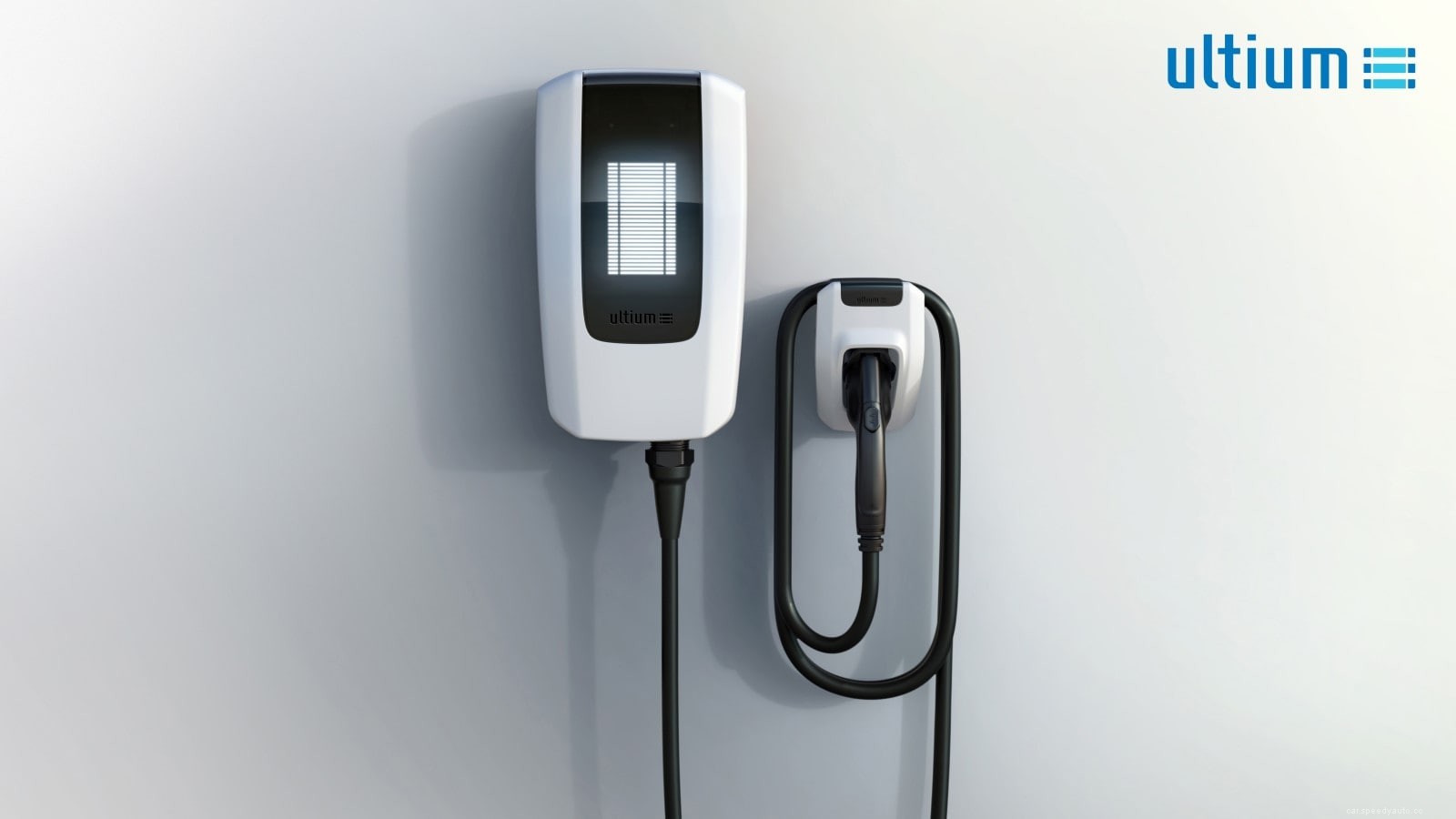
When an EV or PHEV enters your lifestyle, charging your vehicle at home while you sleep is optimal. Many EV owners prefer overnight charging due to the safety, convenience, and lower electricity cost. But not everyone’s situation works the same. Here are the three situations that EV and PHEV drivers choose based on their at-home charging needs.
A popular EV lifestyle strategy is to install a more powerful 240-volt wall unit at home for convenient Level 2 fast charging. In most cases, EV owners purchase an in-home charging “smart” wall unit. These units can send notifications and schedule charging when it suits your schedule. The units cost between $400 to $700, depending on the brand. Many EV owners prefer this type of charger.
Note: You should consult an electrician before installing the wall unit because the units differ when installed outside versus inside a garage. Also, electric power availability varies in each home.
An upgraded 240-volt outlet will give you the same Level 2 charge that a wall unit would provide but without the connectivity. Most mobile charging cords include a 240-volt connector or adapter. Many PHEV owners choose this charging solution because they only need to charge for a short period.
The 120-volt outlet is the standard in homes since the 1950s. It provides a Level 1 “trickle charge” that can always do in a pinch. Older home electrical challenges and detached garages can make it impossible or too expensive to charge in some living situations. This style of charging happens more commonly than you might think. Some vehicles, such as the Nissan Leaf, can take up to 30 hours or more to fully charge using this Level 1 charging option.
Note: Most manufacturers advise not using an extension cord with a charging cord for your vehicle.
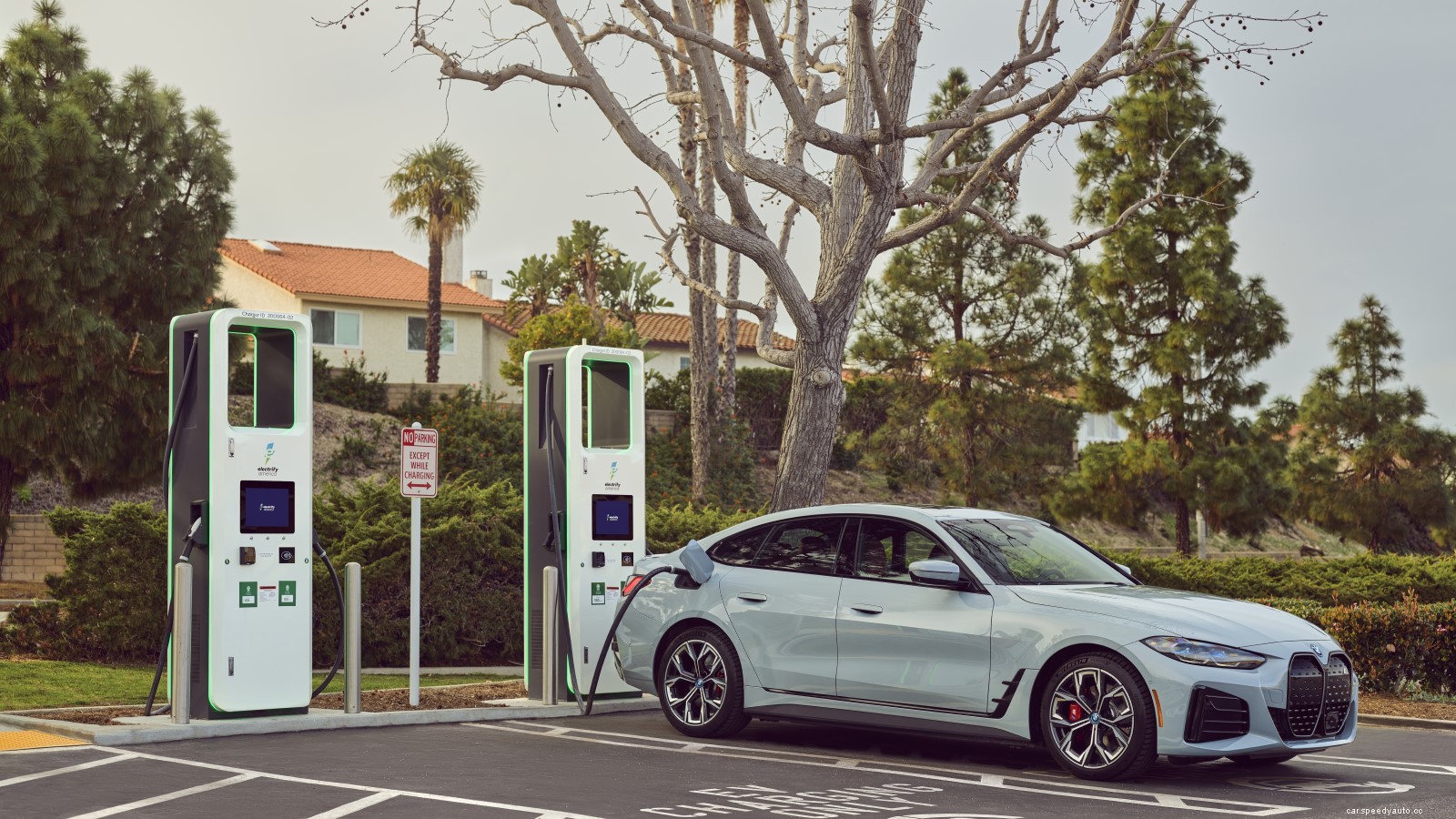
As you can guess, there are many more public charging stations for electric vehicles with CCS1 connectors than Tesla stations. And further, there are far fewer stations that provide CHAdeMO-connected DC fast charging since that technology is limited.
It’s no surprise that there’s higher consumer demand for electric charging, especially in Level 3 fast charging. As a result, Tesla plans to install up to 31% more of its Superchargers globally by the end of 2022. As for other public charging stations, companies added more than 4,000 Level 3 chargers to existing U.S. public stations in 2021.
As of this writing, the U.S. Department of Energy’s Alternative Fuels Data Center reports the following:
All U.S. Charging Stations:
CHAdeMO Charging Stations:
CCS1 Charging Stations:
Tesla Charging Stations:
Do your research and study a map of which charging stations along your route take your car’s particular charging outlet. A handy one is called the PlugShare app, which shows the charging plugs that each station supports.
