
Boating enthusiasts who moor in mussel-infested waters should beware of the havoc the little molluscan monsters can wreak. Once they attach themselves, Dreissena polymorpha are notoriously hard to get rid of. In the interest of boaters everywhere, here’s how to remove zebra mussels from your boat.
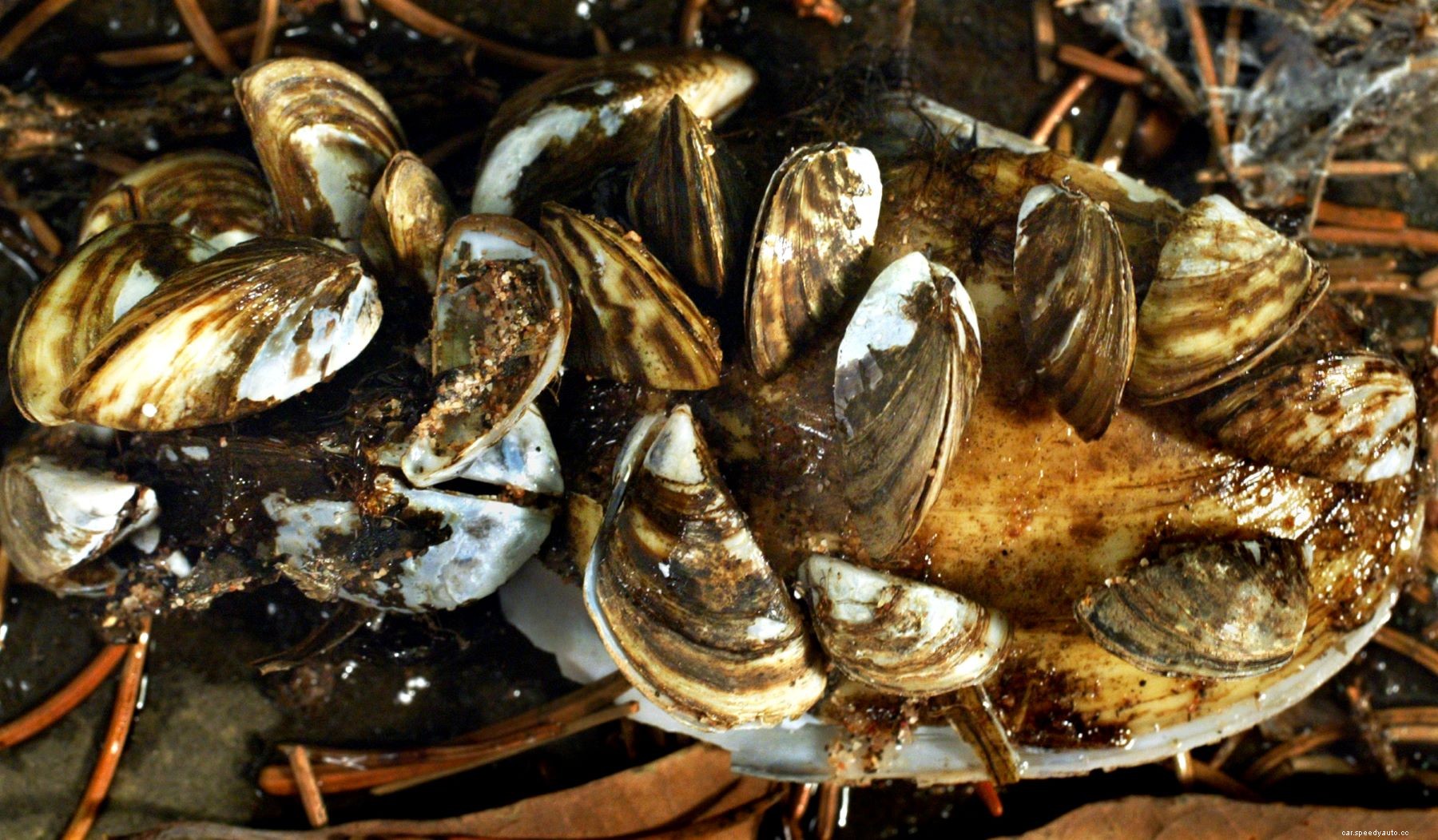
Juvenile and adult mussels have the uncanny ability to attach to practically any hard surface on a boat, including fiberglass, wood, aluminum, and steel hulls, as well as motors, propellers, and water intake pipes. Mussels in a motor can cause overheating, and mussels on the hull can damage the finish and decrease fuel efficiency, says the Wisconsin Department of Natural Resources (WDNR)
To remove zebra mussels, inspect every inch of your boat and hand-pluck any and all adult mollusks you find. Discard the mussel in the trash and repeat until all visible zebra mollusks are gone. Be thorough, as it’s imperative you remove and discard every mussel.
If your boat’s hull is made of metal, power wash it at high pressure with water at least 104 degrees fahrenheit, the WDNR recommends. To prevent reinfestation, apply an antifouling coating to the hull at least once a year and add an in-line strainer to the boat engine cooling system.
Zebra mussels not only damage boats but are also an invasive species that destroy native ecosystems. According to the Pelican Lake Property Owners Association, boaters should take the following steps to prevent further spread of zebra mussels and their larvae:
Zebra mussels are fingernail-sized, two-shelled mollusks that originated in and around the Black Sea and Caspian Sea in Eastern Europe. Zebra mussels were first seen in North America in Lake Saint Claire in 1988. Now considered a scourge to boats, the invasive mussels are believed to have been introduced to American waters by way of discharge from ocean-going vessels, according to the Virginia Department of Wildlife Resources.
Unlike tasty marine mussels, zebra mussels are a freshwater species of clam and are rarely, if ever, eaten. The United States Geographical Survey (USGS) advises against consuming them because they are filter feeders and what they eat is likely to be contaminated. They’re also too small to provide much in the way of meat.
In 2017, the USGS revealed that native mussel species in Lake Saint Claire and the western Lake Erie basin are virtually extinct due to the presence and proliferation of zebra mussels. Some people think the relatively improved visibility of lake waters means the lakes are clearer, but that’s not the case at all.
As mentioned above, zebra mussels are filter feeders, and they happen to eat the same foods as native freshwater mussels. Zebra mussels reproduce at a remarkable rate and filter out all the algae that would otherwise be food for native organisms. Now that zebra mussels are here, they’re not likely to go away. Boaters who heed the aforementioned advice stand the best chance of preventing mussel infestation in the first place.
