
Car wax has evolved a lot since its early days as a carriage shining product in the 1800s. You know, back when cleaning the toilet required chucking the contents of your chamber pot out the window, and certain doctors still prescribed electro therapy. Fun times…
Flip forward more than a century, and wax has ditched the lard in favor of far more advanced, scientifically-enhanced, plant-derived, petroleum-packed, synthetic formulas.
But despite the prolific popularity of automotive wax, very few people are aware of how it is made, or the difference between synthetic and carnauba waxes. Hell, the majority of drivers aren’t even aware of the amount of toil that goes into properly applying, maintaining, and removing this ubiquitous surface protectant.
In the following paragraphs, we’ll go over all of these things, as well as a few extra nerd-worthy notes about the production of car wax, it’s environmental impacts, and the future of car detailing and surface protection.
Ready to get started? Grab your gloves and let’s get to it, because there’s a Brazilian things you need to know about waxing. Oh wait… wrong kind of wax job…
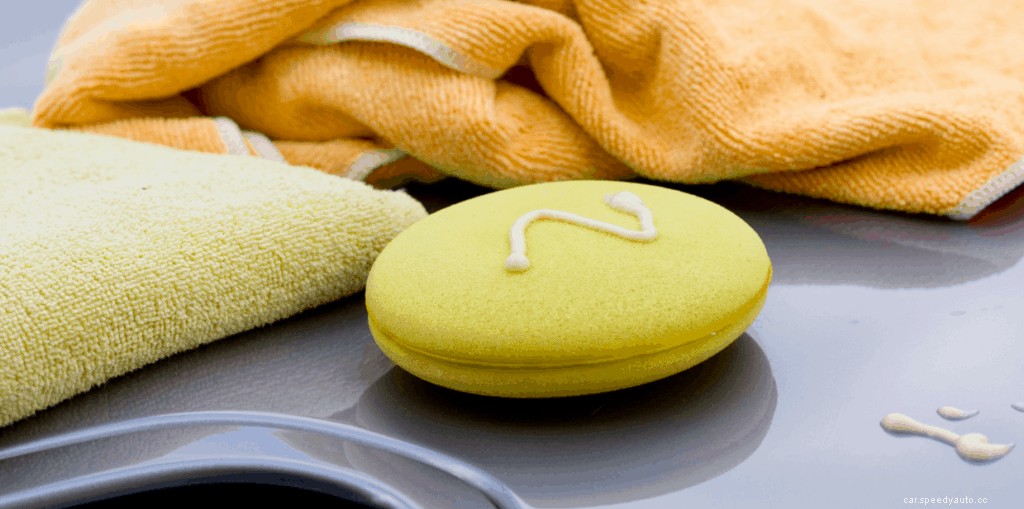
Car wax, or automotive wax, is a natural or synthetic product that is designed to provide a thin layer of protection to the body parts of a vehicle, and enhance paint depth and shine.
To achieve all of these things, the majority of car waxes on the market today are comprised of either a blend of carnauba wax that’s been mixed with natural oils, beeswax, and petroleum distillates, or are a full-blown synthetic substance. Some newer car wax blends even utilize synthetic resins and polymers to serve as hardeners and shine enhancing catalysts.
No matter what form of product is applied, once it’s allowed to dry, and then surface buffed with the right tools, car wax turns into a semi-permanent layer of protection that is resistant to airborne contaminants, UV rays, and in some cases, contact with things like acid rain.

Packed into round metal tins, and rocking one hell of a lengthy stint in the automotive detailing arena, carnauba wax is without question one of the most instantly recognizable automotive surface protectants in the world. But despite its popularity and prolonged presence in our lives, few people know exactly where this all-natural substance comes from, or how it is manufactured.
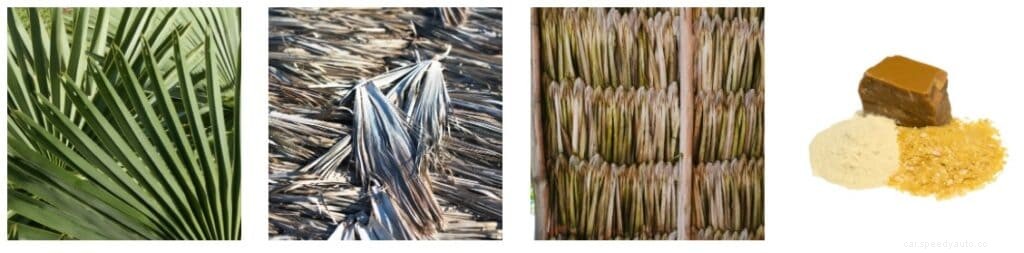
The wax that is extracted from the fronds (leaves) of the carnauba palm tree (Copernicia cerifera), is actually a form of protection that the plant secretes during the dry season. It’s a pretty finnicky specie too, one that refuses to thrive in large numbers in any other part of the world outside of the Caatinga and Cerrado biomes in northeast Brazil.
Harvesting involves little more than cutting the fronds, and typically takes place from September to March, as that allows the carnauba wax secretions on the leaves ample time to dry in the sun.
After curing is complete, the dried wax is extracted from the leaves via a solid thrashing, which is followed by purification, filtration, refinement, cooling, and the molding of the material into blocks. Being that carnauba wax is a plant derived product, these freshly refined blocks often come in either a yellow or brownish green color, which correlates to the age of the leaves that were harvested.
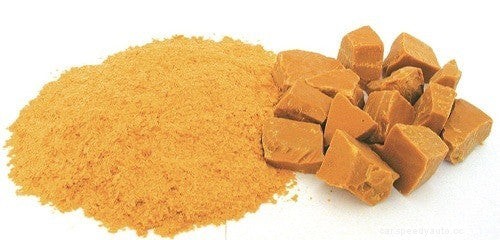
Due to its resiliency, carnauba wax is able to retain a relatively high melting point of 85° C or 185° F. This resistance to heat has allowed the ambidextrous plant-derived product to find its way into many of the products we use every day, including medicine, oral hygiene items, confectionaries, and you guessed it… car detailing products.
When applied to a vehicle’s exterior and allowed to harden, carnauba wax creates a razor-thin protective shell that resists heat, repels moisture, and rejects many kinds of contaminants.
In automotive applications, carnauba wax typically comes in either one of two forms:

While a carnauba wax will protect the exterior of a vehicle from the elements, it only works for about six weeks on average before it begins to break down, at which point it must be stripped away and reapplied. Carnauba wax also does not have a very high scratch resistance rating, and is prone to becoming hazy when submitted to excessive levels of air pollution or airborne contaminants.
Another issue with carnauba wax, is that because it is a plant-based item, people presume that they are doing the environment a favor by purchasing these products. But no one really stops to think about where carnauba wax comes from, or the labor conditions that people are subjected to in order to cultivate this palm-based product.
“Environmental and social challenges have come to light in Carnauba wax extraction areas in northeast Brazil, including high rates of deforestation, degradation of local biodiversity, persistent drought, rapid expansion of invasive species, as well as poor working conditions and low pay.”
–Initiative for Responsible Carnauba
While a demand for palm-oil based products has gotten a lot of heat for all of the mass deforestation in South American countries and areas of Southeastern Asia, carnauba wax production has come under scrutiny in recent years as well, as it too has remained widely unregulated over the past few decades.
Quick Nerd Note: Carnauba wax can be found being used as a hardener or as a gloss-inducing protectant in many of the products that we take for granted every day, including candy, pills, dental floss, sunscreen, floor polish, and even printing cartridge ink.
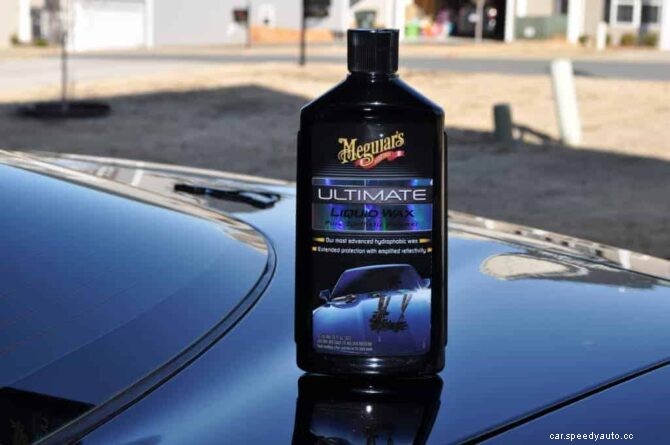
While some synthetic car waxes may contain trace amounts of natural carnauba wax, the majority of them are precisely what they claim to be on the label: Synthetic.
On the upside, as with most modern man-made products, this stuff does tend to outperform Mother Nature, which translates to better surface protection and higher longevity ratings. Relying heavily upon polymers for their artificial armor, synthetic car waxes are affordable, easy to apply, and far more forgiving than traditional carnauba wax.
On the downside, synthetic car waxes struggle to produce the levels of shine that carnauba wax creates, which is why a lot of people will slap the natural stuff on top of a fully cured coating of synthetic car wax.
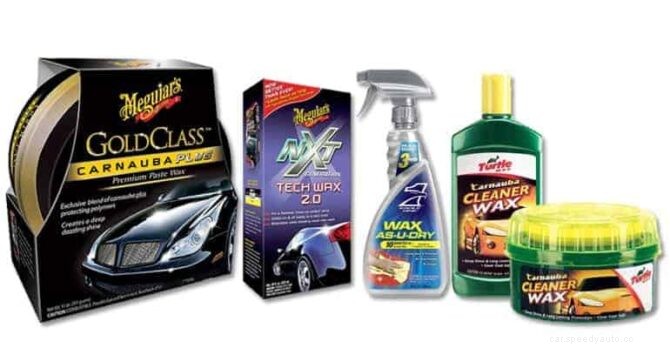
Both synthetic car wax and natural carnauba wax come in a variety of different forms, each with its own unique set of application instructions, longevity ratings, and advertised performance perks.
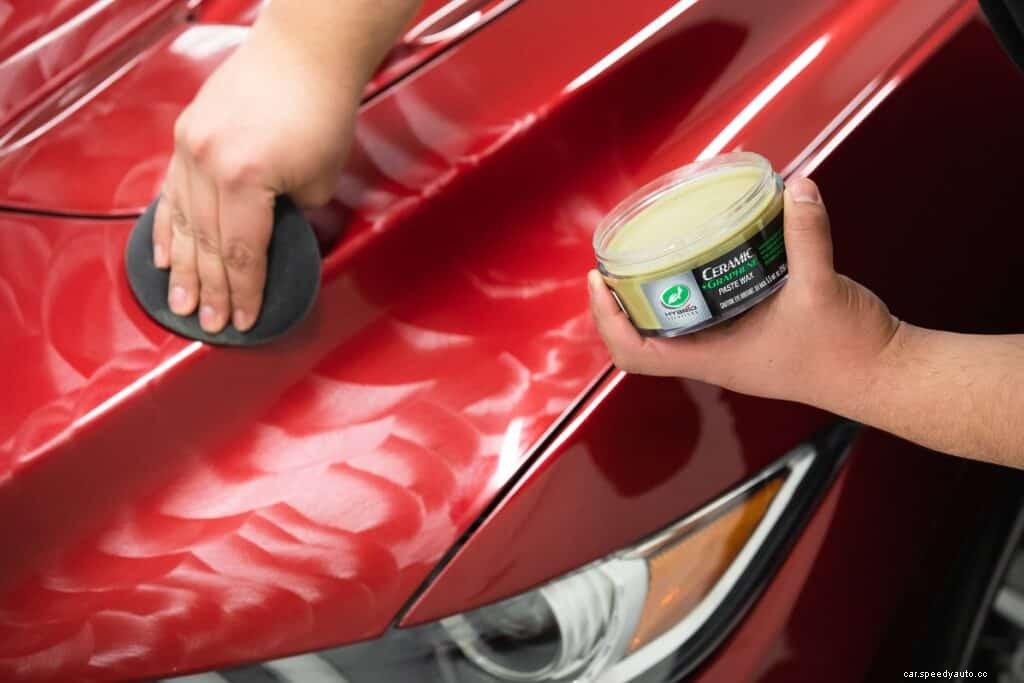
Old school DIY guys swear by this stuff, and for damn good reason. The car wax you’ll find in your grandpa’s garage may look like a big-ass brick of soap, but once heated up and applied, this carnauba “paste wax” creates a surprisingly resilient shell, which thanks to the addition of natural oils, is also extremely shiny.

Arguably the most popular form of automotive wax, liquid wax comes in sunscreen-style squeeze bottles, and is about as commonplace as yoga pants and gawking perverts at the local Pilates studio.
Extremely easy to apply, and equally effortless to remove, the affordability and durability of synthetic liquid wax makes it a crowd favorite, even when it’s shine is anything but extraordinary.
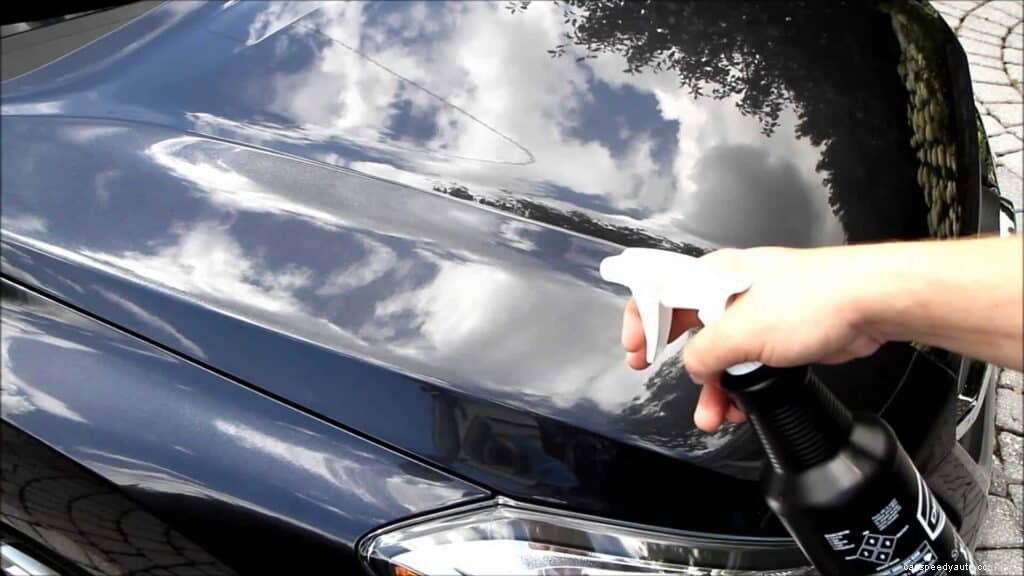
If you’re looking for a quick wax job (not that kind of wax job), the spray-on option is likely the first product you are going to consider. However, contrary to common belief, this stuff is not intended to serve as a primary surface protectant.
You may have heard industry experts refer to spray wax as a “filler, booster, or a topper,” which means this stuff is intended to be used as a wax “add-on.” Something that has the ability to bond with an existing wax, add a splash of shine, and maybe even a smidge of protection to boot.
That being said, this stuff should never, under any circumstance, be considered a stand-alone form of paint protection. Spray waxes tend to wear thin extremely quickly, with less than a week of notable performance being the norm. Oh, and as far as surface protection levels go, let’s just say spray-on waxes leave something to be desired.
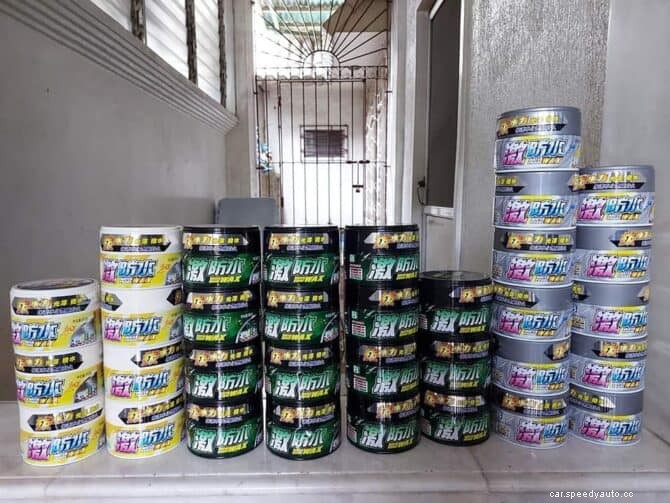
The idea behind colored wax, is that because it has the same pigment as a vehicle’s paint job, it will repair scratches that may have dug beyond the clear coat.
However, there’s one major flaw with this approach. Most modern clear coatings are extremely resilient. So if you have scratches on your vehicle that go beyond the clear coat, your ride is going to require way more than a layer of colored wax to get things looking right again.
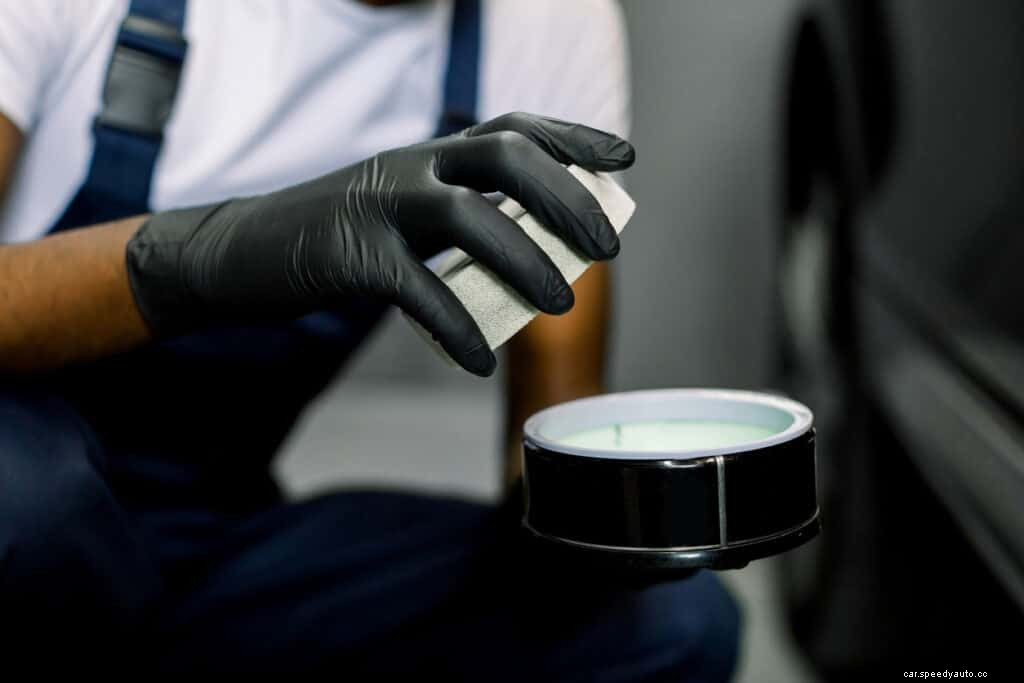
While proprietary blends of car wax are about as ubiquitous as hipster beards at a craft brewery, the following ingredients are recognized as the six most widely used elements in car wax.
This all-natural alternative to synthetic detailing protectants is one of the oldest forms of automotive wax. Due to it’s tough, heat resistant, super shiny tendencies, carnauba wax continues to maintain its place as the great-granddaddy of modern day paint protection products, and accounts for a small, yet still substantial slice of all automotive wax sales.
Honeycombs produce more than just honey, ya know. Beeswax plays a crucial in modern car wax, in that it helps carnauba wax adhere to paint. It also doubles as a filler, for when the palm-based stuff proves too expensive for the bean counters down at the production facility to approve.
Linseed oil is one of the most common types of oil that gets mixed in with car wax. The reason for this, is because natural oils tend to act as emollients, and therefore add luster, shine, and even minute amounts of protection to a clear coat or painted surface.
When you hear the term “synthetic wax,” someone is referring to a product that has been based around artificial silicones and refined plastics. Today, polymers are the primary ingredient in most synthetic waxes, as they provide multiple forms of protection that most carnauba waxes lack, all but with far less shine.
Petroleum distillates are exactly what they sound like. Petrol-based solvents distilled from crude oil, and then used to make a car wax easier to apply and spread across a surface.
Resins can be both natural and artificial in nature, and when added to a wax formula, can increase both the durability of the product, as well as its texture.
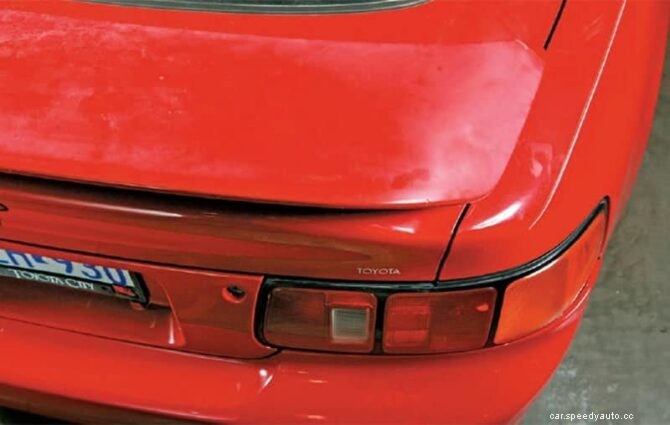
Trying to predict how long a car wax will last is like trying to determine when your dog is going to take a dump during your walk together. No one truly knows exactly when things are going to go down, but chances are that shit-storm is going to occur sooner than later.
While a professional wax job that’s been based around the use of high-quality synthetic sealants and extra anal prep work (not that kind of anal prep work dammit!) may last for six months or so, there’s still a good chance that your wax job will prematurely fail.
For the average DIY wax job, expect a lifespan of about six weeks or so, and then it’s time to strip the wax off, wash and decontaminate everything, and reapply once again. And while synthetic blends may last a tad longer, they too will lose their luster and begin to allow the elements to crap all over your car.
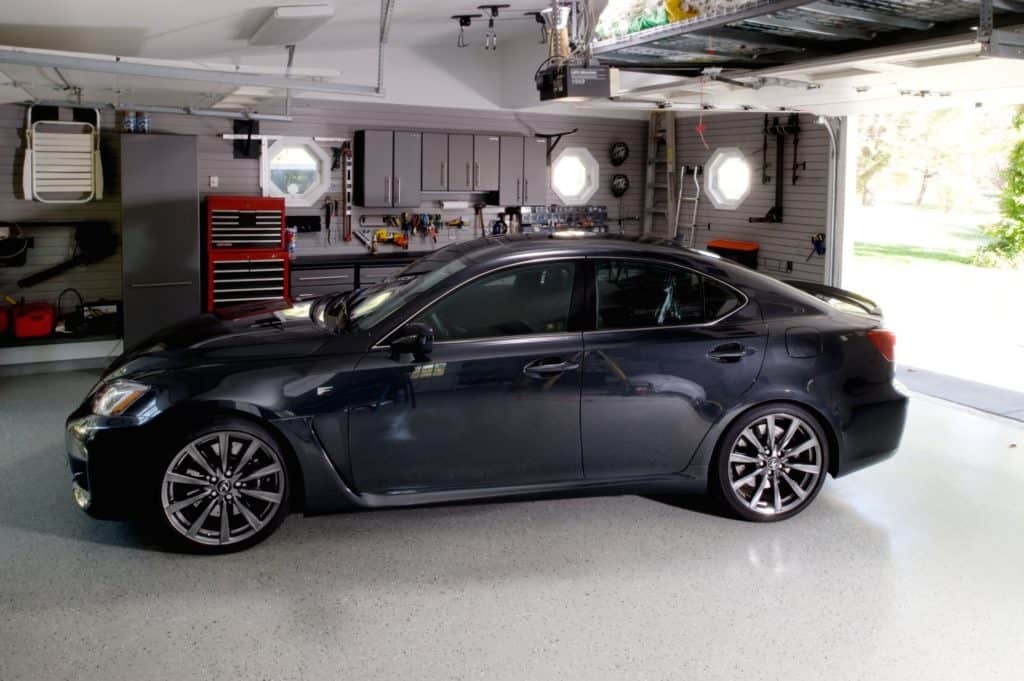
If a vehicle is routinely exposed to the elements, whatever surface protectant has been applied to its exterior is going to wear out far quicker than if it is a garage kept car that is only driven on rare occasions.
Storing a vehicle in a garage, within a carport, or even beneath a car cover will significantly increase the lifespan of whatever wax application has been applied. Environmental factors like acid rain, avian excrement, and UV ray rich sunlight, as well as man-made unpleasantries, like road salt, pollution, and road grime can all shorten the lifespan of a car wax.
Ask any professional car detailer, and they’ll likely tell you that the best way to protect your vehicle’s exterior surfaces, is by washing the damn thing.
Yeah, even with a fresh layer of wax installed, you are still going to need to wash your car with a fluffy microfiber chenille mitt and some quality car maintenance shampoo every other week or so.
Oh, and let’s not forget that every time you wash your car, that protective coating of car wax breaks down a little bit more, so yeah…
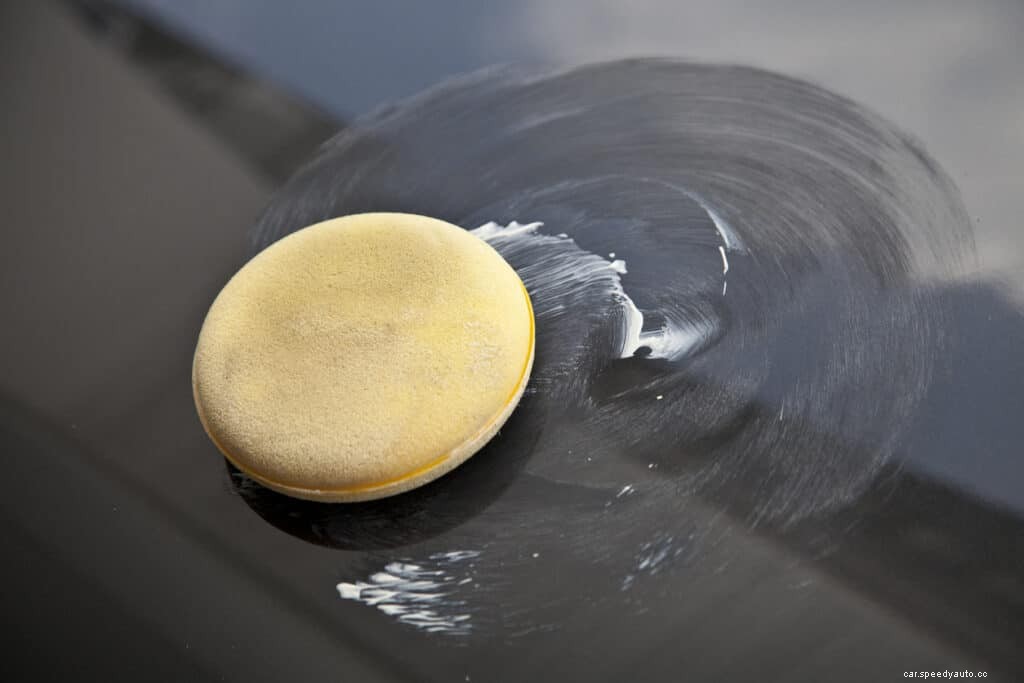
Applying car wax is a fairly straight-forward process. However, there are a few important details that should be followed to produce a high-quality shine and create a protective layer that’s worth a damn.
Quick Tip: While some people swear that applying a car wax in a circular motion will not create swirls marks, there are just as many individuals out there that would beg to differ. Play it safe, use a high-grade microfiber cloth, and always apply your automotive wax in a cross-hatch pattern, regardless of what form of wax protectant you prefer.

Like any other automotive surface protection product, car wax has its good and bad points, and is anything but permanent. Here are a few of the more notable perks and pitfalls to car wax.
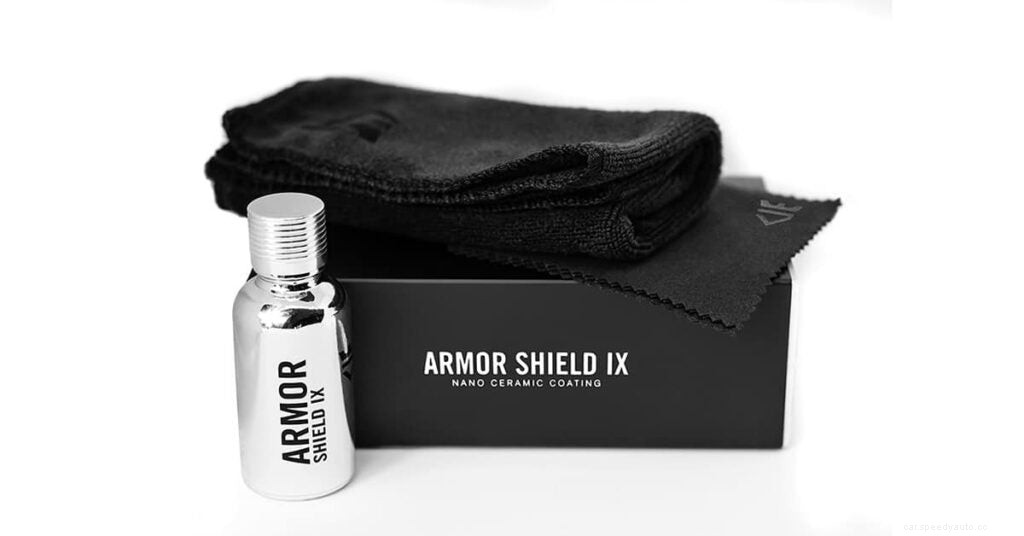
Nano ceramic coatings are concocted from a silica formula, that once allowed to fully cure on a clean, hard surface, becomes both extremely slick and strong as all hell. The word “nano” refers to the microscopic silica molecules contained within the coating itself, which once allowed to solidify, both increase gloss and reject contaminants.
In contrast to car wax, the average DIY nano ceramic coating has the ability to last upwards of 2–5 years, and is both far more scratch resistant and visually appealing. Application merely requires a simple wipe-on, buff-off experience, which once allowed to cure, will repel more filth than any car wax on the market today.
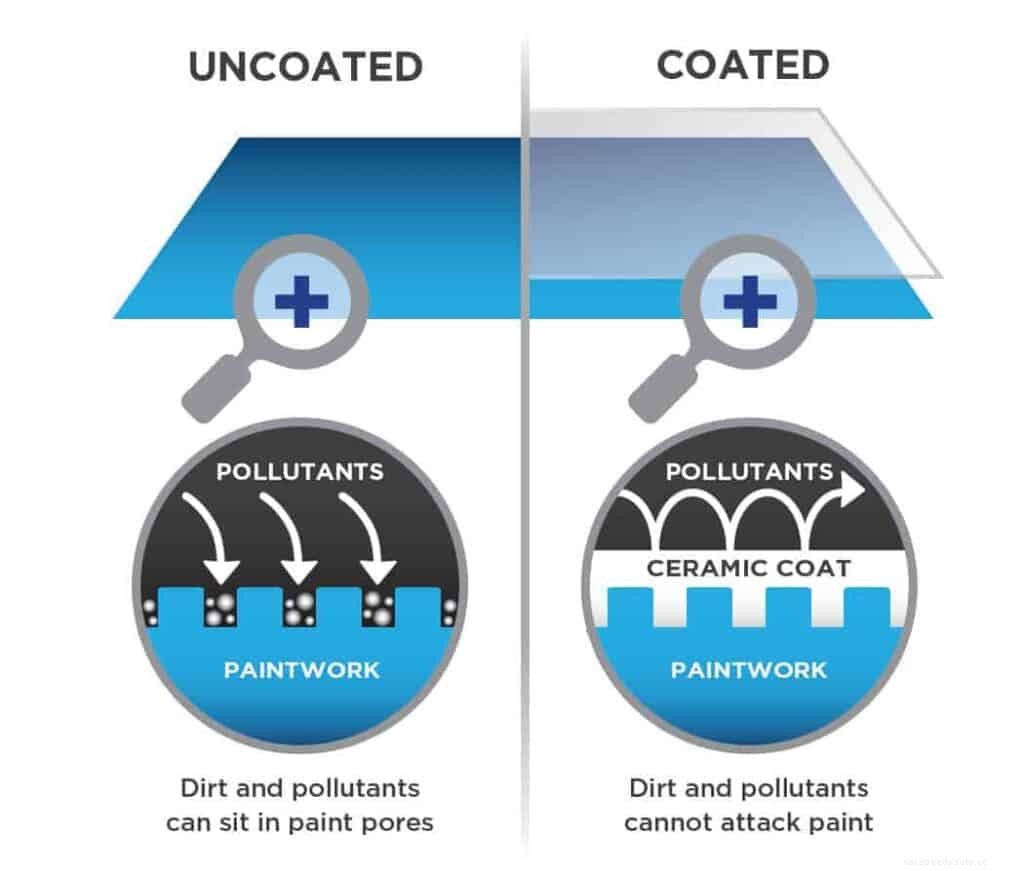
Quick Nerd Note: If you’d like to learn more about this revolutionary surface protection product, be sure to check out the ultimate AvalonKing ceramic coating blog article. That particular article contains everything you’ll ever need to know about nano ceramic coatings and then some, all packed into an easy-to-follow outline.
Despite all of its inherent shortcomings, and equally short life expectancy, car wax remains the most popular form of automotive paint protection on the planet. Approachable, unassuming, inexpensive, and infinitely available, it’s no wonder that some people refer to car wax as the “ham and cheese sandwich of the automotive detailing world.”
But whereas a ham and cheese sandwich will offer some form of sustenance, it is by no means a well-rounded meal. Upping your vehicle’s surface protection game to a nano ceramic coating will not only keep your car’s exterior in stellar shape, but it will also not need to be removed and replaced nearly as often, all while offering superior levels of gloss and shine.
9H-rated nano ceramic coatings, like Armor Shield IX, are the full farm-to-table gourmet dining experience of surface protectants. So go ahead and wet your appetite for DIY automotive detailing. You might be surprised by how affordable and useful AvalonKing’s products truly are…
