
Yet, for some motorists, checking their tyre pressure isn’t something they think about between one MOT and the next.
Poorly maintained tyres can lead to avoidable garage costs and, in the worst-case scenarios, even a breakdown or serious collision.
It’s vitally important that we take care of our tyres, so that they can take care of us. To make this easier, we’ve put together a quick guide on how to check your tyre pressure.
Before you start, make sure you’re using a pressure gauge that uses the same unit of measurement as the pressure guidelines given for your car.
Once you’ve got a suitable pressure gauge:
Make sure you check all four tyres on your car, as pressure in each tyre can vary significantly.
Don’t forget to check the spare tyre as well. This is often overlooked, and you never know when you might need to use it.
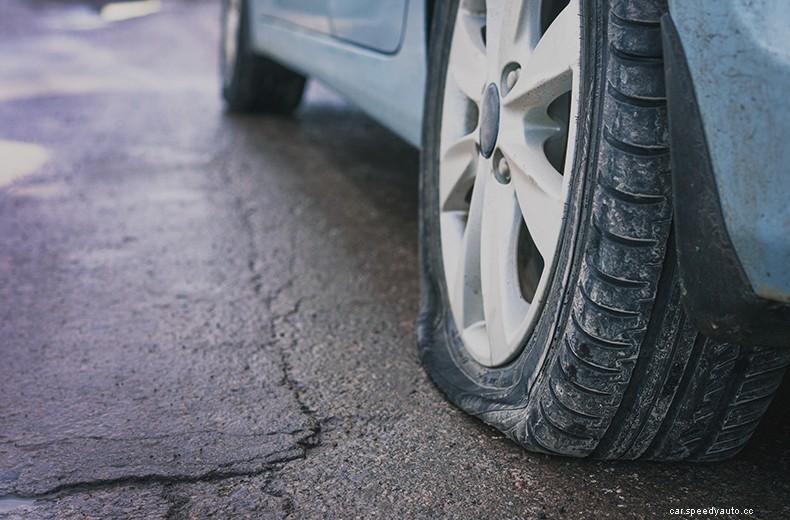
The entire weight of your vehicle is supported by your tyres’ air pressure. As tyres naturally lose a little bit of air every month, it’s essential to check your tyre pressure on a regular basis.
Tyre pressure affects a vehicle’s performance in a lot of key handling and safety areas, such as how quickly you can brake, your accuracy in handling corners, and the general comfort of your drive.
Fuel consumption is also affected by tyre pressure. A deformed tyre can increase your car’s resistance with the road, meaning your fuel will be working harder and costing you more.
Experts predict that correctly inflated tyres can even improve your mileage per tank by up to 3% - so it makes economic sense too.
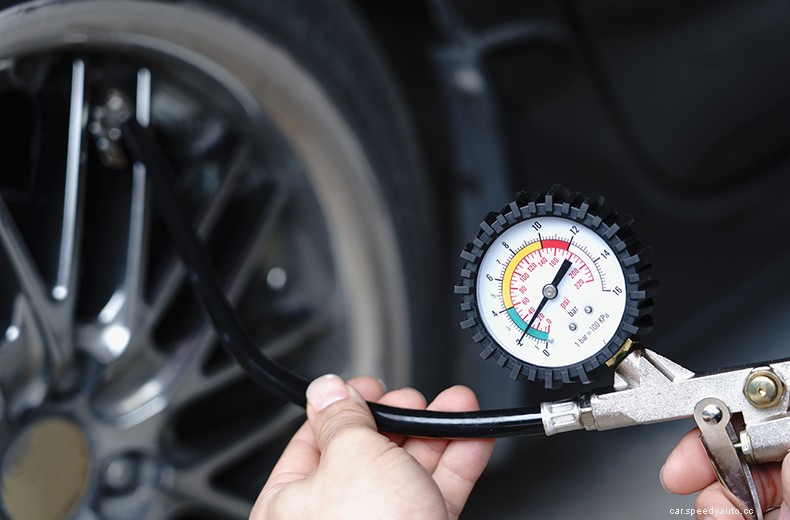
There are two systems used to measure tyre pressure: bar (metric) and pounds per square inch or PSI (imperial).
These are usually quoted together in user handbooks or tyre pressure stickers.
1 Bar = 14.5 PSI if you need to convert.
At petrol stations you’ll almost always be able to select the correct pressure based on either of these measurements. A good home pressuriser will display both numbers on their gauge too.
This depends on your vehicle and tyre.
Most cars come with a sticker somewhere on their bodywork that tells you the correct tyre pressure. This can usually be found on the inside of your door, on the part of the vehicle body that is hidden from view when the door is closed.
If your car doesn’t have a sticker, then refer to the owner's handbook.
Information on the correct pressure will be provided in relation to various loadings (two occupants, four occupants, etc), so it’s important you pick the one that suits your needs.
Tyre pressure should be checked once a month to be sure you’re not driving on inadequately-inflated tyres.
You should always check your tyre pressure when the tyres are cold — i.e. before you’ve made any journeys that day. This is because warm or hot tyres that have recently been driven on may give inaccurate pressure readings.
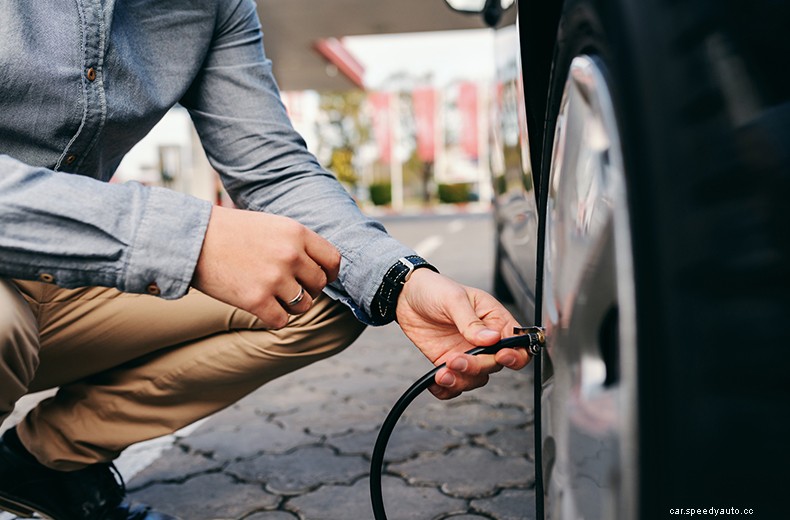
Yes. If you don’t have a pressure gauge or tyre pump at home, head down to a local petrol station that does. On most forecourts you’ll be able to find both a pressure gauge (that gives readings in bar and PSI) and an air pump.
Air pumps at fuel stations are often more complex than the ones you might have at home, and many come with +/- buttons that enable you to set the pressure as needed.
There will often be a third button which provides a ‘rapid fill’ if your tyre is particularly low on air.
You should be able to find the recommended pressure for your tyres on a small sticker on your bodywork, or in the vehicle handbook.
Alternatively, you could use online tools such as tyrepressures.com.
Keep an eye out for different pressures between tyres, and be aware that you may need extra inflation on rear tyres if you frequently travel with heavy luggage or rear seat passengers.
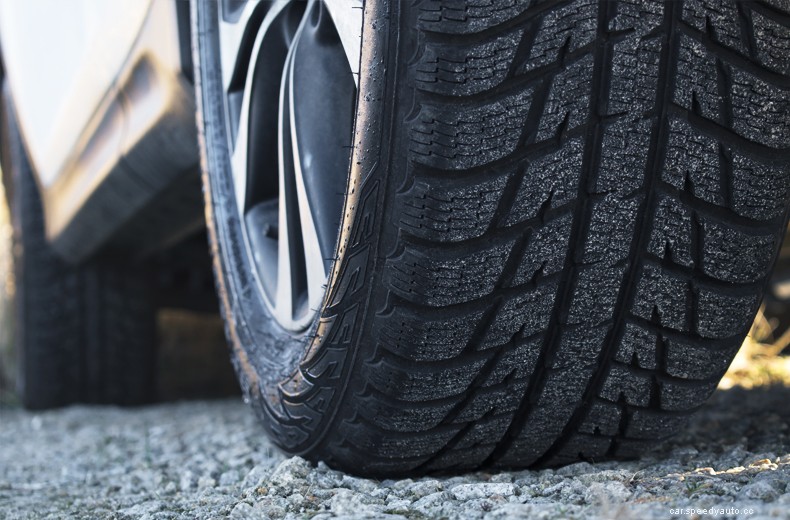
Slow punctures release air from your tyre at a much slower rate than traditional punctures, and can go unnoticed for longer periods of time.
If enough air is released your tyre will eventually lose pressure and become unsafe.
There are a few tell-tale signs that you may have a slow puncture:
Slow punctures are usually caused by a sharp object piercing the tyre, or the impact of driving over a pothole or raised kerb. A faulty valve can also lead to air leaks.
Regular checks will help you notice any punctures before they become too serious. LINK
While it’s possible to drive with a slow puncture, doing so increases the chances of the puncture growing in size and releasing more air.
The increasing loss of pressure will eventually affect your car’s handling and safety before your tyre becomes completely flat.
Although puncture repair kits are widely available, they should only be used as a temporary fix.
They usually come with a glue that’s fed through the valve and then drawn to the puncture, acting as a sealant.
If you suspect you have a slow puncture it’s best to get the help of a professional.
Some slow punctures can be repaired, avoiding the need to replace the tyre completely.
In many cases, garages are able to repair minor damage or simply replace a faulty valve to save on the costs of a new tyre.
