
Read on for our advice to help remove signs of bumps to your bodywork.
Although dents can occur anywhere on your bodywork, some areas are more prone to prangs than others.
If you want to check your car for any irregularities, pay close attention to:
This method uses extreme changes in temperature and you’ll need to wear protective gloves.
You’ll need:
Start by repeating steps one and two from the hair dryer method above.
Step three – Fix aluminium foil over the dent using masking tape to protect your paintwork.
Step four – While wearing heavy-duty gloves, pick up a block of dry ice and rub it across the foil. You should hear the panel pop back into place in less than a minute.
Step five – Remove the foil and marvel at your handywork.
If you want to fix a larger or oddly-shaped dent, it could be time to draw for the glue gun. This method is effectively about creating handles to pull the dent out of place.
You’ll need:
Step one – Test the glue gun on an inconspicuous area of your car to check if it won’t damage your paintwork.
Step two – Take the wooden dowels and drill two screws at one end and at either side of the cylinder-shape to create handles. You’ll need one ‘handle’ per square inch of the damage.
Step three – Heat the glue gun and apply the adhesive to the end of the dowels without screws. Fix your customised dowels on and around the dent so they appear once every square inch.
Step four – Leave for 10 mins to dry. You might want to use your trusted hairdryer at this point.
Step five – Pull the handles outwards and the dent should follow. Repeat the steps if necessary and experiment with placing the dowels in different positions.
Step six – Remove the dowels and wash away any leftover glue.
Top tip: Try fixing the dowels to the edges of the damaged area first before working your way into the middle of the dent.
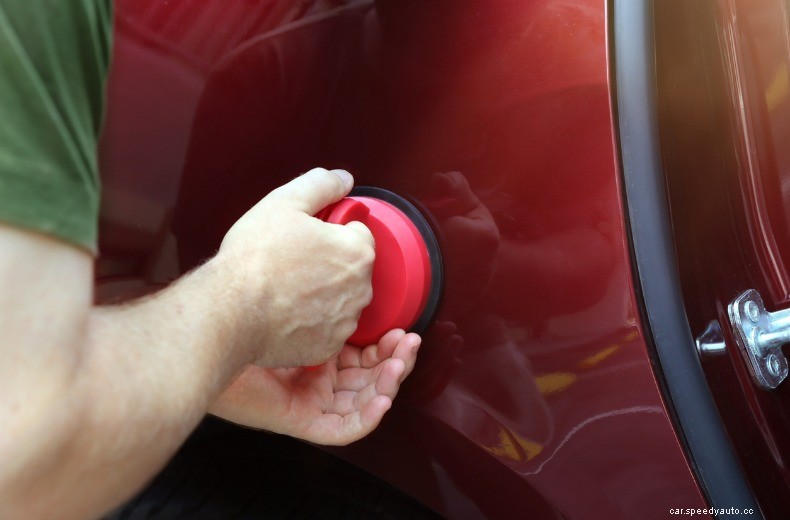
Buying tools specially made for the job might be the most effective approach of them all.
There are three main types of dent repair kits:
It’s important to read the instructions provided and if you don’t feel confident about taking on the job you can always contact an RAC approved garage for help.
Car door panels are typically thinner than other parts of your car. This makes them easier to dent but they are easier to remove for repairs.
Use a screwdriver to detach any wiring or control panels in arm rests, you’ll probably need to pop open screw covers to unfasten everything.
When you pull the door panel away, try to keep the plastic sheet from the door frame completely flat. That way it can be used again.
Once the panel has been removed, try pushing the dent from behind to pop your bodywork back into its rightful place.
The decision to repair a dent yourself depends on a combination of things:
If you’re unsure about how to do the job yourself, an RAC approved garage will be happy to help restore your car where possible.
