
Here, we run through some of the most common causes behind the fumes and what you should do to fix the problems behind them.
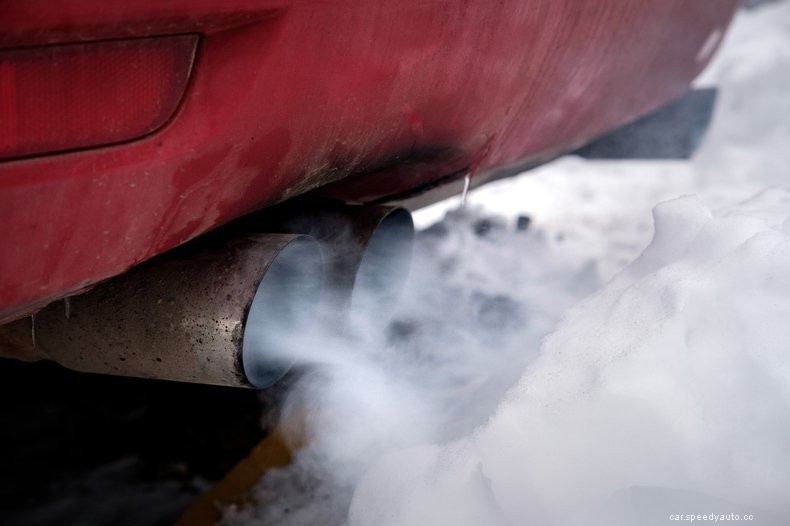
There are numerous reasons why your car could be giving off smoke. Some of the most common causes include:
To work out what’s causing the smoke, check:
You might find that the clouds aren’t smoke at all, but water vapour condensing on a cold day.
But if you’re sure the smoke is the result of a fault in your car, you should try to identify the problem.
If the smoke appears to be a result of a fire under your bonnet, you should act quickly.
The sections below are divided by car parts and the colour of smoke to help you find and fix any faults.
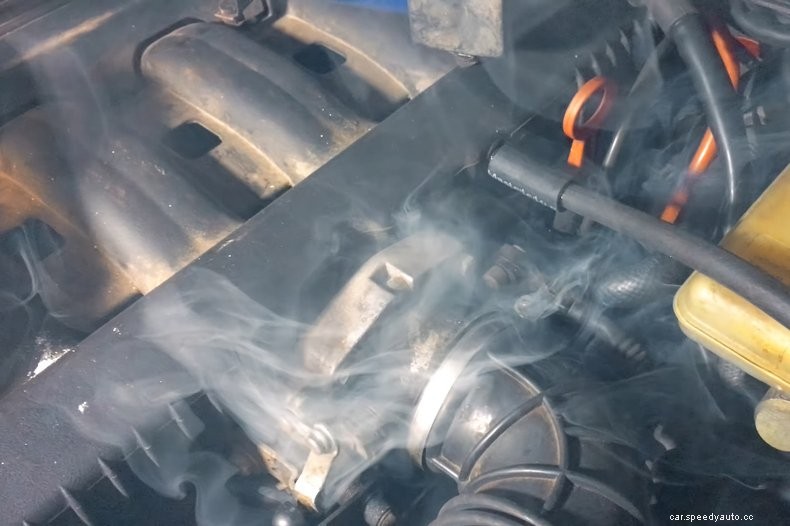
Smoke often leaves car engines as a result of overheating. This can be caused by faulty wire casings, heated residues on the engine block and overheated liquids including oil, transmission fluid and brake fluid.
There may also be a fault in your coolant system, or your engine may not have enough lubricant. No matter the problem, you should find a trusted garage to take a look.
Find an RAC Approved Garage to help.
Black smoke leaving your engine is often a sign that too much fuel is being burned. It could also be caused by a clogged air filter. If you catch either fault early, they are usually easy to fix.
Fuel injectors deliver petrol or diesel into the engine as a high-pressure mist. They can become clogged up with dirt or low-quality fuel, or leak because of wear and tear to the seals.
Both the seals and injector itself can be replaced by a qualified mechanic.
Just as the name suggests, this part of the fuelling system regulates the pressure of petrol and diesel being fed to your car.
The part can be found either outside or inside the fuel tank and this will affect the cost of a replacement.
You should check with your local garage if the fuel pump needs to be replaced at the same time.
Older cars use a carburettor to mix air and fuel. When the part fails and delivers too much petrol or diesel to the engine you’ll notice dark smoke.
It’s important to get the problem checked as soon as possible by a professional, as your car will be burning too much fuel and therefore producing excessive emissions.
The inlet manifold supplies a mixture of fuel and air to cylinders in the engine.
A blocked inlet manifold will only allow a limited amount of the mixture to the combustion system, which can cause your engine to cough up a cloud of dirty smoke.
Although this part can be cleaned at home, it’s best to enlist the help of a professional if you’re not sure what you’re doing.
In order to burn properly, fuel must be ignited at the right time during the combustion cycle.
When your ignition timing is off, your engine will burn more fuel than necessary and in extreme cases pump out clouds of black smoke.
If you think your car is using excessive fuel you should have the engine looked at by a trusted mechanic.
White smoke from your engine is usually a sign that you have a coolant leak. It could be caused by any one of the following problems:
Hoses to and from your radiator can collapse, swell and crack over time and you may be able to see the damage for yourself by simply lifting the bonnet.
The parts should be inexpensive to replace and the work is best carried out by a professional.
Engine blocks hold all the major parts of your engine together.
Extremely low temperatures can lead to coolant freezing and pushing against the walls of the block causing small cracks.
Although uncommon, manufacturing faults can mean some sections of engine blocks may be thinner than others and more vulnerable to damage.
You can try using an engine block sealer for smaller cracks but will need to visit a trusted garage for anything more serious.
A mechanic may need to re-weld parts of the block or use a method known as cold metal stitching to make repairs.
Be warned, the work is very expensive and it could work out cheaper to buy a new car.
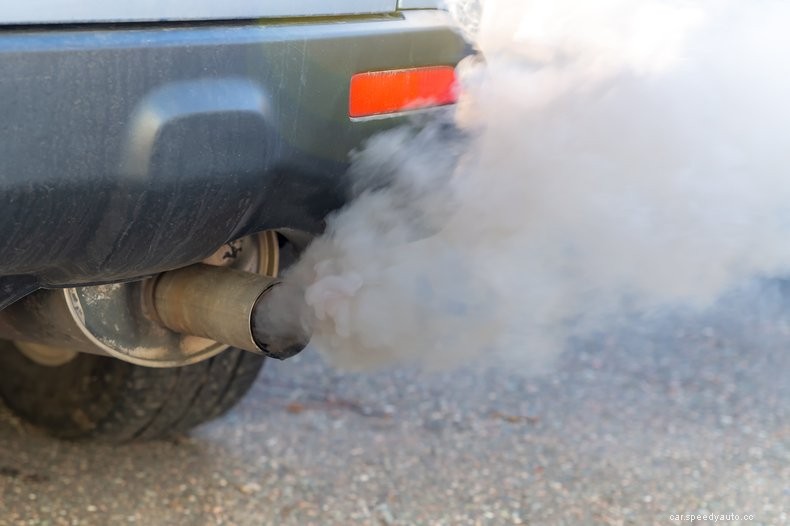
Smoke from the exhaust is usually less serious than smoke leaving the engine.
The colour of the clouds leaving your tailpipe can even help you diagnose the problem elsewhere in your car.
It’s quite common for cars to give off black smoke from the exhaust when the engine starts up, but if this quickly clears up you should have nothing to worry about.
If the problem persists, your car could be facing one of three problems:
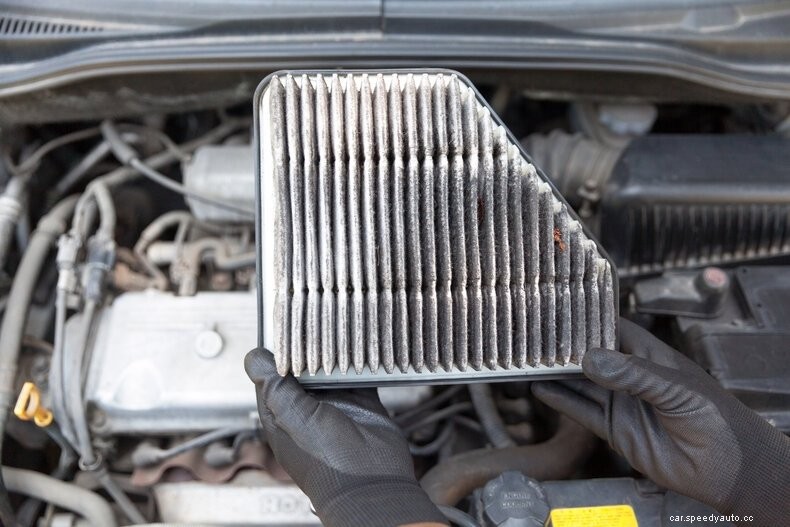
Your air filter prevents unwanted debris from being sucked into your car’s engine. Contaminants collect in the filter over time and prevent the filter from working properly. In some cases the filter can also become damaged.
If debris reaches the combustion engine it can be burned along with fuel and escape as black smoke.
Thankfully, a filter replacement is a straightforward job which you can do yourself, or get a garage to do quickly for you.
If your exhaust continues to give off black smoke, your pressure regulator may be faulty. These devices are used to maintain pressure in the fuel system and are usually mounted on the fuel rail.
A faulty regulator can increase pressure in the system and your car’s fuel economy will suffer greatly. In some cases the excess fuel will burn as black smoke.
The RAC Approved Garage network is a great place to search for a professional who can replace the fuel pressure regulator.
Fuel injectors control the amount of fuel delivered to the combustion chamber. When the parts go bad, you might notice your car shakes when the engine is idle. If the injectors deliver too much fuel, the excess will often burn as black smoke.
It could be a sign that the parts need to be replaced.
