
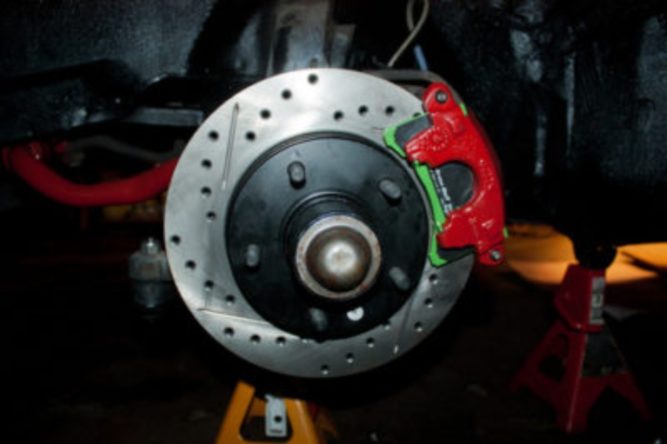
We all know you will need to replace your brake pads at some point, but because the life of brakes varies so greatly with the type of driving, we never know when is when. Here is a short primer for all drivers to understand when it’s time for a brake replacement.
If you need brakes, over time, your brake pedal may be lower than it used to be, or the pedal will need to be pressed slightly harder than before. Most drivers may not realize this – the process is so gradual that we adapt subconsciously.
Instead of trying to remember how things used to be, let’s put several of our five senses to work.
Much of what you will need to repair the brakes depends on how worn the components have become and the overall age of the car.
You usually need to replace your brake pads when the pad has approximately 1 to 2 millimeters of friction material remaining.
Rotors need to be replaced if there is any indication of overheating, dramatic rusting, or any uneven surface that may cause the brakes to pulsate. A clean rotor surface – either by installing a new rotor or machining the old one – gives a nice mating surface for the new pad, and will guarantee full braking efficiency. Oftentimes new rotors are more cost effective than turning the old rotors, although the quality of this new rotor should always be equivalent to the original equipment installed at the factory. In some cases, these new, cheaper rotors are made with lower quality materials and will not dissipate heat as well, leading to less effective braking and less life from the brake pads.
First, and most commonly, any failure in these components need to be addressed, which means if the caliper or cylinder is leaking, or if any part does not move as designed and cannot be freed up and lubricated, then replacement is required. Replacement in pairs, with the caliper or cylinder on the opposite side, especially as the car ages, is usually wise. This will provide more balanced braking. They can also be replaced when the car reaches between 80,000 and 100,000 miles. Though the upfront costs may be expensive, this will prevent any problems from arising at the wrong time, and could prevent a tow and a more expensive bill in the future.
The more you know about the condition of your brakes, the more you can plan for the replacement of the right parts. If you are unsure of what to look for, or just don’t want the responsibility, have the brakes looked at when you head to the shop for regular maintenance, such as an oil change or tire rotation. Most shops will look at the brakes for free, and give you an idea of how much time or mileage may be left. The sooner you address brakes that are worn, usually the less money you will spend, and the less likely the chance the car ends up on the side of the road.
Is it time for you to replace your brakes? Find a great mechanic near you. Compare pricing before going to the shop, and book online!
Get Started with Openbay >