
A 5.7 vortec no spark from coil condition can prevent your truck from starting, so it is an issue you want to fix quickly if it is happening to you. Found in Chevy and GMC trucks, 5.7 vortec engines are durable and reliable, as well as being easy to repair and improve on the whole.
What causes a no spark condition—and how do you fix it if it’s happening in your truck? We will walk you through the most common answers below.

Table of Contents
The high-voltage spark produced by the ignition coil is what fires up the engine, and there are a lot of conditions that must be met for this to happen. Thus, there are several different problems that can cause spark loss, ranging from simple, easy fixes to more complex issues.
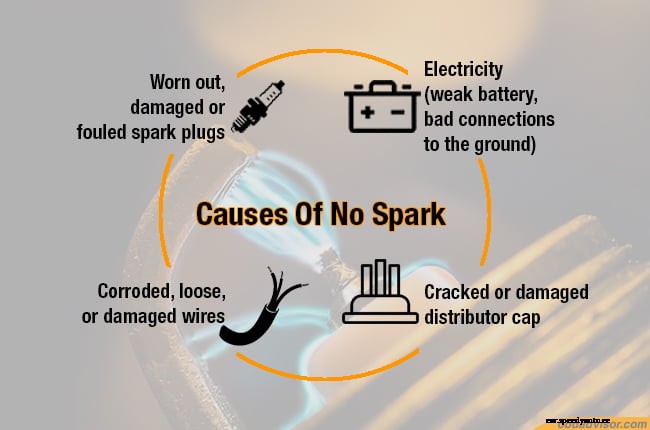
Anything that prevents voltage from jumping a spark plug’s electrode gap will cause loss of spark. Issues with the spark plugs themselves tend to be the most common cause of this problem. If the spark plug is worn out, damaged, or fouled, it can lose its ability to generate a spark.
The cause of no spark can also be electrical. A weak battery can lead to this condition since it cannot generate enough power to create a spark. Bad connections to the ground can also create a no spark condition, though this is a less common cause.
Corroded, loose, or damaged wires around the spark plug can prevent them from properly igniting, as can corroded connections. These breaks in the line create an open circuit, causing the ignition coil to behave as though it’s switched off.
Finally, it may be an issue with the distributor cap. When the system is working properly, the charge from the ignition coil flows to the distributor cap before going to the spark plugs. If the cap is cracked or damaged, it could impair the charge’s ability to flow.
The first place you should start if you have a no spark condition is the ignition coil. This is part of the secondary ignition system of modern engines and is the component that converts the 12-volt charge from the battery to the thousands of volts required for a powerful spark.
If you’re getting a spark at the coil but a no spark condition for the engine, this is a sign the spark plugs or wires around them are the issue. That’s why this is the first thing you should check when you have a no spark issue, as it will give you a clearer picture of where the problem originates.
The easiest way to test the ignition coil is with a digital multimeter. Aside from that, the only supplies you’ll need are the hand tools for removing the ignition coil from the vehicle. Once you’ve assembled these tools, just follow these steps:
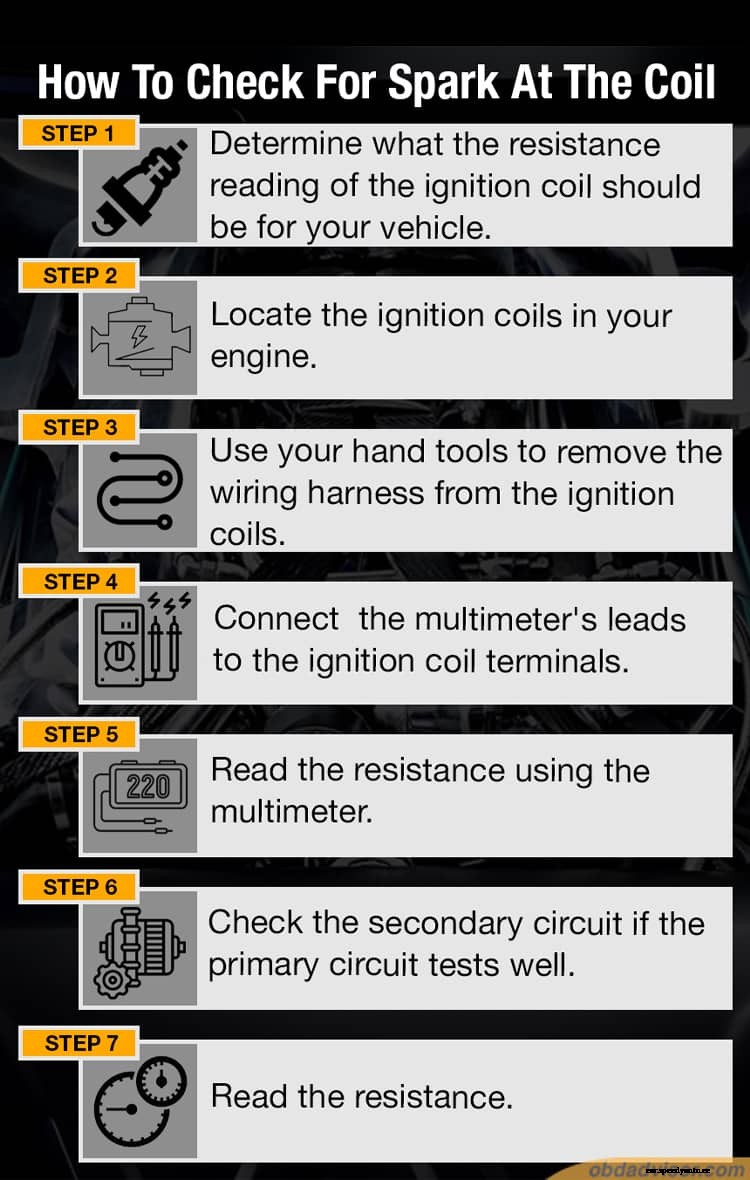
If you received a short or open circuit reading in the test above, the fix is easy: replace the ignition coil. Things can get more complicated if the ignition coil is functioning correctly, however. Here are the best steps to follow if this is the case for you:
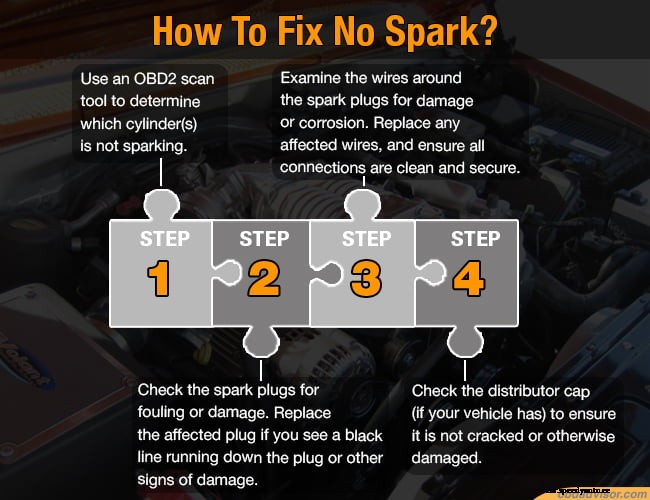
In most cases, a no spark condition is a relatively simple fix. That said, it can be caused by more complicated issues, up to and including a bad ignition module. If the tests and fixes above don’t do the trick, take your vehicle to a mechanic. They can do a more in-depth diagnosis to determine (and repair) the true root of the issue.
Read More: 7 Best Heavy Duty Truck Scanners 2021 [Review]
