
The beauty of modern cars are all the systems that have been implemented to improve the efficiency of the vehicle as well as reduce emissions from the engine, one such system is the Exhaust Gas Recirculation (EGR) System which is designed to redirect exhaust gases back to the intake of the vehicle to help control emissions.
The main component in the EGR system that makes all of this possible is the EGR valve. It’s as simple as the name implies – a valve that opens and closes when needed. What happens if the EGR valve develops problems? Usually, a bad EGR valve will produce a couple of symptoms that can notify the driver to address the issue, but how do you differentiate the symptoms of a bad EGR valve from other engine problems? We’ll be covering the most common symptoms of a bad EGR valve.
Before we dive into the signs, here’s an overview of what an EGR valve is, why it is so important, and how it works.
To make combustion possible, your car engine draws air from the outside, air which is made of approximately 79% nitrogen, 20% oxygen, and 1% argon, carbon dioxide, water vapor. When in the combustion chamber, the air and fuel mixture is ignited at temperatures exceeding 1360°C.
At such high temperatures, inert Nitrogen gas reacts with oxygen creating Nitrogen oxide (NOx). NOx is one of the main pollutants produced by car engines and is known to have a negative effect on the human respiratory system and health. To reduce the NOx pollutants released into the atmosphere, the exhaust gas is redirected into the combustion chamber to lower its temperature and as a result, inhibit the production of NOx emissions.
When you start the engine for the first time or when its temperature is just warm, the EGR valve stays in a ‘closed’ position which prevents exhaust gas from flowing back into the engine. This helps the engine to quickly warm up to its optimum operating temperature.
As you accelerate and the engine temperature rises, the valve gradually opens for recirculation to the engine intake, if you slow down or stop the vehicle, however, the EGR valve will return to its default closed position. This happens numerous times throughout your journey to ensure the car fuel efficiency and emission levels are well regulated.
Here is an array of EGR configurations that can be found on gasoline and diesel-powered engines.
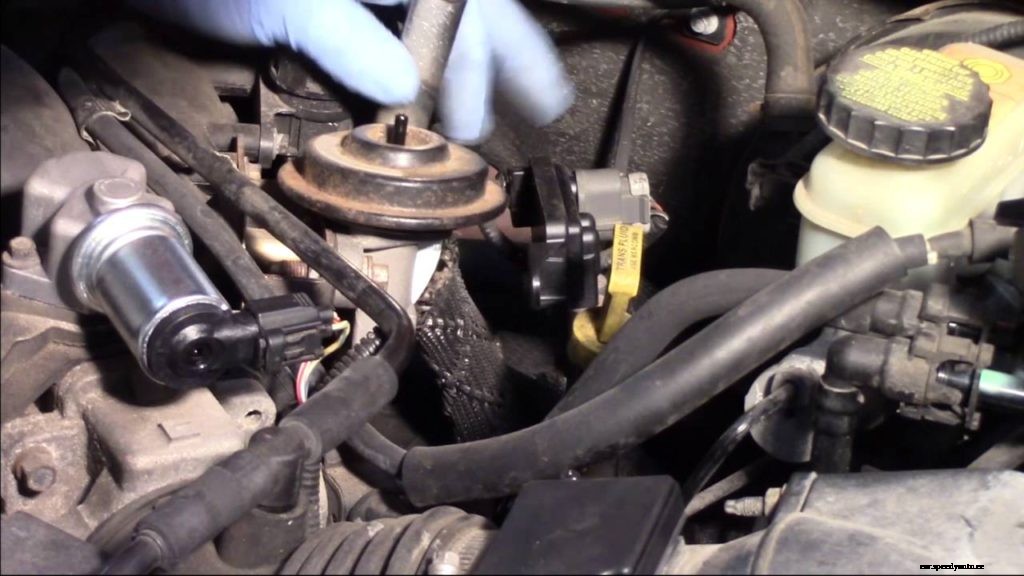
Mostly found in older car models, the Vacuum-controlled EGR system has a valve that’s metallic, round, and thick. It is usually located outside the engine but closer to the top, and has a diameter of three inches. These older vehicles use a vacuum hose to control the valve’s position. A tube connects the intake outlet of the carburetor to the top of the EGR. There’s a vacuum diaphragm, spring, and plunger inside the valve’s metal disc.
This is the EGR that came after the previous one, so you’ll see this type is semi-modern cars. The electronic-vacuum-controlled EGR System is basically a cylinder or small block with a free-moving valve placed inside of it. The way the valve works is similar to the previous model, the only difference being that there’s a position sensor (the electronic part of the ‘electronic-vacuum’ system) that sends position data to the car’s computer for faster and optimized control.
This is the EGR System that’s found in most modern cars. This setup operates very differently from a vacuum controlled EGR. It uses an EGR valve that is electronically controlled by the car’s Engine Control Module (ECM). The ECM collects inputs from many different sensors on the vehicle to determine the optimum position of the EGR valve throughout your journey.
Some car manufacturers have swapped the EGR System that uses a valve with one that uses EGR jets located at the bottom of the intake manifold, whereas some highly-efficient engines, for instance, those have a Variable Valve Timing (VVT), can reduce NOx emissions without the help of an EGR system.
Since the EGR system controls the flow of exhaust gases, when the valve gets stuck in the ‘open’ or ‘closed’ position due to a buildup of carbon particles and dirt from fuel on the valve, the operation of the EGR system will be impeded, resulting in performance issues such as decreased fuel economy, loss of engine power, and poor acceleration. It can increase the amount of emission from the vehicle too.
Though issues with the EGR valve produce variable symptoms, the most common symptoms that point to a failing EGR valve are listed below:
When the EGR is stuck in the ‘open’ position and a continuous flow of exhaust gas goes back into the engine, your vehicle engine will have a rough idle especially at low engine speed, for instance when starting the vehicle or during brief stops. This is because the engine isn’t getting enough fresh oxygen to combust properly and could lead to other issues such as carbon deposits on the spark plugs.
This can occur if the valve is stuck in either the ‘open’ or ‘closed’ position. This is definitely going to affect the performance of the engine. You will experience loss of engine power, which will show up as an inability to accelerate quickly when you step on the gas. Like in the rough idle, this happens because there’s an imbalance in the air-fuel mixture supplied to the engine. As a result of this, the engine will need more fuel than it normally would to increase the engine’s power output. You will definitely feel this one in your pocket. If your car suddenly needs more fuel for the same distance you’ve been driving, then you need to get the EGR system checked.
When your EGR system has issues, you can expect to see the ‘check engine’ light show up on the dashboard. The light will come on immediately the on-board computer senses a drop in the engine’s performance due to poor air-fuel mixture or, if it’s the digital EGR system, it will pick up the abnormal position of the EGR valve and trigger the “check engine” light.
When the EGR system is bad, your engine is forced to use more fuel for the same performance it would produce if the EGR was functional. Since the engine is now using more fuel, more unburnt hydrocarbons will be released from the tailpipe. If you walk around the back of your car and you pick up a strong fuel smell or perceive in inside the car’s cabin, then you know there’s an issue somewhere.
If the EGR valve is stuck in the ‘open’ position, your engine will often stall when idling. This is because the EGR is letting in more exhaust gas into the engine than it should.
For those that reside in the states that require testing their vehicles for emissions twice a year, a bad EGR valve will make you fail the emission test. In most cases you may not even be told you have an EGR problem (I think they don’t know it’s a possible cause), so you might want to keep an eye on it right away.
An EGR valve can fail in one of two ways – stuck in the ‘open’ or ‘closed’ position. This is usually as a result of debris and carbon buildup in the system.
An EGR valve that is stuck in the ‘open’ position creates something known as a ‘vacuum leak.’ This means that the engine is flooded with more exhaust gases and less of atmospheric oxygen to complete the combustion process smoothly. This normally results in stalling or rough idle. You might see P1404 and P1406 error codes displayed on the engine light area.
An EGR valve that is stuck on the ‘closed’ position creates a gas leak. What this means is that huge amounts of NOx are released into the atmosphere. Without exhaust gas to reduce the temperature of the combustion chamber it quickly rises so high that air-fuel mixture ignites before the cylinder attains the correct position. This disrupts the engine timing and is the cause of the knocking sound when the car is idling. You might see P1406 and P041 error codes displayed on the engine light area.
The main cause of EGR-related problems – whether stuck ‘closed’ or ‘open’ – is carbon and debris deposit around the EGR valve. This causes the gas to not circulate or overwhelm the engine with exhaust gas.
As if having a bad EGR valve wasn’t enough, the symptoms of a bad EGR valve we just mentioned above can be caused by other faulty components in the engine. For instance,
So you can see why you need to troubleshoot the EGR system and other components properly, then try to narrow down on the possible causes. This way you don’t waste money replacing components blindly. Troubleshooting a digital EGR will be much easier because the on-board computer will turn on the ‘check engine’ light as well as show an error code to help you track the issue.
If you have narrowed down on possible causes of the problem and you think it might be a case of a bad EGR valve, then it’s advisable to get your car checked by a qualified mechanic. With the right tools and experience, they’ll easily diagnose the problem and fix it for you.
