
Are you planning to live or camp in an RV? Sure, it can be fun traveling all across the country and changing physical address like a nomad whenever you’re bored. However, there are a few things that you must learn as a beginner if you don’t want to get it wrong. For instance, the quality of life as an RV camper depends on where you park your motorhome.
Similarly, it is not just where you park, but also what you pack. Notice the difference? Anyway, there are a few things that you must always remember to pack in your RV no matter the occasion. Of course, you can’t pack everything since the spaces are limited and you don’t want to overwhelm yourself. The trick is to find a balance and create a formula that works out for you.
We’ve covered 17 RV packing tips and hacks for beginners to help you out.
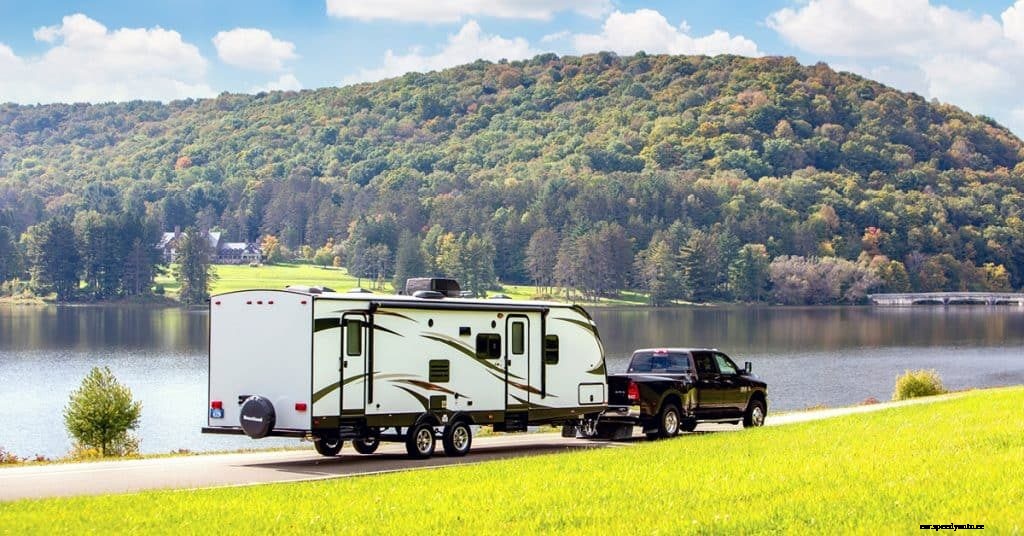
Even if you got the memory of an elephant, you will likely forget to pack a few crucial items if you cross it off the top of your head. It happens to the best of us.
To be on the safe side, you should do your homework and know what to expect when you settle in your motorhome.
Will you be living in a cold place where it is snowing? Will mosquitoes become a problem? Do you have any special needs?
Such questions should be answered to evaluate the items you should write down on your checklist.
Remember, every RV adventure is different and there is no ‘one size fits all’ type of checklist.
It’s the little things like fire extinguishers, smoke detectors, carbon monoxide detectors, first aid kit and flares that could save you in case of a life or death emergency.
A few items you don’t want to miss for example:
Medications, insurance card, extra batteries, emergency phone, water purification tablets, warning triangles, reflective tape, tow straps, ice scraper, analog compass, knife, flashlight, extra water, GPS, jumper cables, window breaker, tow strap, paper map, and personal tool kit.
Most beginners have a tendency of overpacking food and kitchen appliances causing too much clutter in the RV.
Before you start, you should always consider the storage capacity, trip length, and destination.
If you’re lucky to own an RV that comes with a big residential-size refrigerator, you can pack a lot of food.
However, you have to watch every little space when packing into a smaller propane fridge.
In that regard, you should store perishable food in the refrigerator, or anything that you want to keep cool.
It could be something like Pepsi, ketchup, eggs, milk, bread, butter, bacon, sausage or beer.
If you will be staying close to an urban area, there is no need to overpack the fridge like you’re waiting for an apocalypse.
On the kitchen cabinets, you can add basic kitchen utensils and foods that don’t spoil too fast.
For example:
Knives, plates, coffee maker, chopping board, napkins, matches, cups, pans, canned soup, bottled water, baked beans, onions, bananas, spoons, dishwasher liquid soap, dry rice, salt, tea, coffee, sugar, cooking oil, garbage bags, cereals, and butter.
Anything that you know is needed in your RV kitchen, you can add to the checklist.
As much as there are apps to predict the weather, there will be days when the predictions will be wrong.
Suddenly, a bright sunny day can turn into a dull rainy day with no notice whatsoever.
Any experienced RV dweller can tell you to pray for the best weather but expect the worse. For that reason, you should pack clothes for all seasons.
But to avoid throwing pieces of clothes all over, make sure you put them in the closet, storage boxes or special bags.
Don’t forget to separate your clean and dirty laundry.
You wouldn’t forget about the bedroom, would you?
Here are a few items you will need:
Pillows, blankets, duvet, mosquito net, towels, bed sheet, alarm clock, bug repellant, pajamas, slippers, and hairbrush.
Besides packing the basics like:
Toothbrush, bathing soap, lotion, shampoo, deodorant, sunscreen, floss, make up kit, razor and nail clippers, you should bring supplies to keep your bathroom clean.
It’s not a matter of if, but when you’re RV bathroom gets dirty, you should be well-prepared to scrub off the stains and dirt. Additionally, you can bring air fresheners to neutralize any bathroom smell.
Of course, you should also bring supplies like a mop, microfiber towels, handheld vacuum cleaner and detergents to help you clean the entire RV space.
Let’s face it:
You haven’t really lived in an RV until you’ve cooked some barbecued steak.
Even if you’re a vegan, there are a lot of things you could do to make your RV camping trip interesting.
How about you pack playing cards, puzzles and board games like monopoly?
On top of that, you can add books, magazines, camping chairs, fishing gear, bicycle, skateboard, guitar, and squirt guns. Whatever you want, you can add to the checklist.
Besides that, you would probably need your laptop, smartphone, charger, radio and a portable wifi router device.
There are some basic RV tools and accessories that most beginners forget only to regret later. Don’t make that mistake! What are we talking about?
Well, we’re not finished yet.
Even if you got an RV with every single item ticked off the checklist, there are a few tricks and hacks that you ought to learn if you want a smoother ride.
Otherwise, you will just look like a clueless newbie at the RV park or campground who nobody wants to seek advice from.
So let’s get down to it.
We get it – water is life and you would feel more secure if your water tank is filled to the heavens.
But you know what happens when you fill that water tank with 100 gallons of freshwater?
It gets heavier and most likely you will face overweight problems.
In fact, even a half-empty tank with 40 gallons can cause you the trouble of adding hundreds of pounds.
So what should be the alternative? Nobody wants to stay thirsty without water to cleanse their souls!
Most campgrounds will have enough aqua supply that you can connect with a pipe and channel it to your motorhome.
However, you can fill your tanks if you’re planning a secluded dry camping trip where it will be difficult to find freshwater.
Anything else, a low level of water in your tank will be enough.
There are a lot of bad things that could happen if you don’t secure items before you drive your recreational vehicle.
It’s not unheard of sharp knives and forks that are not secured properly accidentally cutting people when the RV hits a bump.
What’s even worse would be a heavy object falling from the top of a cabinet and hitting your head.
So what should you do?
It’s not rocket science, make sure you use shelf liners, magnetic strips, accessory holders, straps or whatever to secure your equipment.
Moreover, you should lock all the cabinet drawers, closets, refrigerator doors and secure all the heavy items as low as possible.
Just to be sure, try to accelerate your RV and hit the brakes before the trip.
Next, listen for anything falling, opening, smashing or slamming.
In case you hear any unwarranted noise at the back, it means there is something not yet secured. That’s better than every item falling apart when you’re on a highway.
It’s an RV, not an underground bunker built for doomsday.
In other words, pack light and don’t overdo it.
Even if you forget something, there is usually a Walmart or shopping center around the corner.
Remember, everything you pack into your RV is added weight and if you keep on going, you will exceed the limit.
You have to be smart about it; instead of using glass bottles or cups, you can use lighter plastic bottles.
A heavy water dispenser can also be substituted with a smaller automatic water dispenser, or rather you go old school and pour water directly from the bottle without anything fancy.
You get the picture? Think like a minimalist!
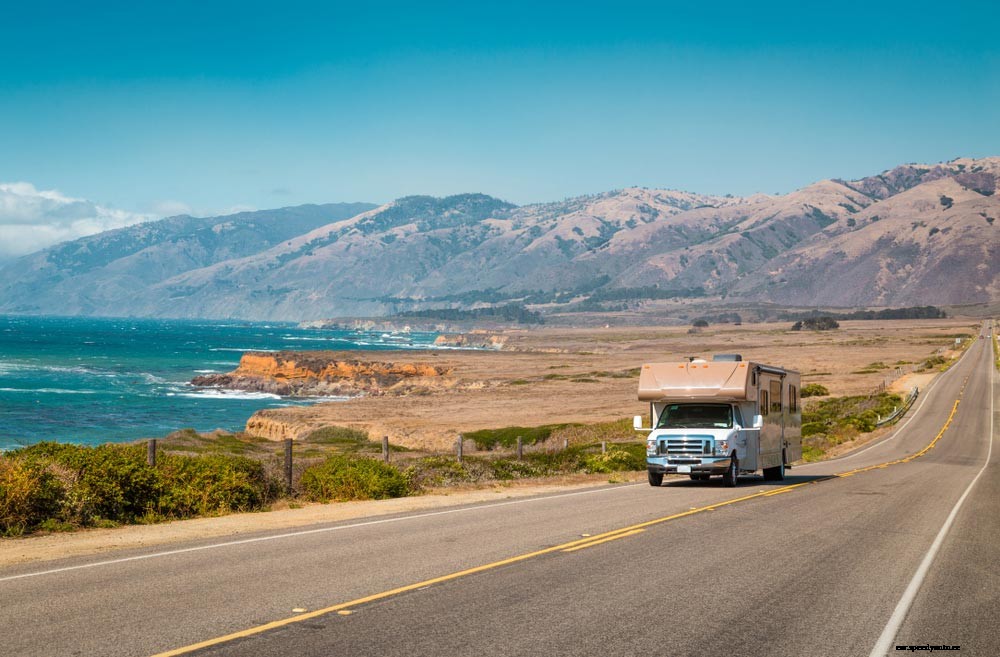
It’s not just the weight limit that you should watch out, but an uneven loaded RV.
That’s not so dangerous, is it?
Actually, if you put too much weight on one side of the RV, you risk a tire blowout. That is why you should balance heavy objects over the axles.
The technique is like using a manual weighing scale; a heavy object on one side of the RV should be counterbalanced with another item of similar equal weight on the opposite side.
Not to encourage you to overload the trailer, but there are lots of small spaces in your RV that you could improvise.
You see that space under your bed? You could put a storage enhancer accessory to capitalize on the space.
Heck, you could even mount extra storage devices on the doors, closet or the roof.
Above everything else, remember two things; don’t overload and always secure the items.
Just because you’ve bought every item that you need to live in an RV, doesn’t mean that you should waste resources.
Try to conserve resources as much as possible. For instance, don’t use too much tissue paper or forget to switch off the lights when you’re not using it.
Additionally, you can save propane by limiting the furnace application or switching to electric water heater once in a while.
A word of caution:
Don’t turn the electric heater on when the tank is empty. If you do that, you can damage the entire heating system.
News flash; not every day is going to be sunshine and rainbows.
If you live in some regions, you’re going to experience the harsh cold of winter.
The good news is, it’s not as difficult as you may think and most motorhomes are engineered to withstand low temperatures.
But as a precaution, you will need heavy-duty curtains, extra blankets, ice scraper, shovel, space heaters, heated tapes, insulation panels, air compressors, and antifreeze.
To ensure there are no rodents or insects in your RV before you pack, make sure everything is clean.
Unless your RV is brand new, you should mop the floors, vacuum clean the carpets, wash your laundry and wipe the cabinets, countertops, and drawers.
A little exterior washing and waxing won’t hurt.
If you have a rodent or bug infestation problem, don’t pack until you’ve sorted it out.
You know how a rocket is thoroughly checked before launching into space?
An RV shouldn’t be any different. You don’t want to wait for winter to find out that your propane heater is faulty.
Neither should you have a flat tire, but no jack stands to lift your motorhome.
Some of the things that you need to inspect before the trip include:
Brakes, lights, pipes, TV antenna, wheel chocks, spare parts, RV repair tools, tire date codes, insurance, roof vents, and other essential items on your checklist.
Basically, you should check if anything is missing, broken or out of order. If you don’t mind, that also involves climbing on the roof to check for any signs of water leaks.
The bottom line:
Inspect your RV. Double-check it. Triple check it. Then have your spouse or friend check it.
Maybe you could be struggling to dispose waste at a dump station or you don’t know how to pump water.
It’s not a shame, every experienced RV dweller has a story about things they could have done better on their first trip.
Most RV communities are friendly and there are a lot of people that could help you out if you ask.
Besides that, there is the internet and dedicated forums to share experiences. We would also like to help you and you can feel free to shoot us a question in the comment section.
Our parting shot to those who are graduating to living in an RV is this:
It gets better with time, you will make new friends and have a home on wheels which gives you the convenience to travel almost anywhere.
Don’t forget, pack a good sense of humor and leave your bad attitude behind.
