
Spill anything in your car, say hot food or drinks, and within a day or two you’ll be able to explain the source of the smell in the car. But if your car smells like burning rubber, you might be wondering why.
Before we go on and list possible reasons why your car smells like burning rubber and how to fix the problem, you need to know that the smell of burning rubber in your car might not be from actual burning rubber, like when you suddenly step on the brake and the tire leaves a mark on the asphalt or concrete.
Chances are, the smell of burning rubber is from a deeper issue within the car that needs immediate attention. To be on the safe side and reduce the chances of any problem escalating into something more expensive to fix, the moment you perceive the scent of burning rubber or any obnoxious smell in your car, you need pull over someplace safe (that’s if you were driving) and inspect your tires and the engine compartment.
The best thing to do immediately you perceive the smell of burning rubber in your car is to stop someplace safe and inspect all over the car starting with the tires, then move on to the hood of the car.
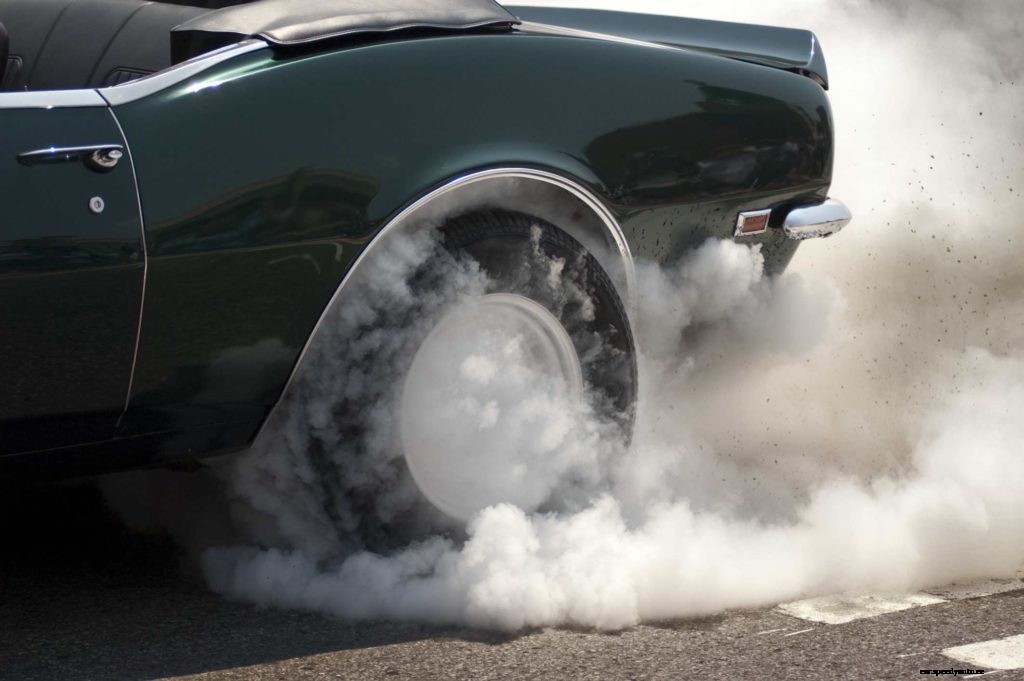
Make sure to stop at each tire and thoroughly sniff around for the burning smell. Most times you might be able to follow the trail all the way to the source. If the smell is coming from the hood, open it and let the engine cool down before touching anything.
One of the main reasons why your car smells like burning rubber is because most of the parts are either made of rubber or wrapped in rubber, and one of such parts may be melting because it has made contact with the hot engine block. In some cases it may be caused by an electric short-circuit, friction in timing belt, steering belts, or compressor belts.
So, let’s see some of the reasons why your car smells like burning rubber and how to fix the problem. In most cases you can handle the situation by yourself, but others might need professional help.
There’s a saying that goes, if it looks like a fish and swims like a fish, it must be a fish. How is this related to your car? Well, if your car smells like burning rubber, then chances are that something made of rubber is actually burning.
Your car contains a couple of rubber hoses, especially in the engine compartment, that are necessary for the optimum performance of the engine. With time, they’ll become weakened, loose, or break-free from the pins and clips securing them in position. If they make contact with the part of the engine that is hot enough to burn them, they’ll give off a burnt-rubber smell.
Start your inspection by looking under the hood for any loose rubber part that may have made contact with the engine wall and secure or change them if the damage is severe.
There are many reasons why your radiator might be leaking coolant onto the engine, but whenever this happens the coolant spilt on the engine will give off a smell of burning rubber when you stop the vehicle after a long drive. Having a leaking radiator is a serious problem on its own because the coolant in it is responsible for keeping the engine temperature at the optimum range.
Another thing that may generate burnt oil smell is when motor oil leaks onto the hot exhaust pipe. If this is the case, you’ll perceive the smell outside the car. The burnt-tire smell will be stronger when you’ve driven for about 30 minutes or more, but clears up when the car is cold.
Sometimes this occurs after you’ve had an oil change. If the oil change wasn’t done properly, the oil is overflowing, or the oil plug wasn’t screwed tight enough, some of the oil might drip onto the exhaust system and other parts. If this is the case and the leak isn’t dealt with, your oil level will drop faster than it should, and that’s a problem.
You might also see fumes coming from underneath the car. If this is the case, then you need to get the car to the mechanic as soon as possible.
If your heater gives off burning rubber smell when you turn it on after an extended time without making use of it, there’s a possibility that the duct may be blocked by dust and debris. Sometimes it might be that your engine has trapped a loose plastic bag, or maybe part of the heater core might be giving off the smell. This one will need the service of a professional to diagnose and fix the problem.
If you are the kind of driver that brakes often and intensely, there’s a possibility that your brakes might bind to the rotor or warp. This is because friction causes the metal to expand, and when there’s not enough cooling time between each application of the brakes, for instance when driving down a slope, the brake pads may produce smoke and a bad smell. If this happens often, and you hear a high-pitched sound when you brake, then it’s time to see the mechanic.
If you own a manual vehicle, you’re familiar with the clutch and gear stick. Some people ride their clutch too hard before switching gears i.e. depressing the clutch halfway while also flooring the gas pedal. The job of the clutch is to smooth transition from a stationary position to rolling motion by matching the speed of your car’s engine to that of the transmission. This involves friction and when the driver isn’t compressing the clutch well, it generates a lot of heat which burns the paper mesh in the clutch and sends the smell into the car.
When a short circuit occurs in your vehicle’s electrical system, you’ll perceive what smells like burnt rubber. Like we mentioned before, this is because almost everything in a car is made of plastic or wrapped in one, and the wires happen to be latter. But, if the wires are wrapped in plastic, how does a short circuit occur?
When the system is running like it was designed to, there will be no short circuit in the electrical system. Short circuits happen when the wires in the system are handling more load than they’re supposed to, which causes them to heat up. Depending on the demands the load places on the wire, the heat generated could cause the rubber coating of the wires to melt away, exposing the bare wire. This is when you perceive the smell of burnt rubber in your car.
It is important that you address this issue as soon as possible because when two of such wires carrying different electrical polarity (positive and negative) come in contact, it could cause corrosion on your battery terminals, drain the battery overnight, damage your vehicle’s central controller or, worse, start a fire.
A couple of components in the vehicle depend on power from the engine to operate. These components such as the alternator, air conditioner compressor, etc. get this power from the engine through the drive belt.
These belts are constantly under pressure and friction as they transfer energy from the engine to these components. If any of these components develop a fault and stops spinning, the drive belt will simply spin against the pulley, increasing the heat and friction on the drive belt which is made of – you guessed it, rubber.
This problem is easy to identify as it is typically accompanied by a loud squealing sound caused by the friction. This is a serious problem and needs to be fixed as soon as possible. In most cases, it might just be that the drive belt in question is old and loose, slipping at higher engine RPMs.
The body of the engine block and the top part of it is sealed and bound by something called a gasket. The gasket is a flat piece that is mostly made of silicone or, in some cases, asbestos that looks like compressed paper. The gasket is not really a technical piece but it has a critical function in the smooth operation of the engine.
It creates a seal between the two parts of the engine block so that engine oil and coolant can flow around the engine without mixing with the fuel-air mixture or getting into the combustion chamber. If the gasket fails, the engine oil will leak out onto the engine block and create a burning rubber smell when it touches plastic hoses and other rubber components.
This one is quite complicated and can lead to many more problems. Depending on where the seal is broken, oil or coolant might get into the combustion chamber, thereby reducing the efficiency of the engine and causing smoke to be emitted from the exhaust pipe.
Why would a gasket blow in the first place you ask? Well, since extreme heat-generating combustion is taking place in the engine, the engine gets really hot while in operation and this is where the coolant comes in. The coolant helps the engine give off some of that heat to the environment. When the radiator fluid is lower than recommended or there’s more water than coolant in the radiator fluid, the temperature of the engine will rise so high that it damages the gasket (which is made of silicone or asbestos).
If you ever notice the temperature of the engine steadily rise as you drive along, just stop and check the radiator so you don’t blow your gasket or worse, bind the piston the combustion chamber.
I admit, the smell of burning rubber in your car no matter how weak, can be quite disturbing to perceive each time you step into the vehicle, but it’s a very useful symptom that alerts you to a problem which, if fixed in the early stage, can save you days of headache and cost. So, if you smell something bad make sure that you:
Always keep in mind that the burning rubber smell is an early warning sign of a problem. If you cannot find the issue do not assume all is well, schedule a visit to the mechanic at once. Catch it – and have it fixed – in the early stage so you can save cash and prevent any major damage in the long run.
