
A conventional vehicle burns gasoline and converts chemical energy to mechanical energy to move the vehicle from one location to other. Combustion of fossil fuels emits environmental polluting gases.
Fossil fuels are a non-renewable source of energy which is being depleted day by day. Uncontrolled consumption of fossil fuels would result in complete depletion in the next century.
In this electric car 101 let’s have a look at the basics of electric cars. We had discussed common questions about EVs earlier. And now, we discuss a few more basic electric vehicle-related questions.
Electric cars are zero tailpipe emission vehicle which is ultra-silent when it runs. Let’s read electric car 101 – A list of basic facts about electric vehicles.
An electric car is a vehicle that uses electricity as one of its sources of energy to propel. An electric vehicle is classified into Battery Electric Vehicle (BEV), Hybrid Electric Vehicle (HEV), and Plug-in Hybrid Electric Vehicle (PHEV).
A battery-electric vehicle is a zero-emission vehicle and hybrid electric vehicle is less emission vehicle. More details of the basics of electric vehicles are available here and you can read how a hybrid electric vehicle works here.
An “Electric Car” is basically refers to Battery Electric Vehicle (BEV) which uses only electricity as the source of energy. Since there is no combustion happens in a battery-electric vehicle, it doesn’t result in any gas emission.
Chemical energy stored in the battery of BEV is converted to electrical energy and it runs electric motors to move the vehicle.
A hybrid car uses one or more sources of energy to move the vehicle. A hybrid car generally uses electricity and gasoline together to propel the vehicle.
Since one of the sources of energy is electricity, they are called Hybrid Electric Cars. A hybrid car is not a zero-emission vehicle. It does have internal combustion engine and emits gases.
The initial cost of electric cars is still higher than that of conventional vehicle. But the running cost of an electric vehicle is less than that of conventional internal combustion engine vehicle.
Maintenance cost is also less for an EV. For the long run, an electric car is economical than conventional vehicle. Despite the disadvantages, people go for electric vehicle due to low emission property of EV.
You can read more about the economics of electric vehicle here.
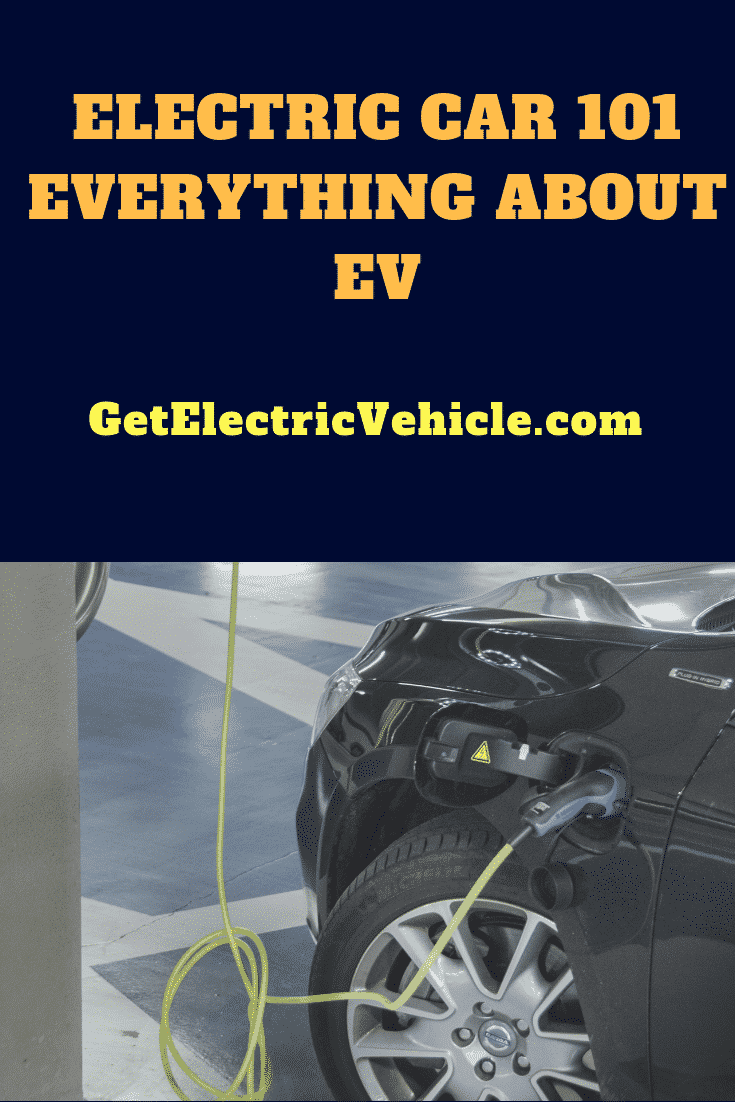
Electric car charging stations are the locations where electric vehicle charges. Charging stations are mainly classified into Home charging stations, Private charging stations, and public charging stations.
Cost to charge electric vehicle depends on the price of electricity. Gasoline price shows an increment day by day and depletion of fossil fuels will reduce the availability of gasoline fuels.
Electricity is being generated from different sources – renewable and non-renewable sources. In the US, an electric vehicle needs around $0.025 to travel 1 kilometer. A more detailed analysis of the cost of electric vehicle charging is available in this post.
All electric cars are not all-wheel-drive vehicles. In general, an electric car is a two-wheel-drive vehicle.
Electric power transfers to either one set of front or rear wheels. All-wheel drive electric vehicles are also available in the automotive industry.
Tesla Motors introduced its AWD electric vehicle which runs on two electric motors. Those motors are independently connected to the front and rear wheels. You can read how AWD vehicle works.
Regenerative braking is a common terminology in the electric vehicle industry. Regenerative braking is a kind of braking in vehicle in which the energy that would have been lost as heat during braking is being taped and stored in energy storage systems. The stored energy can then be used again.
Everyone cares about the future of electric vehicles. Do they have a prominent future? Most of the vehicle manufactures already declare their plan to manufacture the electric vehicle.
Electric rickshaws are common in Indian cities such as Jaipur. Electric cars are now established mode of transportation. They are not new. You can read a reasonable explanation: Why the future of electric vehicle is prominent?
