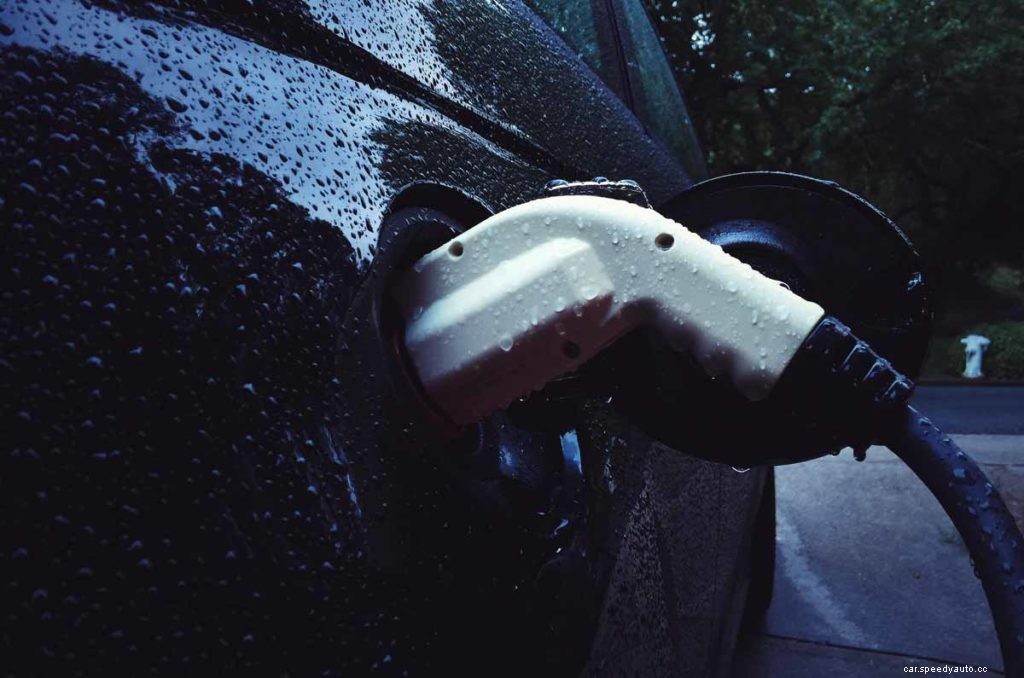
Can You Charge an EV in the Rain? Are They Waterproof?
With oil prices constantly fluctuating, companies going green, Elon Musk constantly in the news, electric cars have become all the rage. Many newcomers have some questions, with one of the most popular being related to electricity and rain.
You can charge electric cars in the rain. The mix of water and electricity seems dangerous, but electric cars and charging stations are built with this in mind. As a result, for every good electric car brand, there is no change between charging your car in the rain and out of it.
I’ve been taught that I should never mix water and electricity from childhood, so what exactly makes electric cars any different? If you’d like to find out what exactly makes these cars tick and how safe it is to charge them in the rain, then read on.
Why Can You Charge an Electric Car in the Rain?
Now that you know that it’s perfectly safe to charge your electric car in the rain, the next thing to understand is why. It seems counterintuitive that a car based on electricity should work so well regardless of the weather, but understanding why they work as well as they do will go a long way towards easing your fears and maybe even nudge you to buy your first one.
You can charge electric cars in the rain because of water resistance. Despite being built to run majorly on electricity, electric cars are also built to be extremely water-resistant. This resistance means that it is nearly impossible for them to sustain water damage regardless of water conditions.
Two main things go into protecting electric cars from the elements:
IP rating
Car’s safety system
Are Electric Cars Waterproof?
If you’d like to understand why electric cars are so safe regarding water damage, you’ll need to understand what an IP rating (Ingress Protection rating) is.
You might have heard of it before if you were buying a new phone and did not know what it was, but the IP rating is simply put, a measure of a container’s resistance to foreign solids and liquids.
Electric cars are waterproof. They are far more protected from water than regular cars because they have no exhausts, which allows them to be almost completely sealed. This ability is reflected in their IP rating of 67, which is usually the highest attainable number for non-specialized equipment.
The IP ratings generally consist of two numbers. Each number represents a different level of protection that you’ll need to understand going forward. The first number represents the enclosure’s level of protection against solids, while the second is its protection against liquids.
For IP ratings, the higher the number, the better, so an IP rating of 23 offers far less protection than a rating of 67. This format makes it easier to understand if you can’t remember all of the different ratings consistently.
Here’s a quick breakdown of what each number represents for both solids and liquids.
For solids:
An IP rating of 0 or x means that the enclosure has no special protection against solids.
An IP rating of 1 means that the enclosure protects from solid objects larger than the hand.
An IP rating of 2 protects from objects wider than a finger.
An IP rating of 3 will protect the entrance from tools and wires.
An IP rating of 4 protects the entrance from even slimmer objects like pins and needles.
An IP rating of 5 gives limited protection from dust and similar fine particles.
An IP rating of 6 gives complete protection from dust and similar particles.
For Liquids:
An IP rating of 0 or x means no special protection is given to any water damage.
An IP rating of 1 means that the device is protected from falling droplets.
An IP rating of 2 means that the enclosure is protected from a spray of up to 15 degrees from the vertical.
An IP rating of 4 protects from sprays from all directions..
An IP rating of 5 protects from low-pressure jets in all directions.
An IP rating of 6 protects from high-pressure jets in all directions.
An IP rating of 7 protects from temporary immersion in water.
An IP rating of 8 protects from extended immersion in water.
IP Rating
Solids
Liquids
IP 0 or x
The enclosure has no special protection against solids.
No special protection is given to any water damage.
IP 1
The enclosure protects from solid objects larger than the hand.
The device is protected from falling droplets.
IP 2
Protects from objects wider than a finger.
The enclosure is protected from a spray of up to 15 degrees from the vertical.
IP 3
Will protect the entrance from tools and wires.
NA
IP 4
Protects the entrance from even slimmer objects like pins and needles.
Protects from sprays from all directions.
IP 5
Gives limited protection from dust and similar fine particles.
Protects from low-pressure jets in all directions.
IP 6
Gives complete protection from dust and similar particles.
Protects from high-pressure jets in all directions.
IP 7
NA
Protects from temporary immersion in water.
IP 8
NA
Protects from extended immersion in water.
If you’d like a better visual on IP ratings and what they protect from, this video from RealPars does a wonderful job:
Now that you have a far better idea of the IP ratings, it’s easier to understand why electric cars are so safe from water. Most electric vehicles have a rating of at least IP 67, which makes them extremely resistant to both dust and water. In fact, due to the lack of exhaust in cars like Tesla, it is generally far safer to drive an electric vehicle in the rain than it is to drive a conventional car.
Here are some of the most popular IP ratings and what they mean.
IP Rating
Meaning
1
IP 55
Will take in some dust but not enough to cause significant damage. Will be protected from most water sources but will sustain damage from high-pressure jets.
2
IP 67
Completely dust-tight. Relatively waterproof and can be submerged but will take damage if submerged for too long
3
IP 68
Completely dust and watertight.
Note: The IP rating is not what protects the car from solids and liquids. It would be impossible to slap a random number on a car and immediately make it water and dust-resistant. Rather, what it does is ensure that all the cars produced by a particular company meet a certain standard. These cars are all tested rigorously to make sure they are safe before they ever leave the factory.
How Do Safety Systems Protect Electric Cars?
With everything that goes into the IP rating and making sure these cars are protected from dust, rain, and everything in between, it seems like it would be enough to keep you safe completely. While this is relatively true, there is still an extra layer of protection that comes in when you charge your car.
Safety systems protect electric cars by shutting off power when a fault is detected. In terms of charging, the system ensures that there is no possibility of water damage before it allows current flow. This safety system also kicks in case of accidents by limiting high voltages to the battery only.
Electric vehicles are set up to create a communication channel between themselves and their charging stations. What this means is that most cars will communicate with the charging station once they’re connected to ensure that everything is as it should be. This allowance provides an extra level of protection to make sure that there is nothing amiss.
If the car detects a problem, then no current flows, and your car won’t charge to keep both you and itself safe.
If youd also like to read a similar post, we wrote an article called Can You Charge a Tesla in the Rain? It has some additional and helpful info with regards to this one.
Conclusion
Although EVs have some problems attached to them, water damage is not one. These cars are made to be completely waterproof, and as a result, you can charge them anywhere and in any weather.