
Owning an electric car as a renter can have a fairly big issue–home charging. According to iPropertyManagement, 37% of the American population rent their home. Since plugging in at home is the primary way EV owners charge, this can be quite a challenge to the millions of renters who do not have access to an on-site charging station.
While new multi-family apartment projects may have a couple of chargers for tenants, this may not be the case for older apartments. Fortunately, there are many solutions. Here are five solutions to help solve owning an electric car as a renter:
Some apartment complexes or condos and most single-family houses have a dedicated carport/garage parking. More often than not, these parking spaces are close to a 120-volt outlet. This is especially the case for single-family houses with garages since most garages have outlets along the walls.
While charging on 120 volts (Level 1 Charging), is the slowest, it can fully recharge an EV after a commute of 50 miles or less overnight. In other words, charging on Level 1 provides about 4 miles of range per hour. It’s slow, but can do the job for short to medium range commutes regardless if its a plug-in hybrid (PHEV) or all-electric (BEV).
Specifically for PHEV drivers, Level 1 charging is really all you need since there is always the gas backup with 300+ miles of range when you need it.
Before you rush to plug into this outlet, it is important to know who is paying for the power. This is the time to ask your landlord/HOA who pays and if you can plug your EV in. If the electricity to the outlet is not yours, you will need to negotiate with the landlord/HOA to compensate for the additional power usage. Some landlord/HOAs may not care and won’t require additional rent, but it is best to check.
The landlord/HOA may have some questions before allowing you to plug the electric car into the outlet. Refer to the table below for a question/answer response.
If the landlord/HOA does require additional payment, you have two options: 1) meter the selected outlet where you will charge the electric car or 2) pay a flat monthly fee.
For the first option, simply use an electrical metering device like the Kill-O-Watt. This can be found on Amazon for less than $40. At the end of each month, record how much kWh, or energy, the EV consumed. Multiply the energy usage by a previously agreed electricity rate and there is the monthly charging cost.
Here is a free Monthly EV Charging Cost For Renters spreadsheet I created to help you get started. Feel free to download at your own use. As you can see, it will only take a few minutes of your time at the end of each month to record the usage and insert the numbers in the spreadsheet. Billing can then be taken care of your landlord/HOA’s desired payment method (check, Paypal, Venmo, etc).
It is important to note that this method relies on a bit of trust from your landlord/HOA. Since you, the renter, are responsible for recording the charging usage and inputting the data into the shared spreadsheet, your landlord/HOA must trust you will not fudge the numbers or plug the charger into a different non-metered outlet.
For the second option, the flat fee-based will be based on your estimated monthly mileage and EV efficiency. Use the above charging cost calculator to determine how much that will be.
Simply select “Driving Range” to calculate the daily cost. Select “MPGe” as the Efficiency metric. Insert 110 MPGe as this is a typical electric car efficiency. If you have a specific EV you are looking to, use that vehicle’s efficiency instead. Enter how many miles you typically drive every day. Enter how much electricity cost in your area. Select “Calculate” to see the daily charging cost.
Electric Vehicle Charging Cost Calculator Inch Calculator
For me personally, I agreed with my landlord/HOA a $50/month fee was fair. This allowed me to drive and charge my EV as much as I wanted to without worrying about the variable charging cost. Additionally, I did not have to spend any time inputting monthly usage data into a spreadsheet and paying my landlord/HOA separately in addition to my rent. Instead, my landlord/HOA simply added the charging fee into my rent and we both did not think about it again until the lease was up.
Renters of single-family houses or condos with a garage can choose to pay to add a 240-volt outlet (think of a dryer or electric stove outlet) for Level 2 charging rather than Level 1 charging (sometimes called trickle charging). This option may be available for renters at apartment complexes, however, it may be unlikely due to the complications of power to the detached carport.
As it sounds, Level 2 charging is faster than Level 1. In other words, Level 1 provides about 4 miles of ranger per hour whereas Level 2 provides around 25 miles of range per hour.
Level 2 charging can charge a PHEV in 2-4 hours and a BEV in 6-10 hours. Level 2 charging is the preferred overnight charging method for BEV drivers due to the larger battery. However, if your typical daily mileage is less than 50 miles, all of the range can be replenished overnight on Level 1. Therefore, there is no need to pay to install the 240-volt outlet for Level 2–see Solution #1 instead.
For daily trips longer than 50 miles, BEV drivers can simply charge at public Level 2 charging stations or DCFC (Level 3) charging stations. More on that later.
The cost to install a 240-volt outlet varies on several factors: location to the electrical panel, presence of drywall or plaster to get to wall wiring, and trenching requirements. Typically, this cost can run from $300 to over $1,000.
After the 240-volt circuit is installed, you will need to purchase a Level 2 charger unless one came with the electric car. Most EVs, however, only comes with a Level 1 charger. There are several variants of Level 2 chargers. Options include hardwired vs. plug, length of cord, speed of charging (measured in kW), and smart capabilities.
For a detailed review of popular Level 2 chargers, see the Best Electric Vehicle Chargers Under $600 article here.
In brief, common Level 2 chargers include Chargepoint, Juicebox, and Clipper Creek. These chargers can be found online at Amazon: Chargepoint, Juicebox, and Clipper Creek.
As a renter, I would highly recommend a plug type charger rather than a hardwired one. Since renters switch homes more often than not, it would be wise to buy the easily transportable charger so you can take it with you when you exit the lease. Like a cell phone charger, the plug type charger easily unplugs from the wall. With a hardwired charger, it takes a bit more effort uninstalling it and reinstalling it at your new house/apartment.
For renters living in an apartment complex without a carport or garage, options are limited to charging on-site. While this is the most expensive option, renters in an apartment complex may request the landlord/HOA to install a charging station benefiting all the tenants.
Most likely, the renter(s) will burden all of the costs. In this case, it would be best to ask around the complex to see if others are willing to pitch in to share the charging station. In this scenario, the charging station would be installed in a shared space parking stall. This means multiple EVs can charge throughout the day. Even more, the charging unit has the option of two plugs to facilitate even more EVs per charger.
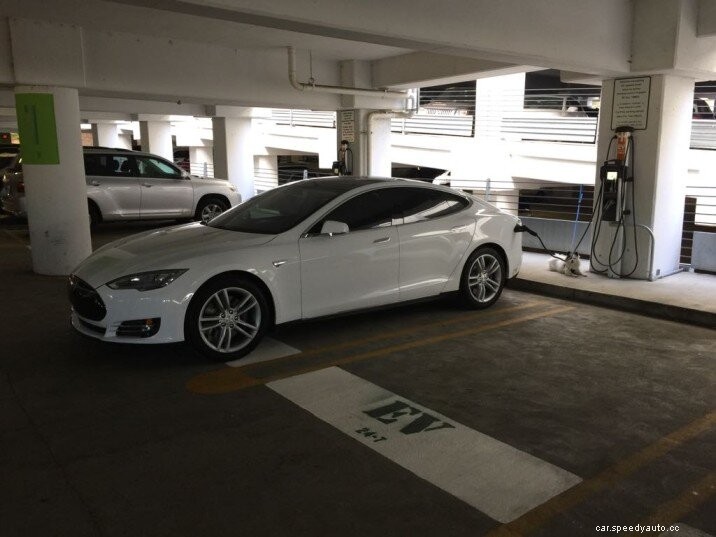
You can read more about shared space charging stations over at Chargepoint. Not only does Chargepoint manufacturer residential chargers, but they also build networked public charging stations. Furthermore, Chargepoint also offers a software management system so the landlord/HOA can control who has access, how much to charge, and how long drivers can charge per day.
While the landlord/HOA may not be willing to pay for the charging station, they may be inclined to allow the tenant to pay for the charging station installation. As EVs rise in popularity, landlord/HOAs may advertise EV charging stations as an amenity to attract renters. The same is currently happening with hotels and Airbnb owners.
Unfortunately, this situation is really only for those with no other options but plan to stick around the apartment complex for some time. Since the installation could cost several thousand, it would be best to plan to be at the apartment complex for a while since you cannot take the charging station with you when you leave.
This might be too much of a stretch for you. Therefore, look at owning an electric car as a renter Solution #4 below.
In the event charging at the apartment or rental unit is not possible, don’t worry! Here is another solution: public Level 2 and DC Fast Charging (DCFC or sometimes called Level 3).
There are many public charging stations currently around and more being installed. You may be surprised just how many are near you right now. Use the Plugshare tool below to find nearby public charging stations. The green stations are Level 2 and the orange stations are DC Fast Charging (Level 3). It is important to note that only BEVs can take advantage of DCFC stations due to their large battery. PHEVs can only charge at Level 2 stations.
As you can see, there are many public charging stations across the United States. These chargers are conveniently located nearby amenities such as shopping areas and restaurants. Common DCFC networks include Electrify America, Tesla Supercharger (Tesla Only), and EVgo.
In a practical sense, a quick 30-minute DCFC charge while buying groceries or getting lunch two or three times a week is all it takes. Since the latest electric cars (specifically BEVs), have a range of more than 200 miles, it only requires two or three full charges to get through the week. Any additional long road trips will require another stop at a DCFC station.
In the video below, Tesla Youtuber, TeslaJoy, explains how she owns a Tesla (or really any electric car for the matter) without a home charger at her apartment complex. TeslaJoy relies on public charging stations just like the conventional gas station for ICE (internal combustion engine) vehicles.
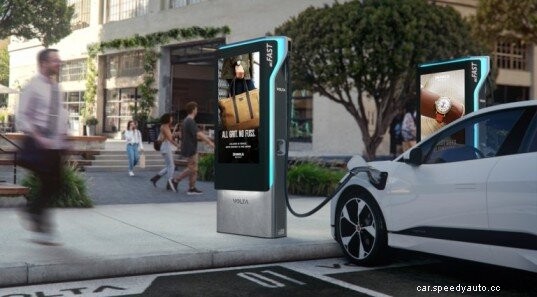
As TeslaJoy finds, and I have too on several occasions, there are a few FREE public charging stations. Not only can you charge while getting groceries, but it is also free! Charging network Volta provides free EV charging with its ad-based station.
If you believe this may be an option but unsure if your EV will have enough range, see here for a complete list of available and future electric cars. The table includes key information such as model, cost, range, max DCFC rates, segment, and more.
Does your workplace have an EV charging station? Will they allow you to install one or plug into a 120-volt outlet? If so, you’re in luck. Charging at work is just as convenient as charging overnight at home. Since the typical workday is over 8 hours, a complete charge is possible on Level 2.
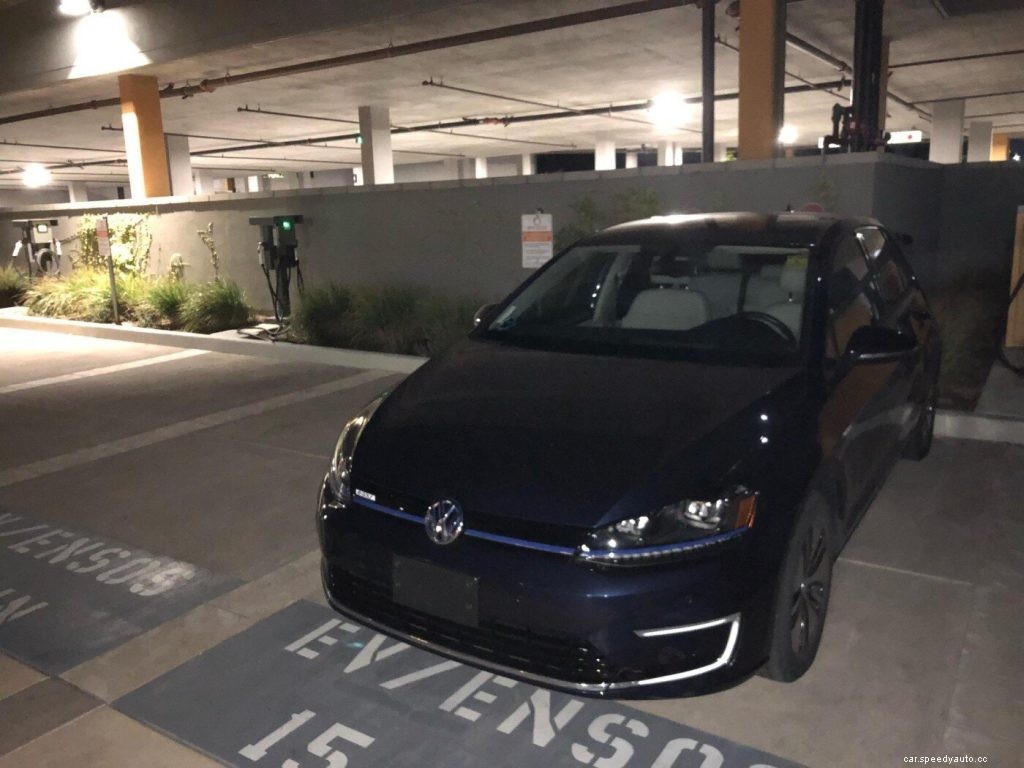
Even if Level 2 is not available at work, charging on Level 1 is still acceptable. Again, if your commute is less than 50 miles, nearly all of the daily range is replenished while you are at work. There is no need for an additional public charging stop unless you need to travel more than your short to medium commute.
Like apartment/house landlord/HOAs, electric car charging can be offered as an amenity to attract employees. Employees who drive an EV will be both more interested in applying for a job at the workplace and willing to stay if workplace charging is how they charge their car.
If there are no current EV charging stations at your workplace, ask your employer if they would be willing to install one. If not, ask if they will let you plug into a nearby 120-volt outlet. It doesn’t hurt to ask!
