
Now that automakers provide WLTP ratings for multiple electric cars, it’s time to organize a comparison table with range and efficiency WLTP figures.
At the moment not all figures provided by automakers make sense, for example the lighter Nissan LEAF (40 kWh) has a worse WLTP efficiency rating than the heavier Nissan LEAF e+ with the 62 kWh battery. However, if we look at the range rating and compare it to the battery capacity, we do see that the lighter variant does get more range per kWh.
Anyway, let’s see some official WLTP ratings that are already available.
| Electric car | Range | Efficiency |
|---|---|---|
| Lightyear One | 451 miles 725 km | 13,4 kWh/100 miles 8,3 kWh/100km |
| Tesla Model 3 Standard Range Plus | 254 miles 409 km | 23 kWh/100 miles 14,3 kWh/100 km |
| Tesla Model 3 Long Range AWD | 348 miles 560 km | 25,7 kWh/100 miles 16 kWh/100 km |
| Tesla Model 3 Performance AWD | 329 miles 530 km | 26,7 kWh/100 miles 16,6 kWh/100 km |
| Hyundai IONIQ Electric (38,3 kWh) | 193 miles 311 km | 22,2 kWh/100 miles 13,8 kWh/100 km |
| Hyundai Kona Electric (64 kWh) | 279 miles 449 km | 24,8 kWh/100 miles 15,4 kWh/100 km |
| Kia e-Soul (39,2 kWh) | 171 miles 276 km | 25,1 kWh/100 miles 15,6 kWh/100 km |
| Kia e-Soul (64 kWh) | 281 miles 452 km | 25,3 kWh/100 miles 15,7 kWh/100 km |
| Kia e-Niro (64 kWh) | 283 miles 455 km | 24 kWh/100 miles 14,9 kWh/100 km |
| MG ZS EV | 163 miles 263 km | 29,9 kWh/100 miles 18,6 kWh/100 km |
| Nissan Leaf (40 kWh battery and 16“ wheels) | 177 miles 285 km | 31,2 kWh/100 miles 19,4 kWh/100 km |
| Nissan Leaf (40 kWh battery and 17“ wheels) | 168 miles 270 km | 33,2 kWh/100 miles 20,6 kWh/100 km |
| Nissan Leaf e+ (62 kWh battery) | 239 miles 385 km | 29,8 kWh/100 miles 18,5 kWh/100 km |
| Renault Zoe R110 (52 kWh battery and 15“ wheels) | 245 miles 395 km | 27,7 kWh/100 miles 17,2 kWh/100 km |
| Renault Zoe R135 (52 kWh battery and 16“ wheels) | 240 miles 386 km | 28,5 kWh/100 miles 17,7 kWh/100 km |
| PEUGEOT e-208 | 211 miles 340 km | 27,2 kWh/100 miles 16,9 kWh/100 km |
| Opel Corsa-e | 205 miles 330 km | 27,4 kWh/100 miles 17 kWh/100 km |
| BMW i3 (120 Ah battery and 19“ wheels) | 191 miles 308 km | 24,6 kWh/100 miles 15,3 kWh/100 km |
| BMW i3 (120 Ah battery and 20“ wheels) | 177 miles 285 km | 26,2 kWh/100 miles 16,3 kWh/100 km |
| Volkswagen e-Golf | 144 miles 231 km | 25,4 kWh/100 miles 15,8 kWh/100 km |
| Audi e-tron (19“ wheels) | 255 miles 411 km | 36,9 kWh/100 miles 22,9 kWh/100 km |
| Audi e-tron (20“ wheels) | 221 miles 355 km | 42,5 kWh/100 miles 26,4 kWh/100 km |
| Jaguar I-PACE (18“ wheels) | 292 miles 470 km | 35,4 kWh/100 miles 22 kWh/100 km |
Remember that like EPA, WLTP figures also measure plug-to-wheels consumption, this means that the on-board charger efficiency matters.
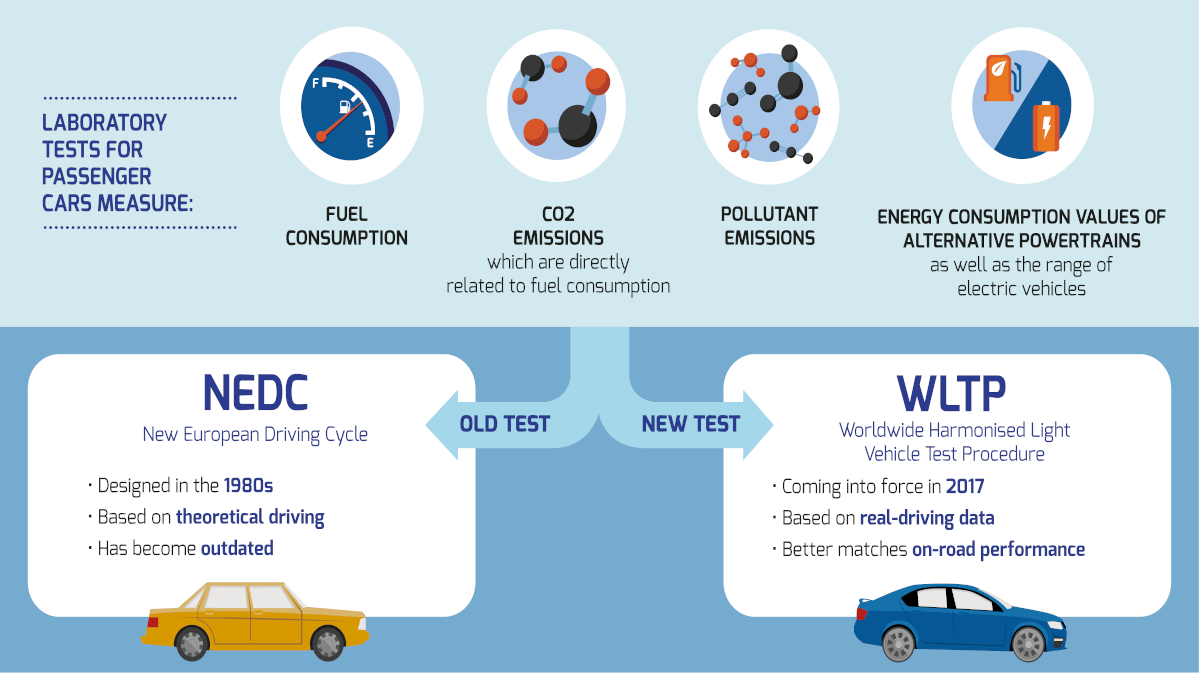
Worldwide Harmonised Light Vehicle Test Procedure (WLTP)
It’s not a surprise to see that the Audi e-tron and Jaguar I-PACE are extremely inefficient, we already knew that from the EPA range and efficiency ratings. Premium legacy automakers never had to worry about efficiency, but now they have to, if they want to make a successful transition from ICE (Internal Combustion Engine) to electric cars.
It’s also not a surprise that the Korean legacy automakers Hyundai and Kia have very efficient electric cars, but it’s Tesla Model 3 the most impressive with great range and efficiency, only surpassed by a real self-charging car the Lightyear One.
