
If you’re thinking of switching your company fleet to electric cars, the environmental impact is likely to be a key concern, as well as what it could mean for your bottom line. Both could have a positive effect on your business.
Here we guide you through the key questions when considering the business case for electric vehicles.
In a word, yes.
Pure electric vehicles (EVs) produce zero CO2 emissions; those which are harmful to the environment. There are manufacturing considerations to take into account though, as well as where the electricity that powers them comes from.
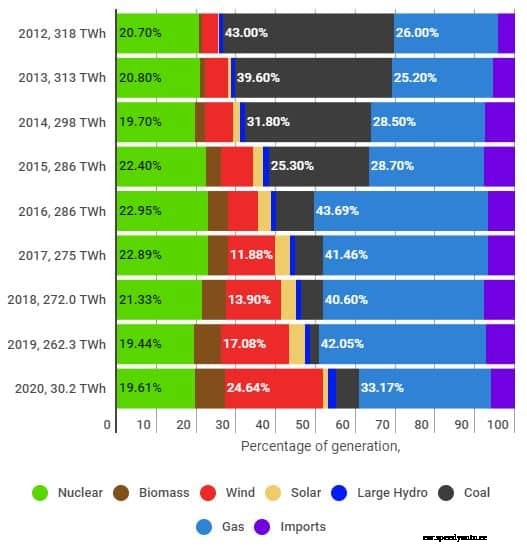
Electricity since 2012: The chart below shows the energy mix each year. Note how coal is being squeezed out by gas and renewables.
The rising popularity of EVs means manufacturing processes are becoming more efficient. Some manufacturers are also creating their EVs with more environmental consideration, vegan interiors are available in some models. The BMW i3 is an excellent example of this; each i3 is up to 85% recyclable, and made from sustainable materials in BMW’s state-of-the-art Leipzig plant in which the production line runs entirely on renewable wind power.
In terms of the emissions associates with the electricity that goes into your car we’ve also made huge advancements in producing cleaner, renewable energy. The UK barely uses coal anymore, while half of the EU’s energy will be renewable by 2030. This is key for clean air initiatives around the world.
Electric cars are already more sustainable than petrol and diesels with an internal combustion engine (ICE). At the moment, they generate around half the emissions of their ICE counterparts. This figure will only improve in the future as the UK electricity grid decarbonizes further, increasing EV sustainability with each passing year.
The World Health Organisation estimates rising CO2 levels will play a part in 250,000 more deaths a year. With corporate social responsibility such a key issue, getting ahead of the curve with a fleet of electric cars makes great business sense.
The change is already happening. There were 221% more battery electric vehicle (BEV) registrations in 2019 than the year before, and it’s tough to ignore the business case for EVs. So, is it time to future-proof your company?
Wow, January's vehicle registration numbers are out... take a look at the BEV registrations in January 2020 compared to previous years. Overall EV registrations last month are over 3 times more than January 2019! #TheFuture #ElectricVehicles
— DriveElectric (@DriveElectricUK) February 5, 2020
Data c/o @SMMT pic.twitter.com/GTmW76fOuO
You may think there’s going to be a high cost associated with giving your business’s reputation such a great boost. Not so. EVs are more affordable than ever, while there are often government grants and other incentives to help bring down the cost.
You can lease a Skoda Citigo iV SE for £131 per month (+ VAT) on a 9+23 contract with 5,000 miles per annum. This car’s perfect for driving in cities. If you’re looking for a van, you could get a Renault Kangoo ZE for just £99 per month (+ VAT) as part of the government’s Ultra Low Emission Zone (ULEZ) scrappage scheme.
You can make massive savings on fuel with an EV. To work out the cost of a full charge, simply multiply the energy cost by the car’s battery size.
Energy cost x battery size = cost of full charge.

A Renault Kangoo ZE Maxi Van offers a range of 168 miles on its 33kWh battery, while special EV friendly energy tariffs can cost less than 5p per kWh. This means a full charge costs just £1.65 (5p x 33kWh = £1.65).
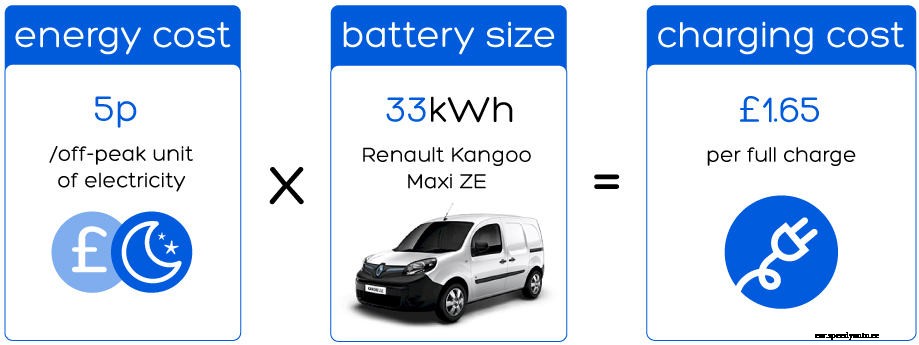
That’s an estimated saving of £13.87 on what you can expect to pay in covering the same distance as the diesel version of the same van, based on a fuel price of £1.30 per litre, though that’s based on the official mpg of 64. A more realistic saving would be closer to £20 based on the real-world economy of both vans.
Then there’s company car tax. EVs won’t attract a penny of it during the 2020/21 financial year. For an employee who drives 20,000 miles and is taxed at 40%, this means an annual saving of £2,235. Individuals can also claim 4p per mile when driving a company car on business.
Want more savings? EVs costing under £40,000 pay zero road tax. All-electric cars are exempt from paying the London Congestion Charge, while they’re also exempt from ULEZ charges. Electric cars driving in London don’t contribute to toxic air pollution, allowing the city’s population to breathe cleaner air.
Currently, you can take advantage of the government’s OLEV Grant too. Provided by the Office for Low Emissions, you can get up to £500 off the cost of buying and installing a home charging point. There are also workplace grants available.
We’ve found the issue of charging and range is the biggest concern for fleet managers thinking of switching to electric cars. However, battery technology is improving all the time. Today’s EVs are generally able to cover between 150-300 miles on a single charge. The Tesla Model S Long Range can do around 325 ‘real world’ miles per charge.
At the same time, the infrastructure needed to power electric cars is experiencing a boom. Around 4,000 new public charging locations opened in 2019, pushing the total well over 10,000 at the start of 2020. There are now more EV charging points than traditional fuel stations, and many of these are equipped with rapid chargers that can boost your battery from empty to 80% in just 30 minutes.
With hundreds of miles at your disposal on a full charge, as well as huge UK charging point network, there’s no need to worry about range. This applies to people who need to cover large distances every year, as shown by leading last-mile delivery service Gnewt. We helped the company become London’s biggest fully electric delivery fleet, getting it ready for the future in a cleaner, quieter and healthier city.
It’s as easy as 1,2,3 to see how you can start saving thousands of pounds in fleet costs:


https://www.telegraph.co.uk/connect/small-business/operations-and-logistics/renault/electric-vehicles-to-power-cities/
https://www.cleanairpartnership.org/wp-content/uploads/2018/11/CAP-EV-Business-Case.pdf
https://www.smmt.co.uk/vehicle-data/evs-and-afvs-registrations/
https://pod-point.com/guides/driver/olev-grant
https://www.nextgreencar.com/cost-calculators/renault/kangoo-maxi/
https://www.statista.com/statistics/673575/charging-locations-electric-vehicles-uk/
https://www.electrive.com/2019/08/16/uk-electric-car-charging-stations-surpass-fuel-stations/
Header photo by Nick de Partee
