
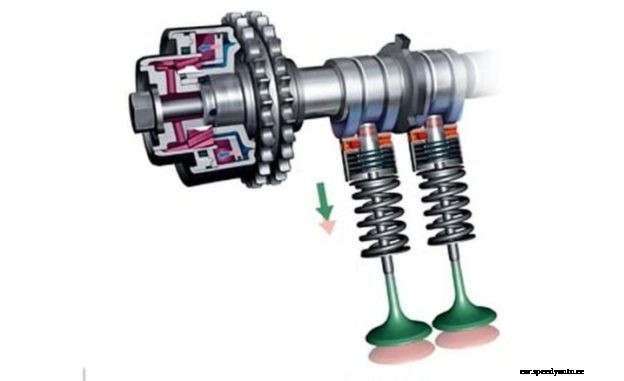
Because, with variable valve timing (VVT) it’s possible to have the timing altered. As a result, matching the engine speed, torque, and valve overlap.
So, in theory, maximum overlap is needed between intake and exhaust valves’ opening; whenever the engine is running at high speed.
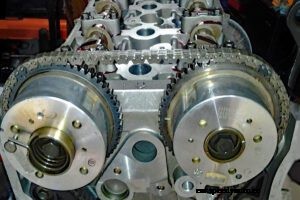
However, when the vehicle is running at medium highway speed; in other words, the engine is running at light load; maximum overlapping may be useful; as a means to reduce fuel consumption and emissions.
Since the exhaust valves do not close until the intake valves have been open for a while; some of the exhaust gases are recirculated back into the cylinder; at the same time as the new fuel/air mix is injected. Consequently, as part of the fuel/air mix is replaced by exhaust gases, less fuel is needed.
Because, the exhaust gas is comprised of mostly non-combustible gas; such as CO2, the engine runs properly at the leaner fuel/air mixture, without failing to combust.
On (VVT) systems that use oil pressure to actuate the cam phaser; oil quality, viscosity and contamination problems can affect the operation of the phaser.
So, if the phaser does not receive adequate oil pressure; or the oil is the wrong viscosity (too thick or too thin), or the oil is dirty; it may prevent the phaser from working properly.
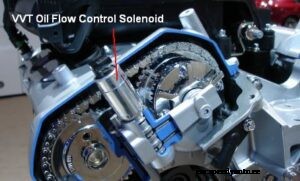
As a result, hurting engine performance, fuel economy and emissions. Furthermore, such faults will often turn on the Check Engine light and set a (VVT)-related fault code.
After you’ve properly diagnosed and fixed the problem that triggered the OBD trouble code; you can reset or clear the Check Engine a number of different ways:
Back in the day:
But, nowadays many engines can change when their valves open, how much they open and for how long.
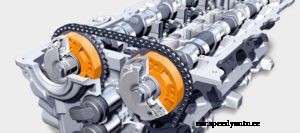
So, these systems are complex, and it’s essential that you change your engine oil at the recommended intervals. So, make sure you are using, the correct weight and viscosity that’s in your manufacturer’s recommendations. Consequently, the solenoids that control (VVT) systems, can easily be damaged by improper lubrication.
