
Whether it is through neglect, general lack of information regarding regular vehicle service intervals, or just plain bad luck, the oil dipstick we all use to check the oil level of our trusted car’s engine can become stuck and in most cases you find that the handle or the tip of oil dipstick broke off, leaving you with a broken oil dipstick stuck in the tube. There is a myriad of reasons as to why a dipstick can be stuck and render itself unremovable. Things such as sludge build-up, corrosion, fallen “o” rings in the oil dipstick tube as well as debris that can lodge itself into the oil dipstick tube. Here are a few reasons why this happens and a couple of ways of How to remove a stuck oil dipstick tube.
What are a dipstick and dipstick tube and how does it affect your maintenance of the engine?
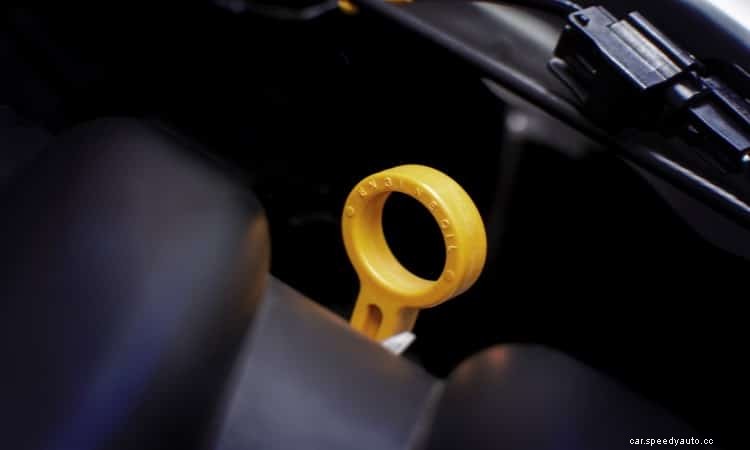
A dipstick is a metal rod with an attached metal or plastic holder in which one or more fingers fit. The handle is usually brightly colored in order to stand out and be spotted easily. The Dipstick fits inside a hollow tube which allows it to slide down into the oil sump of the engine and it helps measure the quantity and quality of the motor oil in your engine. The dipstick tube is most usually welded onto the engine block and it allows the dipstick to be emulsified by the engine oil at any given time.
It is only used when the engine is cold at ambient temperatures above 0 degrees Celsius when the quantity of oil in your engine is most correctly shown. Using the dipstick to check for the level of engine oil in your engine right after driving the car will give you a false reading due to the vibrations and moving engine parts that cause the oil to move around all parts of the engine including the dipstick, thus covering the measuring ranges completely, giving false information that your oil level is satisfactory.
Grime and sludge build-up. With the engine, neglect comes more than a few warning signs including a stuck dipstick within your engine. As engine oil is used by the vehicle for lubricating all moving components, its viscosity changes, and after a certain interval this used-up oil should be changed. Many car owners neglect this face and with time, this spent motor oil due to heat and friction can become very viscous and start to build up in parts of the engine and engine sump where there is a low amount of movement.
Such a place is at the bottom of the dipstick tube where there is only one moving part, the dipstick, and the only movement is provided by a human factor. When this situation is presented to the dipstick tube, this viscous sludge buildup of old and spent motor oil seizes up the dipstick and prevents it from moving. This is a scenario where an approach from the inside of the engine is necessary in order to free up the dipstick and clean out the dipstick tube. This is explained briefly and in simple terms down below.
You May Like Easiest Way on How to Remove Stuck Oil Drain Plug
Heat factors. More often engines can overhead due to a variety of reasons. The more this happens the more abnormal heat is introduced to all engine components, and this heat is much more than the approved running temperature the engine and its components are rated at. In this case, the rubber o rings that act as gaskets to the dipstick and are located just below the handle of the dipstick can perish, melt and fuse themselves to the metal dipstick tube, making your dipstick virtually impossible to remove.
Poor Quality Materials. Poor quality materials most commonly found in knock-off dipsticks or off-brand dipsticks that are used as a replacement are not very resistant to a normal engine’s vibrations and temperature. This will, in turn, cause great stress to already very cheap material and greatly lessen the structural strength of the handle on the dipstick. This can cause breakages leaving the metal rod of your dipstick stuck inside the dipstick tube, which is not too dangerous for the running of the engine but prevents you from checking your oil level and quality.
Removing a stuck oil dipstick is a process that will either take an eternity and a lot of patience or it can be quick and easy, depending on your car type, the design of the dipstick, and how it is attached to the dipstick handle as well as the positioning of the dipstick tube on the engine.
A stuck oil dipstick can usually be pried off the dipstick tube with a little heat and some added lubrication. To avoid using a blowtorch, make an attempt at wiggling the dipstick by moving the handle very gently in all directions in order to dislodge the stuck dipstick handle from the dipstick tube. Once you gain little movement spray the cavity between the stuck dipstick and dipstick tube generously with a lubricant that is safe to use on an engine. The perished and stuck o rings that are stuck to the dipstick tube should come free and you will be able to remove the stuck dipstick from your engine. Source genuine rubber o rings and replace them before placing the dipstick back in the tube.
If and when the handle of the stuck dipstick breaks you have an option of two different approaches on how to remove the broken oil dipstick from its tube.
The first approach would obviously be from the top of the engine, in the opening of the dipstick tube. Due to the building design of the engine, a dipstick with a broken handle will remain in its position minus the handle.
You May Like: How To Remove A Stripped Spark Plug
If by any chance there is grime or sludge build-up which caused the dipstick to be stuck inside your engine, you must move to a more drastic approach. Here is how you can remove a stuck oil dipstick from its tube with a removal tool.

The second approach is easily approachable by a DIY mechanic. This will explain how to remove the dipstick tube from the engine block.
You May Like: How to Remove a Stuck Oil Filter within Seconds
This is arguably a more effective and a much more demanding process but, besides removing your oil dipstick tube you will also change the oil pan gasket, assess any grime build-up that may be problematic to your stuck oil dipstick as well as top up your engine with fresh new engine oil and keep it happy for another 5-10K miles.
A broken dipstick can be easily removed with a telescopic magnet oil dipstick tube removal tool where the magnet grabs the metal rod of the dipstick and allows you to pull it out. There are a few oil dipstick tube removal tools on the internet to help you if the tip of the oil dipstick broke off. Products such as the PowerPull Oil Tube Extractor or a simple bolt with the same dimensions as the internal circumference of your dipstick oil tube can grab the metal bar of the dipstick as they are winded in the oil dipstick tube. If you are a capable DIY-er you can also remove the oil pan from your engine block, tap out the dipstick, and while you’re at it, give your engine a quick service since you’ve already drained out the oil.
You absolutely cannot and should not drive with a broken dipstick tube. The engine of your car works at very high pressures and thanks to those pressures the oil is evenly distributed to all moving parts. If a leak from a broken dipstick tube, your engine will not be lubricated properly, you will most definitely have an oil leak from your engine and cause it to seize in a matter of hours.
Driving without a dipstick inside your dipstick tube should be cautious at most. The tube runs a far way up from the oil pan and there should not be any leaks from the tube itself. Although it is not recommended a car can be driven a short distance to get your dipstick replaced without any problems.
An oil dipstick’s price depends on its quality and the manufacturer of your vehicle. It is obvious that more luxurious brands will definitely charge more for a replacement although you can buy a generic dipstick and use it as a replacement for a short amount of time until you can get an original part for your engine. Generic one-size-fits-all dipsticks that are used as a direct replacement to the original can cost between 15 and 40 us dollars and are usually used as a quick fix as you can buy one from any auto shop or can easily be ordered online from a trusted supplier such as (amazon link) An original part replacement can cost from 10 to upwards of 50 dollars and is usually in stock but can sometimes take some time due to shipping and current availability.
Driving with a broken dipstick is not usually a problem but can become one very quickly when putting your car through its paces. Although the bottom end of your dipstick is curled to provide friction and reduce the chance of moving down into the crankshaft, this can and will happen. If your dipstick slides down and into the crankshaft expect a total engine failure and a hefty repair bill.
There is a couple of root causes why oil would come out of a dipstick tube. Most commonly this is due to ring wear on the pistons on a worn engine where the combustion in the piston is not isolated in the top half of the engine and a blow by happens releasing increased pressure into the oil pan causing the oil to seek an escape route by looking for the most available and weakest path, the dipstick tube.
One other reason can be to use much thicker oil than the manufacturer recommends thus reducing the lubrication that is necessary when a car is starting up as well as driving in general. This necessary lubrication that the thicker oil cannot produce due to its viscosity puts extra stress on the engine causing oil leaks through the dipstick tube.
All in all, a simple analog tool such as the oil dipstick can be a formidable problem for any car owner. As with any perishable part of your vehicle (brake pads, discs, filters, sparkplugs, etc.), the dipstick should be visually inspected for any wear and regularly used by a car owner to both check the oil level and quality as well as inspect the quality and condition of the dipstick. While breaking off the handle will not create a problem that cannot be fixed, the dipstick’s metal rod coming in contact with the crank will definitely cause the need for a lengthy and rather expensive repair.
Read More :
