OBD Engine Codes – The Check Engine Light Is Only The Messenger
OBD Engine Codes - The Check Engine Light Is Only The Messenger
So, OBD Engine Codes, or a check engine light, cannot be fixed by; simply resetting it or disconnecting the battery.
In other words, the OBD Engine Codes, and dreaded check engine light will return! However, stay cool, the check engine light is only the messenger.
When this system identifies an issue; it turns on the check engine light and records OBD engine codes.
Because, it is simply doing it’s very important job; letting you know that your vehicle, isn’t operating at top efficiency.
Furthermore, the check engine light is not only for, the vehicle’s emission system. This light informs the operator when there is a problem; anywhere in the vehicles, electronic engine control system.
The OBD Engine Codes System, Basically Includes:
sensors
solenoids
valves
actuators
Consequently, your vehicle needs these and many more to operate correctly. So, to troubleshoot, repair and maintain your vehicle; you’ll need diagnostic repair information, that is specific to your vehicle.
Check Engine Light
But, with only a few basic tools, a little patience and some mechanical aptitude; you can pinpoint and repair most of these concerns yourself.
So, How Do I Read The OBD Engine Codes !
How Do I Read The Codes
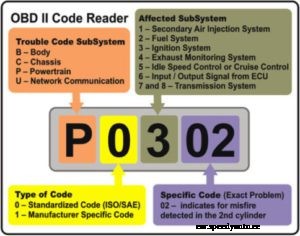
Firstly, the first character identifies the system, related to the trouble OBD Engine Codes.
P = (Powertrain)
B = (Body)
C = (Chassis)
U = (Network Communication)
Secondly, the second digit identifies, whether the OBD Engine Code is a generic code (same on all OBD-II equipped vehicles); or a manufacturer specific code.
0 = (Standardized Code ISO/SAE) Generic (this is the digit zero — not the letter “O”)
1 = (manufacturer specific OBD Codes)
While, the third digit, denotes the type of sub system, that pertains to the OBD Engine Code.
(Secondary Air Injection System) Emission Management (Fuel or Air)
(Fuel System) Injector Circuit (Fuel or Air)
( Ignition System) or Misfire
(Exhaust Monitoring System) Emission Control
(Idle Speed Control) Vehicle Speed
(ECU) Computer & Output Circuit
(Transmission System)
(Transmission System)
9= SAE Reserved
0= SAE Reserved
Finally, OBD Codes-4th and 5th, these digits are variable, and relate to a specific problem.
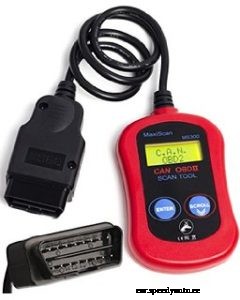
OBD Codes Reader
OBD Code Categories
P0100-P0199 – Fuel and Air Metering. So, these will be things like the mass airflow sensor and throttle body.
P0200-P0299 – Fuel and Air Metering (Injector Circuit). Consequently, these codes would be for things involving the fuel injectors.
P0300-P0399 – Ignition System or Misfire. So, if there was a bad spark plug or faulty coil you would see one of these codes.
P0400-P0499 – Auxiliary Emissions Controls. Above all, these are the famous (EVAP) system codes.
P0500-P0599 – Vehicle Speed Controls and Idle Control System. Furthermore, the idle air control valve and (VSS) would fall under this category.
P0600-P0699 – Computer Output Circuit. As a result, sometimes these types of codes point to a faulty computer.
P0700-P0999 – Transmission Codes. Finally, simply lets the driver know that there is a fault in the transmission computer; and the TCU needs to be scanned for codes.
So, now you have a better idea of what makes up a Diagnostic Trouble Code. As a result, you can see that every digit has its purpose. Also, you know which system is having the problem. Therefore, just by knowing what the first few digits are.
Diagnostic Trouble Code Reader
A Short List Of, OBD Codes Definitions And Abbreviations
ABS: Antilock Brake System
AC: Air Conditioning
Baro: Barometric pressure. Usually a sensor.
CKP Crankshaft Position
CMP: Camshaft Position
CO: Carbon Monoxide
CO2: Carbon Dioxide
DLC: Data Link Connector
DTC: Diagnostic Trouble Code
ECM: Engine Control Module
ECM: Electronic Control Module
ECS: Emission Control System
ECT: Engine Coolant Temperature
ECU: Electronic Control Module
EEC: Electronic Engine Control
EGR: Exhaust Gas Recirculation
EVAP: Evaporative Emissions
FTP: Fuel Tank Pressure
H2O: Water
HO2S: Heated Oxygen Sensor
hp: Horsepower
IAC: Idle Air Control
IAT: Intake Air Temperature
IC: Ignition Control
I/M: Inspection Maintenance
KS: Knock Sensor
MAF: Mass Airflow Sensor
MAP: Manifold Absolute Pressure
MIL: Malfunction Indicator Lamp
NOx: Nitrogen Oxides
OBD: On Board Diagnostics
OBD-II: On Board Diagnostics generation 2
PCM: Powertrain Control Module
SES: Service Engine Soon
TCC: Torque Converter Clutch
TDC: Top Dead Center
TP: Throttle Position
TPS: Throttle Position Sensor
TWC: Three Way Catalyst
VCM: Vehicle Communication Module
VSS: Vehicle Speed Sensor
WOT: Wide Open Throttle
Conclusion
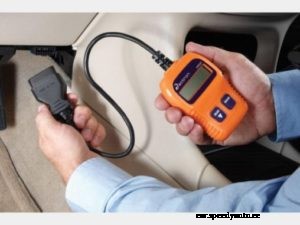
So, OBD engine codes are accessed, by plugging a code reader, into the vehicle’s OBD port. Consequently, these codes provide a mechanic, with information about the system and the conditions; under which the issue was first identified.
However, they can’t provide a clear-cut solution to the actual cause of the problem. Because, the check engine light, is only the messenger. So, to learn more about what your vehicle is trying to tell you; read more on our OBD engine codes page.
Finally, our goal is to provide you with the knowledge; to know what is going on with your vehicle; when the check engine light comes on.