
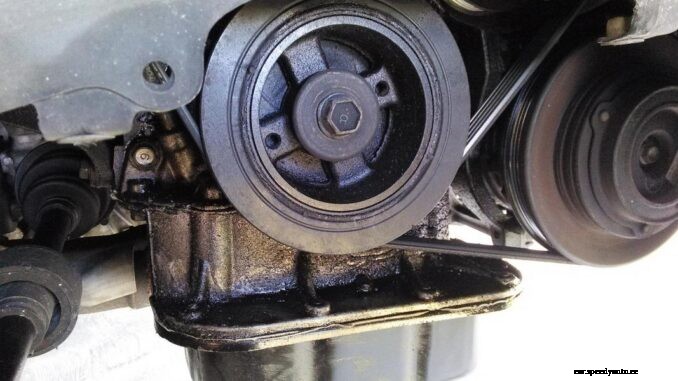
The main function of the harmonic balancer is to; absorb and reduce harmonic and torsional vibrations, from the engine.
Excessive vibrations, especially at high engine speeds can cause; accelerated wear and damage to engine components. The speeding up and slowing down of the crankshaft also produces; torsional vibration or twisting forces. As a result, putting stress on the crankshaft and the connected components. If the stress is great enough, the crankshaft will eventually fail.
So, each time a cylinder fires, the connecting rod applies, rotational force to the crankshaft. While, at the same time, the crankshaft is in the process of, pushing another piston up.
So, there are tremendous counteracting forces, being applied to the crankshaft. Between each power pulse, the crankshaft twist, tends to spring back. As a result, there’s really a forward and backwards twist. For this reason, the crankshaft is designed to bend slightly. Consequently, this is to accommodate, the counteracting forces and prevent breakage.
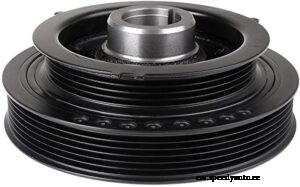
Inertial Mass Element
The inertial mass consists of an outer ring and; an inner hub that, connects to the crankshaft. The outer ring contains the mass, to cancel out the vibrational forces.
Energy-Dissipating Element
Between the two metal components, is the energy-dissipating element. That material, is a rubber or elastomeric compound. This ring of rubber; allows the two metal parts to go, out of phase, as it absorbs the vibrations.
A fluid isolation system is similar. But, instead of using a rubber ring, it relies on a, thick silicone fluid. Similar to the viscous clutches, used in radiator fans and (AWD) center differentials.
The rubber isolation ring deteriorates completely. As a result, the pulley completely dislodges, from the center portion of the balancer.
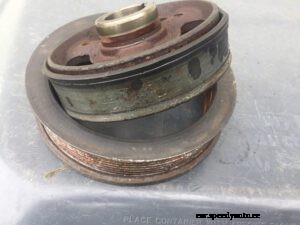
The constant twist/untwist movement, causes the rubber to heat. The most damaging cause, would be engine overheating. That extra heat can dramatically accelerate, deterioration of the rubber isolation ring. In addition to heat deterioration; fluid contamination can also, accelerate decomposition of the rubber isolation ring.
Consequently, you can have an engine oil leak or coolant leak that flows, onto the harmonic balancer.
The oil and coolant contamination; softens the rubber, causing a change in vibration frequency. A technician with a stethoscope; can pick up the vibrations, of a bad harmonic balancer. In some cases, you can also see, the belt vibration. As the rubber deteriorates even more, you’ll notice, engine vibration at higher (RPM)s.
One of the first symptoms of a potential problem, is engine vibration. If the harmonic balancer can no longer properly absorb the harmonic vibrations; the engine will shake excessively. At some point, the shaking will become even more pronounced. As a result, making it dangerous to the engine, at high speeds.
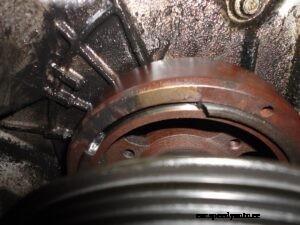
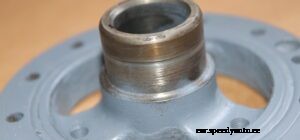
Heat and engine vibration, can cause the seal to become, hard and loose its sealing ability. As a result, allowing residual engine crankcase pressure; to force oil past the seal and out from the engine. Because the seal rides against the inner hub of the balancer; it can cause, grooves in the seal surface.
Another symptom of a potential problem with the harmonic balancer is, misaligned timing marks. If the layers separate or slip, the timing marks can shift. This will make it, difficult if not impossible; to properly time the engine with a timing light.
If a damper is no longer able to absorb crankshaft vibration; the destructive forces will start to attack the transmission. The vibrations could damage the, input shaft, bearings, planetary gears and more.
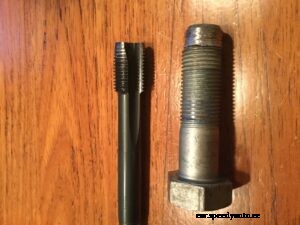
Another common issue is, the hold down bolt coming loose or breaking. In fact, some engines are more prone than others for this problem. It may be from incorrect torque or just engine vibration. So, at some point it could develop into a; wobble in the pulley or even, severe engine damage.
A belt tensioner or de-coupler pulley, can take only so much vibration. While the damper may only flex 1º or 2º, this helps to; take a lot of strain off attached components.
So, a loose or damaged damper, can make a squeaking noise as it rotates.
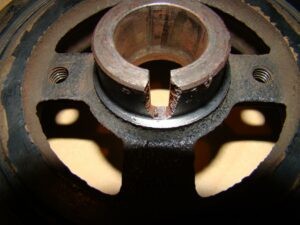
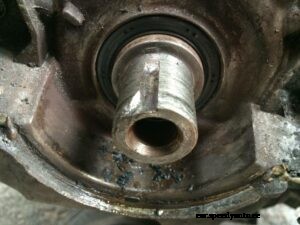
A worn keyway, could cause the balancer to fall off. As a result, overheating and damage to the engine, will be the end result.
So, some dampers work hardest, during idle. If a damper has failed, the idle may fluctuate, as the dampening mass moves around.
So, always use the correct procedure and tools, to pull the damper from the engine. To replace the timing belt on most vehicles, the damper has to come off. The most important thing to remember is; never put pressure on the outer ring with a hammer.
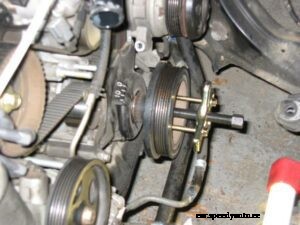
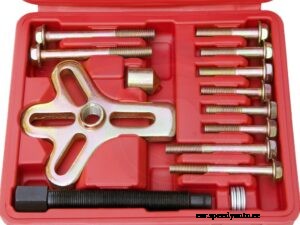
So, do not use a hammer to hit the damper. Because, this could damage, the internal components. Instead, always use, the correct tools to install a damper. As a result, not using the correct tools, can damage the damper and the crankshaft. The most common installation error is; using the center bolt, to pull the damper on the nose of the crank. That’s why, it is common, to strip the threads in the crankshaft.
A belt that is too tight can cause, excessive stress, on the accessory belt drive items. As a result, the harmonic damper can fail from the, extra tension. You may also see this as a flutter, in the tensioner arm.
So, a simple way to think of the harmonic balancer is like a, massive stress reliever. Because, it absorbs the violent torsion of the modern-day engine.
