
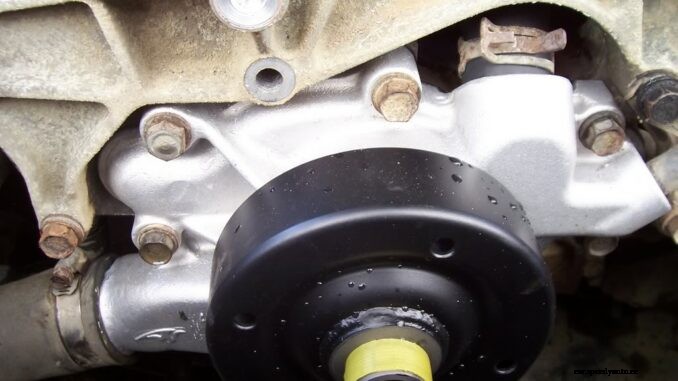
As a result, water pump noise will, resonate throughout the engine, making it even harder to identify.
Given a chance, a failed water pump, could overheat and completely destroy your engine. Although the water pump in most modern cars, trucks, and SUVs will last a long time; they are by no means indestructible. Like any other mechanical device, they will produce a few warning signs, of wearing out. Fortunately, things don’t have to get to that point.
Your water pump has a simple, but efficient design. The water pump uses an impeller; mounted on one end of a shaft, to push coolant throughout your:
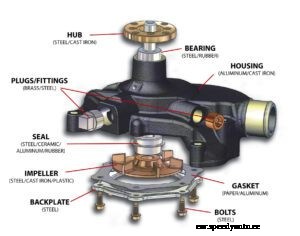
So, the shaft has a pulley on the other end and is supported by, one or two bearings. Consequently, allowing it, to transfer rotating force to the impeller. Worn bearings, are the biggest source of, water pump noise. Also, depending on your particular vehicle make and model; your engine may use a serpentine belt, drive belt, or timing belt, to turn your water pump. Although a shaft seal isolates coolant from the bearing assembly; your water pump housing has a weep hole; to allow coolant to exit, if your water pump develops a leak.
Most of the time, when a water pump fails; the noise is caused by damage to the bearings.
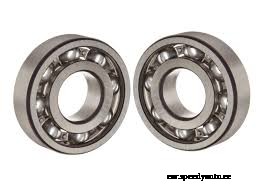
One way to check for worn out or failed water pump bearing; is to check for water pump shaft movement.
So, with a faulty bearing, you can often hear a squealing, howling; or sometimes a grinding noise, coming from the front of the engine.
Even if you don’t hear any noises, apply the next steps:
Also, be aware that a, loose or slipping drive belt, an AC compressor, alternator, steering pump, belt tensioner; or another accessory driven by the belt, may also cause a similar noise.
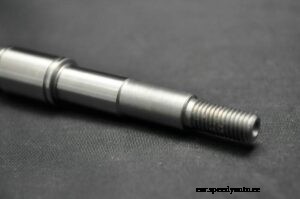
First, check the water pump shaft and pulley, for signs of damage or movement.
Also, you may have a vehicle where, a serpentine, drive or timing belt, runs the water pump. If so, you may need to remove the belt, to manually check the water pump pulley.
Confirm any damage or movement:
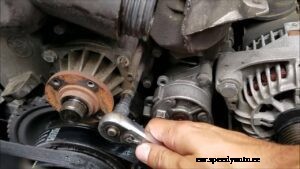
So, when replacing a water pump run by a timing belt; always replace the timing belt at the same time; especially if the water pump was leaking. A coolant contaminated timing belt, will have a reduced service life. On the other hand, a worn out timing belt may break and damage your new water pump. In most applications, the water pump and timing belt have about the same service life period (50,000 miles or more). So, you’ll save time and money, by doing both at the same time.
So, you should begin diagnosing a water pump noise; as soon as you suspect, something is wrong. Because, an early diagnostic, can save you thousands of dollars in repairs.
