
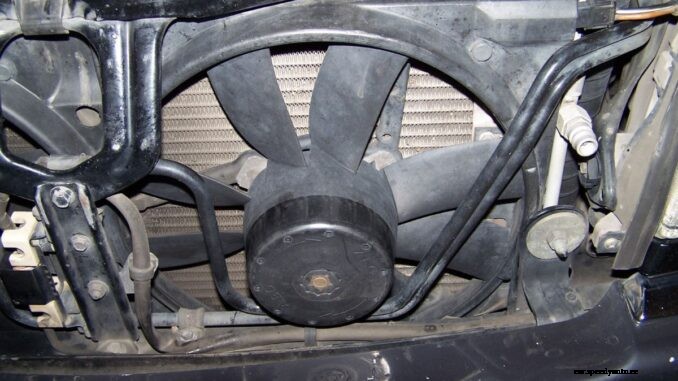
So, extra cooling is not needed, when a cold engine is first started. As a result, the engine cooling fan, does not come on, until the engine reaches, normal operating temperature.
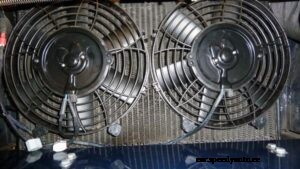
The fan will then cycle on and off as needed, to maintain the proper coolant temperature. So, the fan runs mostly at idle or low speed, when the engine is at normal temperature. Most fans should come on, when the coolant reaches, about 200 to 230 degrees.
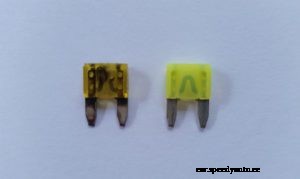
Your engine cooling fan will not work if, you have a blown fuse. In general, most vehicles on the road have, two types of fuses. Older cars have glass, cylinder-shaped fuses, with stainless steel on the ends and glass in the middle. Most newer cars have a different style of fuse, that uses a plastic housing; with the fusible link, encased in the housing. So, the easiest way to check it is visually. Check it for a continuous wire with no breaks. Using a multimeter, is another good way.
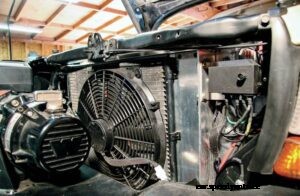
Unplug the fan connector, closest to the fan. Make up some jumper cables. Then connect them directly, from the battery to the fan motor, to see if it spins.
So, a fan failure or a failure of the fan relay or control circuit, is bad news. Because, it can allow the engine to overheat. On applications that have variable fan speeds; the engine may also overheat, if the fan speed fails to increase, when additional cooling is needed. The fan may work, but it only runs at low speed. Which may not be fast enough, to prevent overheating.
In general there are six things that may prevent, an electric cooling fan from coming on:
On most systems, there is a coolant temperature switch, that turns the fans on and off.
First, locate the coolant temperature switch and unplug it. But, be sure you have the right one. Because, some vehicles have as many as three:
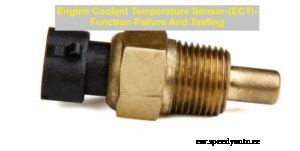
So, with the engine running and the coolant temperature switch unplugged, the fan should come on. The (PCM) will now detect a failed switch, store a Diagnostic Trouble Code (DTC) and turn on the fan(s).
If it doesn’t, and you have a domestic vehicle; the coolant temperature switch, is a normally open type, that stays open, until the coolant reaches its set temperature. When it reaches that temperature; the switch closes and turns the fan(s) on.
To check this, unplug the single wire connector and, using a jumper wire, ground it. At this point, the fan should come on. Most Japanese cars have a normally closed switch. Those switches open, when the set temperature is reached, thus turning the fan(s) on.
So, cooling fan motors, are an important component, to any engine cooling fan assembly. And, play a key role in keeping the car at safe temperatures, during idle and low speeds.
Finally, if you suspect that your cooling fan motors may be having an issue; do some testing to see if you can fix it yourself.
