
You may be aware of how the air conditioning system works in your car. It needs to have have a certain amount of oil, just like your car's engine. If you don’t want to suffer from an unexpected failure in your air conditioning system, you should have the idea of how well it is operating.
Normally you do not need to add oil to your AC compressor after it is installed, unless your installing a new compressor or if their is a leak in you AC system. If you do need to add oil check the compressor specifications on how much oil is needed. Normally you'll want to evacuate the entire system before adding oil or refrigerant (which has oil in it).
If I have a leak in my AC system it's best to fix the leak and then deal with the oil needs next. Well discuss how you can prevent the failure of your A/C system and keep things running well.
Servicing of your vehicle’s A/C compressor should be done at regular time intervals by inspecting it yourself or going to a mechanic for a car checkup.
Your air conditioning system uses a compressor that acts like a engine, and needs oil for lubrication. The compressor helps compress the AC gases, that later expand which causes cooling. When gases compress, the gases get hot. Your car’s AC is able to keep you cool when air is blown over the cold gases in the evaporator.
You may be surprised to know that the AC compressor has cylinders like a car engine, except these cylinders help compress gases. It is working hard to compress the refrigerant in the system and needs oil to help with heat control and lubrication.
The recurring compression, expansion, and circulation of the refrigerant through the system can cause stress on the system eventually if it isn't maintained properly.
If you notice that the AC isn't getting as cold as it use to, then you may have a leak. One reason your AC may not get too cold is a leak in the system. If you decide to try to fix the leak yourself, you'll need to be very careful because no one is quite sure how much refrigerant was lost.
If you fix the leak and add AC refrigerant, you'll need to understand it does come with some risks.
AC refrigerant comes with oil in it and adding too much may cause the compressor to run inefficiently or create leaks again from excess stress.
If you don't add enough then the AC compressor might get too hot or have a mechanical failure.
First, the refrigerant is compressed by your AC compressor where the temperature increases. Then it gets cooled in the condenser. It is collected in the receiver and turns into a liquid. It is then allowed to expand, allowing it to get cool as it passes through the evaporator. Then the gas is compressed again.
As the low pressure refrigerant returns to the compressor, it enters the intake area, is compressed, and exits the output side as a high pressure gas.
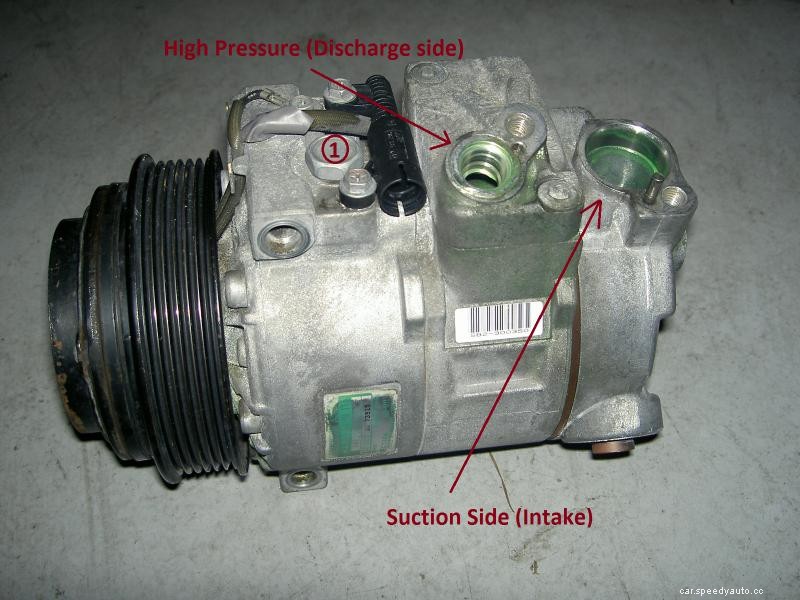
Photo Credit: http://www.benzworld.org/forums/w210-e-class/1535567-where-add-c-compressor-oil.html
The automotive industry in the past two decades most commonly uses R134a refrigerant. After 2015, advancement in refrigerant have taken place with adoption of a new refrigerant R-1234yf, which is environment-friendly.
The advancement in refrigerant also changed the lubricant used inside the compressor. PAG oils (polyethylene glycol) are the best substitutes of the former lubricants. R-1234yf also requires PAG-oils. The PAG oils come in various viscosity e.g. PAG 100, PAG 150. If in case the OE specs aren’t given for your A/C system then you should choose PAG 100 for R-134a as technicians mostly use it because of its universal viscosity.
To increase the efficiency of your compressor and for long life compressor operation, proper maintenance is required. The application of a certain amount of lubricant inside the compressor increases the efficiency, and the components of AC system operate well and smoothly on start up without creating noise.
If you add up an excess amount of oil for lubrication inside the compressor, then it will reduce it cooling capacity. It also creates an unnecessary internal coating inside your compressor which reduces heat transfer between the atmosphere and the system.
USE CAUTION WHEN ADDING OIL OR REFRIGERANT TO A SYSTEM THAT HASN'T BEEN EVACUATED
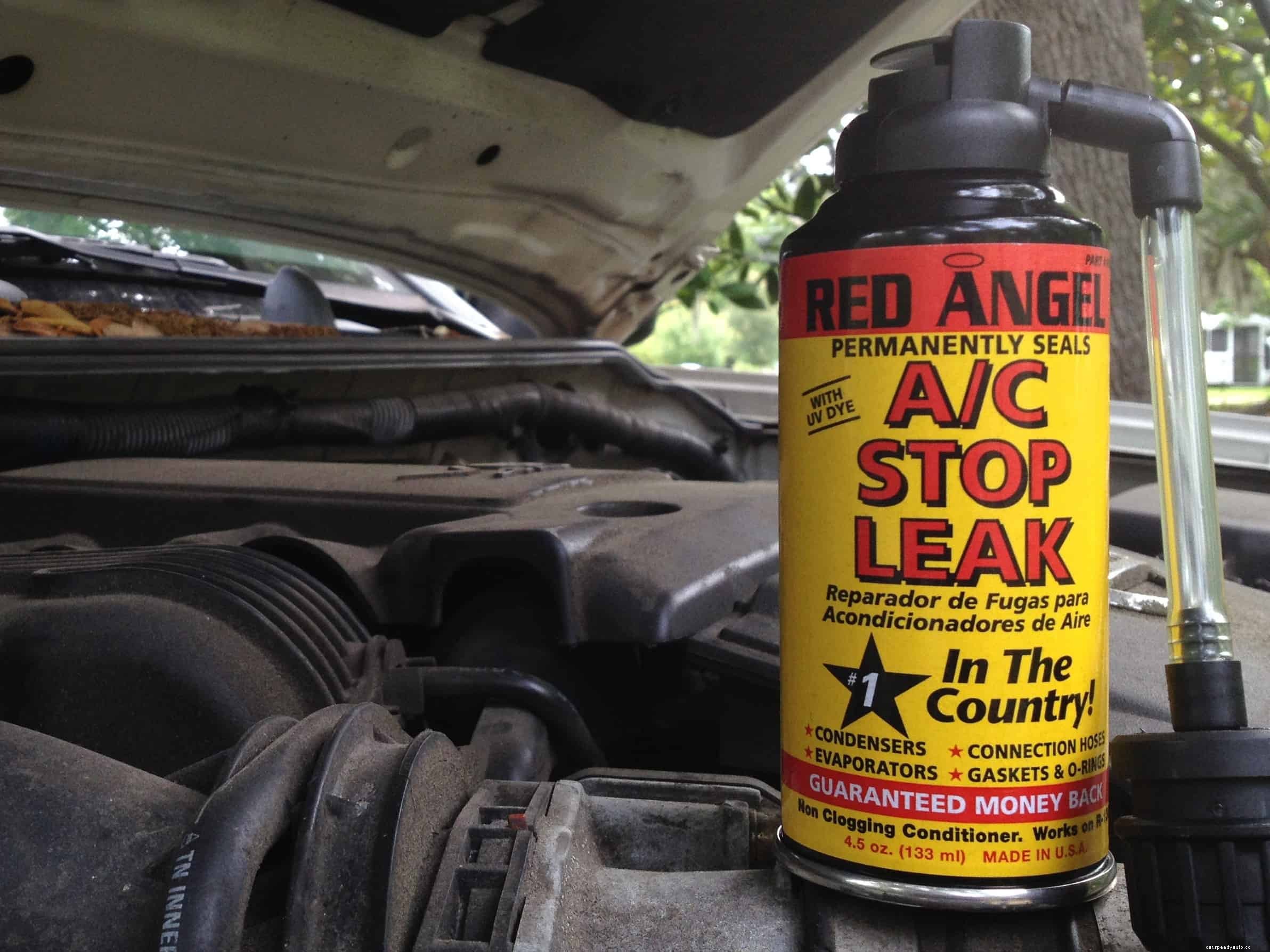
Photo Credit: https://gobdp.com/blog/healing-the-stop-leak-reputation/
Part OF A/C system
Amount of Oil to Add Up
Accumulator
2 oz.
Condenser
1 oz.
Evaporator
2 oz.
Filter drier
1 oz.
You should adopt the following practices to prevent premature failure of your compressor:
All in all, you should add up oil in the amounts required by your compressor. This will make sure that your compressor will start up well and the oil will also spread evenly throughout your car’s A/C system.
Now you have a brief idea that how much important oil is to your AC compressor and how the air conditioning system of your car can be properly maintained. The lubricant inside your compressor has considerable effects on the life of the system. Therefore regular intervals, you should maintain your A/C compressor and add up the proper amount of lubricant when needed.
As I described above, due faulty compressors cause issues with your AC system. If you need a mechanic to service your AC compressor, its usually best to get a new one, since parts and labor make this the more cost effective and reliable way to proceed.
You should follow the your car guidelines while you are adding up oil inside the compressor whether it is new or old. I hope the information and guidelines which are provided in this blog will help you to find the solution of your problem.
