
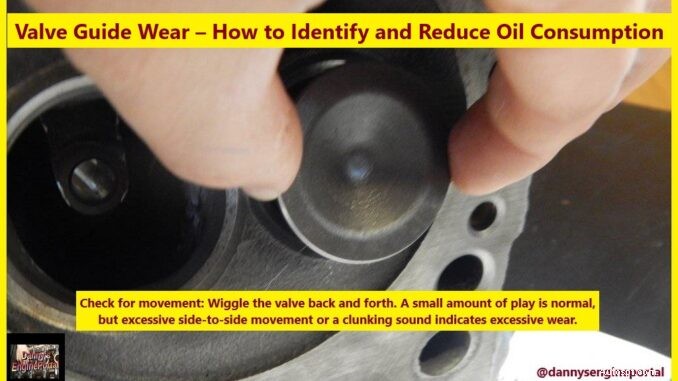
 Valve Guide Wear – How to Identify and Reduce Oil Consumption
One thing you can almost always count on when rebuilding a cylinder head is, valve guide wear. The guides experience a lot of wear, because of the constant friction, between the guide and valve stem.
To make matters worse, positive valve stem seals on late model engines, prevent the guides from receiving needed lubrication. Side forces on the valve stem, caused by valve train geometry, or direct acting overhead cams, contribute to guide wear.
So, the engine will use oil, if the guides are worn, or there’s too much guide to valve stem clearance. This applies to both, intake and exhaust guides.
Oil consumption can be more of a problem, on the intake side because:
Problems Are Always Worse, On The Intake Side:
Carbon deposits in the combustion chamber, can raise compression, to the point where, detonation occurs under load.
Deposits on intake valves, in engines with multi port fuel injection, can cause hesitation and idle problems. Because, the deposits interfere with proper fuel delivery.
Inadequate valve cooling and premature valve failure is another problem. And, is usually caused by valve guide wear or ones with excessive clearance. About 75% of the heat from a typical valve, is conducted to the seat. The remaining 25% goes up the stem and out through the guide.
Worn guides can also, pass air. “Unmetered” air can be drawn into the intake ports past the guides. And, creates an effect similar to, worn throttle shafts on a carburetor. The extra air, reduces intake vacuum and upsets, the air fuel ratio of the engine at idle. The result may be, a lean misfire problem and rough idle.
Valve guide wear, can also contribute to valve breakage. The guides support and center the valves, as they open and close. A worn guide, will allow the valve, to wobble slightly as it opens. This will cause it to drift off center, with respect to the valve seat.
Intake valve, stem-to guide clearance for most engines, ranges from .001 to .003 in. Because, of extra heat, the exhaust, will be .002 to .004 in. Diesel engines as a rule, have looser specs, on both intake and exhaust guides than gasoline engines.
So, if you see blue smoke on startup, on a cold engine. Then, you can pin the problem on, excessive clearance or worn valve seals.
But, if the engine smokes all the time or on heavy acceleration. Then, the problem is more likely to be, the piston rings. In both cases, I recommend professional diagnosis if possible, before spending a lot of money on large engine repairs.
So, valve guide wear is a sign of, serious issues with your engine. Consequently, properly sealed valves, are crucial to your engine’s compression. Finally, if you believe your vehicle is having, valve guide problems. Then, you should take it to a professional mechanic and have it, checked.
Thank You!
