
Motor oil is a fluid that runs through the engine for lubrication, keeping it from wearing out prematurely. The oil pressure must be just right for the engine to get what it needs. If there’s low oil pressure at idle, there’s something wrong demanding your attention.
In this guide, we cover the differences between normal oil pressure and low oil pressure. We go on to evaluate reasons for low oil pressure and show you how to fix it. Finally, you can get some answers to your most important questions when you get to the end of our article.
Oil pressure is measured by pounds per square inch (PSI). Every car has a different normal, but you can find the information for your model in the service manual. On average, the following measurements are typically true.
Anything going lower than the minimum is considered to be running low. The opposite can also be true. If the oil pressure exceeds normal parameters, it’s considered too high.
Whether oil pressure gets too low or high, it can lead to engine problems. By paying attention to the oil pressure level, you can head off costly repairs and permanent damage.
Any time that the oil pressure goes below what’s normal for your vehicle, it’s considered to be too low. For the majority of cars, the measurement would be 20 PSI or lower, but you need to check your service manual to see what’s normal.
With most vehicles, a warning light will come on once the oil pressure gets too low. As the oil pressure gets too low, the lubricating fluid can no longer circulate through the engine as it should. As the parts run without lubrication, engine damage can occur.
There’s usually a mechanical malfunction causing the low oil pressure, whether it is due to a lack of oil, poor quality, or the wrong viscosity. It can also be caused by a bad oil pump, filter, sensor or gauge. In the most extreme cases, the reason for low oil pressure at idle is due to engine damage.
We evaluate these possibilities in-depth, based on what we have seen as professional auto mechanics.

One of the most common reasons for reduced pressure is a lack of oil. If oil gets below the low dipstick marking, the oil pump isn’t able to supply what’s needed for the engine.
When the oil pressure gets too low, you may also smell something burning. Furthermore, the engine can start to make a ticking noise and the motor won’t be able to perform as it normally does.
READ MORE: How to Check Your Car’s Engine Oil (Read The Dipstick)
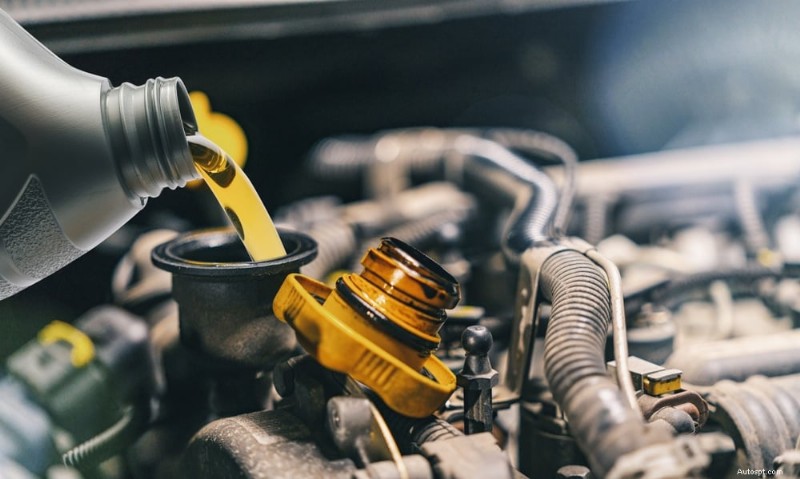
Even if there is enough oil, the same problems can occur if the quality is low or you are using the wrong viscosity. Bad oil becomes too thin due to the engine heat, thereby reducing the pressure. It can also get dirty as it continues circulating through the engine, which also reduces the viscosity.
If you’ve used the wrong viscosity in the motor, several other problems can occur. The motor oil may not be able to circulate properly through the engine, leading to lowered pressure. For these reasons, it’s important to get regular oil changes and use the proper oil viscosity as outlined in the owner’s manual.
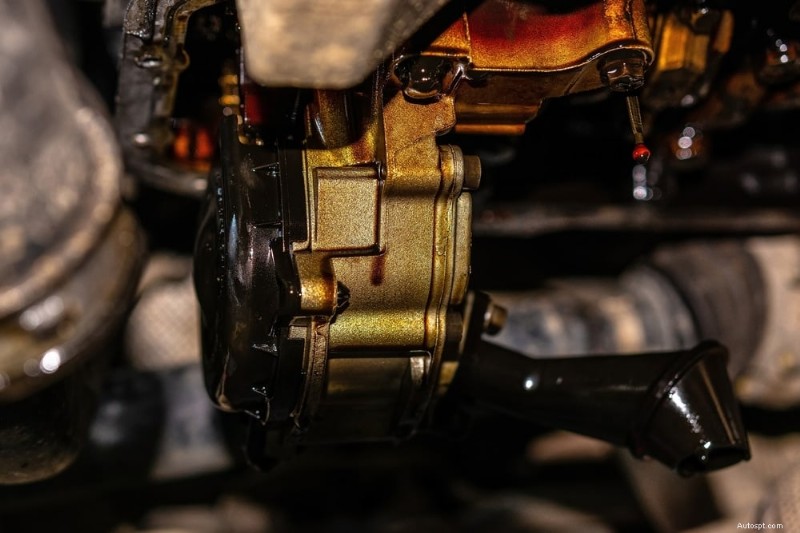
The oil pump is responsible for circulating the oil through the motor. If the oil pump starts to fail, the pumping capacity is severely diminished, making it difficult for the engine to get the lubrication it needs.
As oil fails to reach parts of the engine, the pressure drops, especially at idle. Plus, there will be a dramatic decrease in power from the motor.
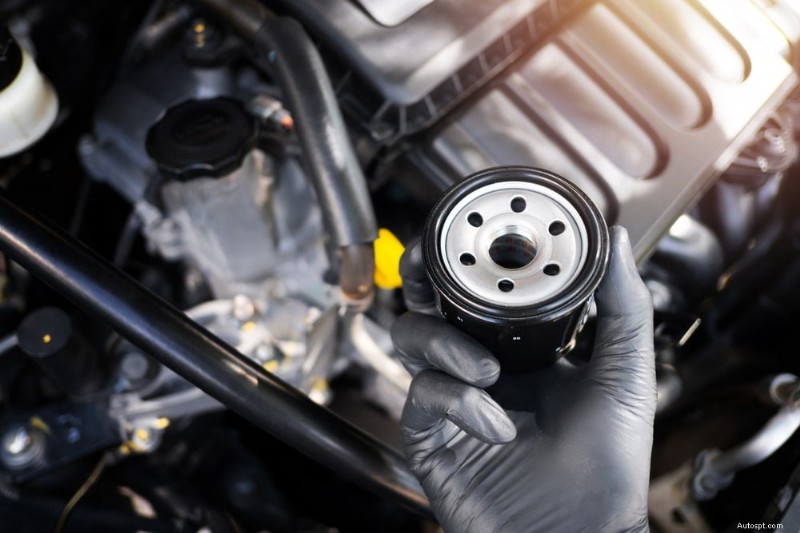
Oil passes through a filter before going into the engine to remove contaminants and debris. If the filter isn’t changed frequently enough, it becomes clogged and oil can no longer freely flow into the engine.
You will notice a drop in oil pressure, especially at idle. If the engine doesn’t get any oil because of the clogged filter, it will no longer be able to function.
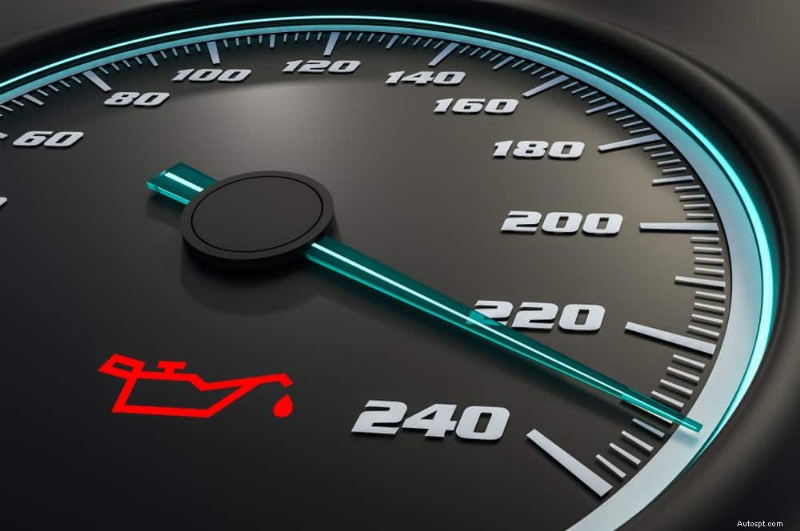
The oil pressure sensor determines how much oil pressure is in the engine. This signal is sent to the Engine Control Unit (ECU) and the information is displayed on the gauge.
All of these electronic parts can fail, leading to a faulty reading. With either of these problems, the warning light on the dashboard should come on, indicating the presence of low oil pressure, whether real or perceived.
As the car gets older and it’s driven many miles, the engine starts to wear out. The internal parts experience more wear and the clearances increase. Oil pressure can only remain within normal ranges when the resistance is correct inside the engine.
Some people choose to use a higher viscosity grade when the engine starts to wear out, but this is only a temporary fix. Eventually, the motor will need to be rebuilt or replaced.
If you want to repair the low oil pressure situation, it’s best to tackle the problem the same way professional technicians do. Here’s what we would do, and you can try it as well.
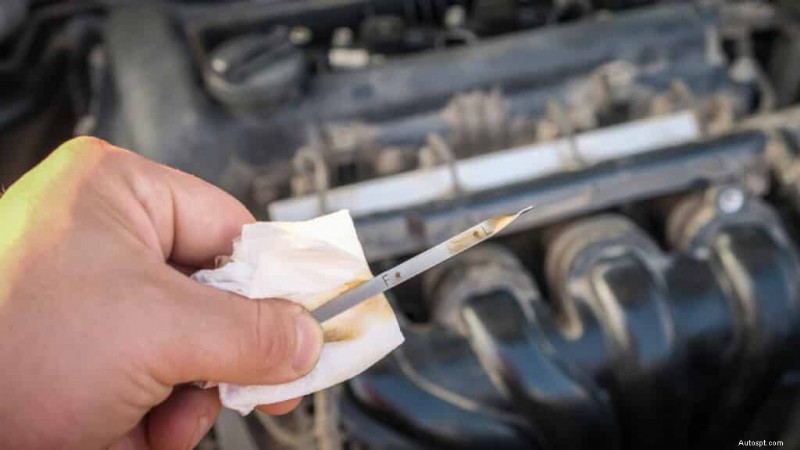
Your first step is to check how much oil is in the system. You can do this by pulling out the oil dipstick and reading the level. It should be between the empty and full marks on the stick. If it’s not, you need to add more oil.
If the engine continues to drop low in oil, you may be dealing with an oil leak. You should inspect the system to see where the oil is dripping from. There can be a leak in the oil pan or one of the seals. It could also be coming from a gasket.
If the oil level is okay, but you notice that it’s dirty or contaminated, it’s time to perform an oil change. You also want to do this if you’ve accidentally used the wrong oil viscosity.
Most manufacturers recommend an oil and filter change every 5,000 to 10,000 miles, depending on what type of oil you use. However, if you are hard on your vehicle, you may need to get more frequent changes. Towing heavy loads or operating your car in mountainous terrain all take a toll on the engine and the oil. Changing the oil more frequently only helps it remain in better condition to protect the motor.
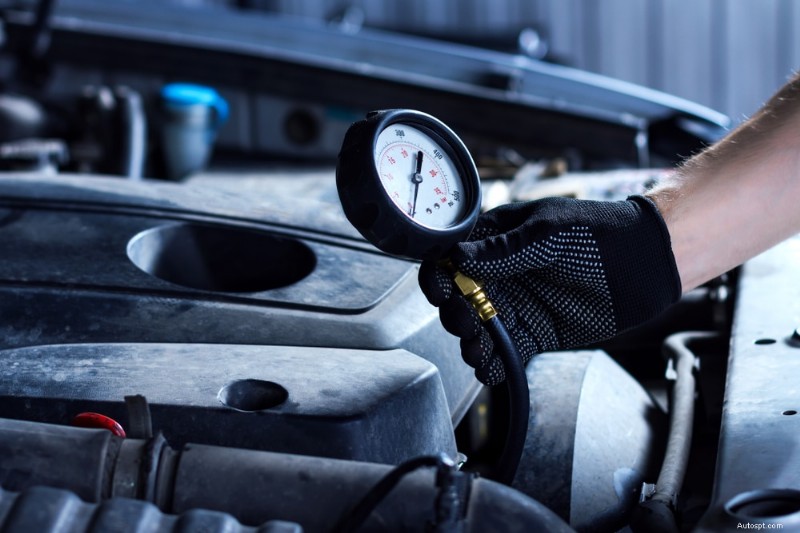
If you think there might be something wrong with the gauge, you can test the oil pressure manually. Here are some basic steps to follow.
If you are getting a different reading manually than what’s showing on the dash, the gauge or sensor could be faulty.
If you think the oil pump may be to blame, you need to remove it from the motor for an inspection. Take the cover off of the pump so you can look for signs of wear. There may be heavy scoring inside the cover. You should also look for metal particles in the pump body. Be mindful of how everything comes apart so you can put it back together when you are done.
If the pump shows wear, you want to replace it with a new one. If it still looks good, you can consider cleaning it up and reinstalling it, but most people just decide to replace it.
The oil pump is often located inside the oil pan and is often difficult to reach. Therefore, you should be absolutely sure that you have checked everything else before starting this process.
It’s not easy to deal with low oil pressure on a car. A lot of the problems could be advanced and above your mechanical understanding. If so, it’s best to reach out to a professional.
Check online reviews before choosing a mechanic. When dealing with the car engine, you don’t want to take any chances by using someone with a lack of understanding.
Start by checking the oil level. It may need to be topped off. It’s also possible that it’s time for an oil change. Just make sure you use the right viscosity. Aside from that, there could be a mechanical failure with the pump, a sensor or the gauge. At worst, there’s engine damage that needs to be corrected.
It’s possible that you are using the wrong viscosity oil or it has become contaminated. Other than that, there’s a mechanical issue with the gauge, sensor or the pump. If the engine is old and worn out, there could also be internal damage that can’t be reversed.
It depends on what type of vehicle you drive. The specifications can be found in the service manual. Typically cars will have an idle oil pressure between 20 and 30 PSI, while a truck will be slightly higher between 25 and 35 PSI.
The most common cause is a lack of oil or that you are using the wrong type of oil. If topping off the oil or changing it doesn’t help, you want to look at possible mechanical failures. Inspect the pump, sensors and gauges or evaluate if the engine is worn-out and defective.
No, you should stop driving your car until you can figure out the problem and resolve it. When the engine doesn’t get an adequate amount of oil pressure, there’s a lack of lubrication and the internal components can fail. You don’t want to replace or rebuild the engine when it could have been prevented.
Low oil pressure should never be messed around with. The reason that there’s a gauge and a warning light on the display is to ensure you are always informed. At the first sign of low oil pressure, especially while idling, it’s best to have the vehicle looked at.
If you resolve the problem quickly, you may prevent future engine damage. Otherwise, you could cause irreversible damage that leads to massive repair bills.
Learn more:
