
Many mufflers take on a bronze or blue hue after a period of operation. In most cases this moderate change in color is perfectly normal. It can simply be a result of varying temperatures within the internal chambers of the muffler.
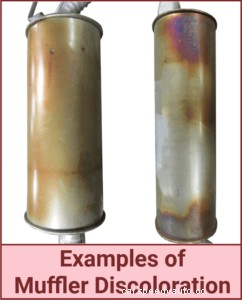
A lot of mufflers feature multiple internal partitions designed to improve structural stability, enhance sound quality, and extend service life. These partitions separate the muffler into chambers which contain exhaust gasses for varying lengths of time in order to reduce sound. As a result, some chambers will operate at higher temperatures than others. Under certain conditions, this can result in an uneven bronze or blue discoloration on the exterior of the muffler.
In most cases there is nothing wrong with the muffler. The color shift is a normal result of the unit’s thermal characteristics. However, high temperature discoloration accompanied by increased fuel consumption and elevated emissions, could indicate an underlying engine problem. Misfires, possibly due to a fouled spark plug, can increase the catalytic converter and muffler temperature. Service providers can simply test drive the vehicle while monitoring the misfire count with a scan tool.
The 100% stainless steel Walker® QuietFlow® SS muffler is designed to resist rust-out more than three times longer than competing designs. Traditional mufflers use a shell made of two sheets of thin, aluminized carbon steel – one layer to seal the interior and another to cover weld points for a cleaner look – whereas the QuietFlow SS uses a single, heavier-gauged, stainless steel wrap. This feature leaves the muffler less susceptible to corrosion and helps to better control sound.
